ECON SPEA-V202: Midterm
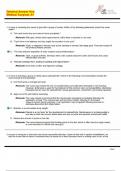
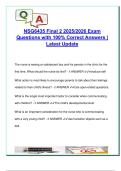
Early on in the pandemic, concerned about possible shutdowns, shoppers rushed out to buy
lots of extra toilet paper. This would best be described by which of the following: a. There was
a reduction in supply of toilet paper b. There was an increase in demand for toilet paper c.
There was a reduction in the quantity supplied of toilet paper d. There was a reduction in the
quantity of toilet paper demanded e. Demand for toilet paper become more elastic f. All of the
above g. None of the above -(correct answer)b. There was an increase in demand for toilet
paper Referring to the above question, shoppers bought so much toilet paper, so quickly, that
many stores ran out of toilet paper. What do the empty shelves in the stores indicate about the
toilet paper market? a. Demand for toilet paper is very inelastic b. The price was below the
market equilibrium c. The price was above the equilibrium price d. Demand for toilet paper is
very elastic e. Supply of toilet paper is very elastic f. The government should pay a subsidy to
toilet paper producers g. None of the above -(correct answer)b. The price was below the
market equilibrium The elasticity of demand for pumpkin pie is -2. Last year, due a big pumpkin
harvest, the price of a pie fell from $10 to $8. What occurred to the demand for pumpkin pie? a.
Quantity demanded decreased by 10% b. Quantity demanded increased by 40% c. Quantity
demanded decreased by 40% d. Quantity demanded increased by 10% e. Quantity demanded
did not change -(correct answer)b. Quantity demanded increased by 40% In an effort to
increase output of personal protective equipment (PPE) early in the pandemic, policymakers
proposed paying producers $5 for each piece of equipment they produce. Which of the
following would NOT be a likely impact of this policy? a. The price hospitals pay for PPE would
fall b. Employment in PPE-producing industries would increase c. The price received by the
PPE-producers would increase d. More PPE would be purchased by hospitals e. The hospitals
would be made better off by this policy (increase consumer surplus) f. The PPE-producers
would be made better off by this policy (increase producer surplus) g. Economic surplus would
increase h. None of the above (i.e., they would all be likely results) -(correct answer)g.
Economic surplus would increase The monthly demand curve for mangos is P=18-3Q (Q is
Early on in the pandemic, concerned about possible shutdowns, shoppers rushed out to buy
lots of extra toilet paper. This would best be described by which of the following: a. There was
a reduction in supply of toilet paper b. There was an increase in demand for toilet paper c.
There was a reduction in the quantity supplied of toilet paper d. There was a reduction in the
quantity of toilet paper demanded e. Demand for toilet paper become more elastic f. All of the
above g. None of the above -(correct answer)b. There was an increase in demand for toilet
paper Referring to the above question, shoppers bought so much toilet paper, so quickly, that
many stores ran out of toilet paper. What do the empty shelves in the stores indicate about the
toilet paper market? a. Demand for toilet paper is very inelastic b. The price was below the
market equilibrium c. The price was above the equilibrium price d. Demand for toilet paper is
very elastic e. Supply of toilet paper is very elastic f. The government should pay a subsidy to
toilet paper producers g. None of the above -(correct answer)b. The price was below the
market equilibrium The elasticity of demand for pumpkin pie is -2. Last year, due a big pumpkin
harvest, the price of a pie fell from $10 to $8. What occurred to the demand for pumpkin pie? a.
Quantity demanded decreased by 10% b. Quantity demanded increased by 40% c. Quantity
demanded decreased by 40% d. Quantity demanded increased by 10% e. Quantity demanded
did not change -(correct answer)b. Quantity demanded increased by 40% In an effort to
increase output of personal protective equipment (PPE) early in the pandemic, policymakers
proposed paying producers $5 for each piece of equipment they produce. Which of the
following would NOT be a likely impact of this policy? a. The price hospitals pay for PPE would
fall b. Employment in PPE-producing industries would increase c. The price received by the
PPE-producers would increase d. More PPE would be purchased by hospitals e. The hospitals
would be made better off by this policy (increase consumer surplus) f. The PPE-producers
would be made better off by this policy (increase producer surplus) g. Economic surplus would
increase h. None of the above (i.e., they would all be likely results) -(correct answer)g.
Economic surplus would increase The monthly demand curve for mangos is P=18-3Q (Q is