TNCC Trauma Nursing Core Course 15th
Edition ENA Test Bank |Graded A+ pass
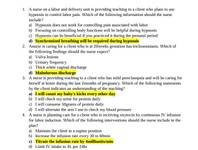
4. Why might you consider early mechanical ventilation via bag-mask device in a geriatric
patient?
A. Shorter tracheas in geriatric patients create the need for ventilation assistance.
B. Laxity of the rib cage makes hyperventilation more likely.
C. Geriatric patients have greatly limited physiologic reserve.
D. Geriatric patients have a greater alveolar surface area of the lungs. - ansQuestion 4: C
Early mechanical ventilation via bag mask device or advanced airway measures should be
considered in geriatric trauma patients because of their greatly limited physiologic reserve.
5. Which of the following signs would be most concerning at this point?
A. A drop in systolic blood pressure to 88 mm Hg
B. SpO₂ of 93%
C. A field GCS motor score of 4
D. Hemiplegia on the left side - ansQuestion 5: A
A systolic blood pressure of less than 90 mm Hg indicates secondary brain injury. Her SpO2 is
> 90%, and a motor score of 4 is not as concerning.
5. While attempting to lay the patient supine for spinal motion restriction she becomes
increasingly distressed and complains of shortness of breath and difficulty breathing. The
fractured clavicle appears to move distally and increases the difficulty of breathing as the
patient lies back. What should you do?
A. Tip the backboard to a left lateral position.
B. Raise the back of the stretcher.
C. Let her sit up in a position of comfort.
D. Administer morphine. - ansQuestion 5: B
Because laying the patient supine increases the risk of airway/ventilation problems, raising
the back of the stretchers slightly fundamentally maintains spinal alignment while reducing
the ventilation issues.
5. You now perform a secondary survey. You notice a sternotomy scar. Your patient tells you
he is on oral clopidogrel since he had a coronary artery bypass graft 2 years ago. Is this
information useful?
A. No, he should stop talking and breathe.
B. Yes, he should see a cardiologist once in the local hospital.
C. Yes, he will need platelets and a heart surgeon ASAP.
D. Yes, you should raise his blood pressure up to 130 mm Hg systolic. - ansQuestion 5: C
Because he is on clopidogrel, his platelets are out of order for at least 5 days, so he will
require urgent platelet transfusion.
6. According to the Monro-Kellie doctrine, what happens to the brain when it is still in a
compensated state after a TBI?
A. CSF, ICP, heart rate, and blood pressure are still within normal range.
B. CSF increases, ICP decreases, heart rate increases, and blood pressure decreases.
C. CSF and blood volume decrease, while heart rate and blood pressure are still within normál
range.
,TNCC Trauma Nursing Core Course 15th
Edition ENA Test Bank |Graded A+ pass
D. CSF decreases, ICP increases, heart rate decreases, and blood pressure increases. -
ansQuestion 6: C
In a compensated state, CSF and blood volume decrease, while heart rate and blood pressure
are still within normal range.
_________ therapy is now suggested for fluid resuscitation to replace patient losses, including
administering PRBCs, plasma, and platelets. - ansCOMPONENT THERAPY
ch. 5, p. 45
__________, which can occur in resuscitation, is a common IATROGENIC cause of INCREASED
intrathoracic pressure resulting in COMPRESSION of the heart and DECREASED cardiac
output. - ansHYPERVENTILATION
ch. 7, p. 74
55% of spinal injuries occur to which part of spine? - anscervical
ch. 13, p. 179
A rapid, thready pulse may indicate (a. _______), and an irregular pulse may warn of potential (b.
_______). - ansa. HYPOVOLEMIA
b. CARDIAC DYSFUNCTION
ch. 5, p. 45
ABGs provide values of oxygen, CO2 and base excess, which are... - ansReflective endpoint
measurements of the effectiveness of cellular perfusion, adequacy of ventilation, and the
success of the resuscitation.
An abnormal base deficit may indicate poor perfusion and tissue hypoxia, which results in the
generation of hydrogen ions and metabolic acidosis.
ch. 5, p. 46
Activation of the SYMPATHETIC NERVOUS SYSTEM causes the ADRENAL glands to release
TWO catecholamines - EPINEPHRINE and NOREPINEPHRINE. These cause... - ans- HIGH levels
of EPINEPHRINE cause smooth muscle relaxation in the airways and causes arteriole smooth
muscle contractility (potentiating inotrophic effect). EPI also INCREASES heart rate (positive
chronotrophic effect), peripheral vasocontriction, and glycogenolysis (breakdown of glycogen
stores in liver into glucose for cellular use)
- NOREPINEPHRINE increases heart rate, vascular tone through alpha-adrenergic receptor
activation, and blood flow to skeletal muscle and triggers the release of glucose from energy
stores.
ch. 7, p. 77
Additional history includes the following (MIST mnemonic) prehospital report: - ans- MOI
,TNCC Trauma Nursing Core Course 15th
Edition ENA Test Bank |Graded A+ pass
- Injuries sustained
- Signs and Symptoms (in the field)
- Treatment (in the field)
ch. 5, p. 47
All open fractures are considered contaminated due to exposure to the environment and are at
risk for infection. These sites of injury have poor wound healing with a risk of.... -
ansOSTEOMYELITIS and SEPSIS
ch. 14, p. 197
Anterior cord syndrome - ansloss of pain and temperature sensation with weakness,
paresthesia, and urinary retention
ch. 13, p. 182
AORTIC DISRUPTION - ansAssessment findings
- Fractures of sternum, first or second rib or scapula
- CARDIAC MURMURS
- BACK, CHEST PAIN
- UNEQUAL EXTREMITY PULSE STRENGTH or BLOOD PRESSURE (Significantly greater in
upper extremities)
- HYPOTENSION
- TACHYCARDIA
- SKIN CHANGES: diaphoresis, pallor, cyanosis
- PHARAPLEGIA (due to disruption of spinal perfusion from aortic injury)
- Radiograph findings include- left hemothorax, right-sided tracheal deviation, widened
mediastinum
Interventions
- Prepare for surgery or angiography
- Consider massive transfusion protocol
ch. 11, p. 146
Are the lumen contents of the small bowel considered sterile? What is the pH? - ansneutral
pH, and sterile
ch. 12, p. 164
As ICP rises, CPP ________, resulting in cerebral ischemia, hypoxemia, and lethal secondary
insult. - ansDECREASES
Ch. 9, p. 109
As shock progresses, primary goal of the body is to maintain perfusion to vital organs.
Sympathetic stimulation has little effect on the cerebral and coronary vessels since they are
, TNCC Trauma Nursing Core Course 15th
Edition ENA Test Bank |Graded A+ pass
capable of autoregulation. Cerebral autoregulation maintains a constant... - anscerebral
vascular blood flow as long as the MAP is maintained between 50-150... when autoregulation
in the brain fails, perfusion becomes dependent solely on pressure.
ch. 7, p. 78
Assess pupils for... - ansEquality, shape, and reactivity (PERRL)
ch. 5, p. 45
Assessment findings for MILD, MODERATE, and SEVERE TRAUMATIC BRAIN INJURY INCLUDE:
- ansMILD
- GCS 13-15
- Brief (<30 min) LOC
- POST-TRAUMATIC AMNESIA < 24 hours
- No change on neuron aging studies
MODERATE
- GCS score 9-12
- Wide variety of symptoms, including ALTERATIONS IN CONSCIOUSNESS, CONFUSION,
AMNESIA, and FOCAL NEUROLOGICAL DEFICITS
- May deteriorate to severe head injury over time
SEVERE
- GCS score <8
- Significant alterations in consciousness
- ABNORMAL PUPILLARY RESPONSE
- ABNORMAL POSTURING
Ch. 9, p. 115
Assessment findings for renal injuries include - ans- Turner sign (bruising by 11th and 12th
ribs)
- Hematuria
- Frank tenderness, costovertebral angle tenderness, palpable flank mass
- Structural damage or leakage of contrast on intravenous pyelogram (IVP)
- If patient hemodyanmically unstable for CT, a single-infusion IVP can be performed at
bedside followed by complete study once patient is stable
- Positive urine dipstick for microscopic blood or leukocyte esterase
- Abnormal or elevated BUN and creatinine
90% of injuries are minor. Anticipate nephrology consultation in more severe injures; surgical
repair is required within 12 hours to salvage an ischemic kidney
ch. 12, p. 167
Assessment findings of a CHRONIC SUBDURAL HEMATOMA - ans- ALTERED or STEADY
DECLINE IN LOC
Edition ENA Test Bank |Graded A+ pass
4. Why might you consider early mechanical ventilation via bag-mask device in a geriatric
patient?
A. Shorter tracheas in geriatric patients create the need for ventilation assistance.
B. Laxity of the rib cage makes hyperventilation more likely.
C. Geriatric patients have greatly limited physiologic reserve.
D. Geriatric patients have a greater alveolar surface area of the lungs. - ansQuestion 4: C
Early mechanical ventilation via bag mask device or advanced airway measures should be
considered in geriatric trauma patients because of their greatly limited physiologic reserve.
5. Which of the following signs would be most concerning at this point?
A. A drop in systolic blood pressure to 88 mm Hg
B. SpO₂ of 93%
C. A field GCS motor score of 4
D. Hemiplegia on the left side - ansQuestion 5: A
A systolic blood pressure of less than 90 mm Hg indicates secondary brain injury. Her SpO2 is
> 90%, and a motor score of 4 is not as concerning.
5. While attempting to lay the patient supine for spinal motion restriction she becomes
increasingly distressed and complains of shortness of breath and difficulty breathing. The
fractured clavicle appears to move distally and increases the difficulty of breathing as the
patient lies back. What should you do?
A. Tip the backboard to a left lateral position.
B. Raise the back of the stretcher.
C. Let her sit up in a position of comfort.
D. Administer morphine. - ansQuestion 5: B
Because laying the patient supine increases the risk of airway/ventilation problems, raising
the back of the stretchers slightly fundamentally maintains spinal alignment while reducing
the ventilation issues.
5. You now perform a secondary survey. You notice a sternotomy scar. Your patient tells you
he is on oral clopidogrel since he had a coronary artery bypass graft 2 years ago. Is this
information useful?
A. No, he should stop talking and breathe.
B. Yes, he should see a cardiologist once in the local hospital.
C. Yes, he will need platelets and a heart surgeon ASAP.
D. Yes, you should raise his blood pressure up to 130 mm Hg systolic. - ansQuestion 5: C
Because he is on clopidogrel, his platelets are out of order for at least 5 days, so he will
require urgent platelet transfusion.
6. According to the Monro-Kellie doctrine, what happens to the brain when it is still in a
compensated state after a TBI?
A. CSF, ICP, heart rate, and blood pressure are still within normal range.
B. CSF increases, ICP decreases, heart rate increases, and blood pressure decreases.
C. CSF and blood volume decrease, while heart rate and blood pressure are still within normál
range.
,TNCC Trauma Nursing Core Course 15th
Edition ENA Test Bank |Graded A+ pass
D. CSF decreases, ICP increases, heart rate decreases, and blood pressure increases. -
ansQuestion 6: C
In a compensated state, CSF and blood volume decrease, while heart rate and blood pressure
are still within normal range.
_________ therapy is now suggested for fluid resuscitation to replace patient losses, including
administering PRBCs, plasma, and platelets. - ansCOMPONENT THERAPY
ch. 5, p. 45
__________, which can occur in resuscitation, is a common IATROGENIC cause of INCREASED
intrathoracic pressure resulting in COMPRESSION of the heart and DECREASED cardiac
output. - ansHYPERVENTILATION
ch. 7, p. 74
55% of spinal injuries occur to which part of spine? - anscervical
ch. 13, p. 179
A rapid, thready pulse may indicate (a. _______), and an irregular pulse may warn of potential (b.
_______). - ansa. HYPOVOLEMIA
b. CARDIAC DYSFUNCTION
ch. 5, p. 45
ABGs provide values of oxygen, CO2 and base excess, which are... - ansReflective endpoint
measurements of the effectiveness of cellular perfusion, adequacy of ventilation, and the
success of the resuscitation.
An abnormal base deficit may indicate poor perfusion and tissue hypoxia, which results in the
generation of hydrogen ions and metabolic acidosis.
ch. 5, p. 46
Activation of the SYMPATHETIC NERVOUS SYSTEM causes the ADRENAL glands to release
TWO catecholamines - EPINEPHRINE and NOREPINEPHRINE. These cause... - ans- HIGH levels
of EPINEPHRINE cause smooth muscle relaxation in the airways and causes arteriole smooth
muscle contractility (potentiating inotrophic effect). EPI also INCREASES heart rate (positive
chronotrophic effect), peripheral vasocontriction, and glycogenolysis (breakdown of glycogen
stores in liver into glucose for cellular use)
- NOREPINEPHRINE increases heart rate, vascular tone through alpha-adrenergic receptor
activation, and blood flow to skeletal muscle and triggers the release of glucose from energy
stores.
ch. 7, p. 77
Additional history includes the following (MIST mnemonic) prehospital report: - ans- MOI
,TNCC Trauma Nursing Core Course 15th
Edition ENA Test Bank |Graded A+ pass
- Injuries sustained
- Signs and Symptoms (in the field)
- Treatment (in the field)
ch. 5, p. 47
All open fractures are considered contaminated due to exposure to the environment and are at
risk for infection. These sites of injury have poor wound healing with a risk of.... -
ansOSTEOMYELITIS and SEPSIS
ch. 14, p. 197
Anterior cord syndrome - ansloss of pain and temperature sensation with weakness,
paresthesia, and urinary retention
ch. 13, p. 182
AORTIC DISRUPTION - ansAssessment findings
- Fractures of sternum, first or second rib or scapula
- CARDIAC MURMURS
- BACK, CHEST PAIN
- UNEQUAL EXTREMITY PULSE STRENGTH or BLOOD PRESSURE (Significantly greater in
upper extremities)
- HYPOTENSION
- TACHYCARDIA
- SKIN CHANGES: diaphoresis, pallor, cyanosis
- PHARAPLEGIA (due to disruption of spinal perfusion from aortic injury)
- Radiograph findings include- left hemothorax, right-sided tracheal deviation, widened
mediastinum
Interventions
- Prepare for surgery or angiography
- Consider massive transfusion protocol
ch. 11, p. 146
Are the lumen contents of the small bowel considered sterile? What is the pH? - ansneutral
pH, and sterile
ch. 12, p. 164
As ICP rises, CPP ________, resulting in cerebral ischemia, hypoxemia, and lethal secondary
insult. - ansDECREASES
Ch. 9, p. 109
As shock progresses, primary goal of the body is to maintain perfusion to vital organs.
Sympathetic stimulation has little effect on the cerebral and coronary vessels since they are
, TNCC Trauma Nursing Core Course 15th
Edition ENA Test Bank |Graded A+ pass
capable of autoregulation. Cerebral autoregulation maintains a constant... - anscerebral
vascular blood flow as long as the MAP is maintained between 50-150... when autoregulation
in the brain fails, perfusion becomes dependent solely on pressure.
ch. 7, p. 78
Assess pupils for... - ansEquality, shape, and reactivity (PERRL)
ch. 5, p. 45
Assessment findings for MILD, MODERATE, and SEVERE TRAUMATIC BRAIN INJURY INCLUDE:
- ansMILD
- GCS 13-15
- Brief (<30 min) LOC
- POST-TRAUMATIC AMNESIA < 24 hours
- No change on neuron aging studies
MODERATE
- GCS score 9-12
- Wide variety of symptoms, including ALTERATIONS IN CONSCIOUSNESS, CONFUSION,
AMNESIA, and FOCAL NEUROLOGICAL DEFICITS
- May deteriorate to severe head injury over time
SEVERE
- GCS score <8
- Significant alterations in consciousness
- ABNORMAL PUPILLARY RESPONSE
- ABNORMAL POSTURING
Ch. 9, p. 115
Assessment findings for renal injuries include - ans- Turner sign (bruising by 11th and 12th
ribs)
- Hematuria
- Frank tenderness, costovertebral angle tenderness, palpable flank mass
- Structural damage or leakage of contrast on intravenous pyelogram (IVP)
- If patient hemodyanmically unstable for CT, a single-infusion IVP can be performed at
bedside followed by complete study once patient is stable
- Positive urine dipstick for microscopic blood or leukocyte esterase
- Abnormal or elevated BUN and creatinine
90% of injuries are minor. Anticipate nephrology consultation in more severe injures; surgical
repair is required within 12 hours to salvage an ischemic kidney
ch. 12, p. 167
Assessment findings of a CHRONIC SUBDURAL HEMATOMA - ans- ALTERED or STEADY
DECLINE IN LOC