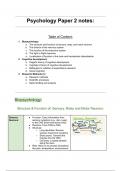
Psychology Paper 2 notes:
Table of Content:
1. Biopsychology:
a. The structure and function of sensory, relay, and motor neurons
b. The division of the nervous system
c. The function of the endocrine system
d. The fight or flight response
e. Localisation of function in the brain and hemispheric lateralisation
2. Cognitive development:
a. Piaget’s theory of cognitive development
b. Vygotsky’s theory of cognitive development
c. Baillargeon’s violation of expectations research
d. Social cognition
3. Research Methods (1):
a. Research methods
b. Scientific processes
c. Data handling and analysis
Biopsychology:
Structure & Function of: Sensory, Relay and Motor Neurons:
Sensory ● Function: Carry information from
Neurons: sensory receptors (e.g., skin, eyes)
to the CNS (brain and spinal cord).
● Direction: From PNS to CNS
● Structure:
○ Long dendrites: Receive
sensory input from receptors.
○ Short axons: Transmit the
impulse into the CNS.
○ Cell body: Located partway
along the axon.
● Role: Allow us to process sensations
like pain, temperature, and pressure.
,Relay ● Function: Connect sensory neurons
Neurons: to motor neurons and are involved in
reflex arcs and decision-making
processes within the CNS.
● Location: Entirely within the CNS
(brain and spinal cord).
● Structure:
○ Short dendrites and short
axons.
○ Many of them to form
connections.
● Role: Process the information
received and pass the response
signals to motor neurons.
Motor ● Function: Carry electrical signals
Neurons: from the CNS to effectors like
muscles or glands, causing a
response (e.g., muscle contraction).
● Direction: From CNS to PNS
(effectors)
● Structure:
○ Short dendrites: Receive
signals from relay neurons.
○ Long axons: Carry impulses
to effectors.
○ Cell body: Located at one
end in the CNS.
● Role: Responsible for actions such
as movement or hormone release.
The Nervous system:
= a body system that collects information from the outside world → processes it and takes
action.
, The Endocrine System
What is the endocrine system?
A network of glands throughout the body releases hormones to affect and organise the
body’s physiological systems. (If it is a 3 marker, then you can give an example.)
● The endocrine system is one of the body’s major information systems that instructs
glands to release hormones directly into the bloodstream. These hormones are
carried in the blood towardsthe target organs in the body.
● It works alongside the Nervous System to control vital functions in the body.
● Hormones can affect any cell in the body that has a receptor for that particular
hormone.
● If there is an imbalance in the body's hormones, it can lead to dysfunction.
What is a hormone?
● A chemical released from the endocrine glands into the bloodstream acts on
target structures to alter their function or to release their hormones.
What is a gland?
● A body organ that releases hormones into the bloodstream.
The hypothalamus = The hypothalamus is connected to the pituitary gland and is
responsible for stimulating or controlling the release of hormones from the pituitary gland.
Therefore the hypothalamus is the control system which regulates the endocrine system.
Effects of hormones:
● Most hormones can affect cells in several organs, leading to diverse responses.
● Pineal Gland: responsible for important biological rhythms, including the
sleep-wake cycle
● Thyroid gland: responsible for regulating metabolism
● Pituitary gland: sometimes known as the master gland because the hormones
released by this gland control and stimulate the release of hormones from other
glands
● Ovaries: control the regulation of the female reproductive system, including the
menstrual cycle and pregnancy
● Adrenal gland (Medulla): The key hormone in the fight-or-flight response
● Testes: responsible for the development of male sex characteristics during
puberty, while also promoting muscle growth
● Adrenal gland (Cortex): stimulates the release of glucose to provide the body with
energy, while suppressing the immune system
Pituitary glands:
● Anterior lobe: Adrenocorticotropic hormone (ACTH), which stimulates the adrenal
cortex and the release of cortisol (stress hormone)
● Posterior Lobe: oxytocin (love hormone) responsible for contractions in childbirth
and attachment (hugs!)
, Adrenal glands:
● Adrenal Medulla (inside): adrenaline and noradrenaline - a key role in fight or
flight.
● Adrenal cortex (outside): cortisol triggers the release of glucose to provide the
body with energy and suppress the immune system.
Reproductive glands:
● Testes: release testosterone which is responsible for male sex characteristics
during puberty and muscle growth.
● Ovaries: release oestrogen which regulates the female reproductive system
(menstrual cycle and pregnancy).
Fight or flight:
Fight or flight response:
● The body's physiological (inside) reactions to threat or danger;
● Involved activation of the hypothalamic-pituitary-adrenal cortex pathway and the
sympathetic adrenal medullary system;
● Designed to provide energy and arousal for rapid responses to threat and danger.
Table of Content:
1. Biopsychology:
a. The structure and function of sensory, relay, and motor neurons
b. The division of the nervous system
c. The function of the endocrine system
d. The fight or flight response
e. Localisation of function in the brain and hemispheric lateralisation
2. Cognitive development:
a. Piaget’s theory of cognitive development
b. Vygotsky’s theory of cognitive development
c. Baillargeon’s violation of expectations research
d. Social cognition
3. Research Methods (1):
a. Research methods
b. Scientific processes
c. Data handling and analysis
Biopsychology:
Structure & Function of: Sensory, Relay and Motor Neurons:
Sensory ● Function: Carry information from
Neurons: sensory receptors (e.g., skin, eyes)
to the CNS (brain and spinal cord).
● Direction: From PNS to CNS
● Structure:
○ Long dendrites: Receive
sensory input from receptors.
○ Short axons: Transmit the
impulse into the CNS.
○ Cell body: Located partway
along the axon.
● Role: Allow us to process sensations
like pain, temperature, and pressure.
,Relay ● Function: Connect sensory neurons
Neurons: to motor neurons and are involved in
reflex arcs and decision-making
processes within the CNS.
● Location: Entirely within the CNS
(brain and spinal cord).
● Structure:
○ Short dendrites and short
axons.
○ Many of them to form
connections.
● Role: Process the information
received and pass the response
signals to motor neurons.
Motor ● Function: Carry electrical signals
Neurons: from the CNS to effectors like
muscles or glands, causing a
response (e.g., muscle contraction).
● Direction: From CNS to PNS
(effectors)
● Structure:
○ Short dendrites: Receive
signals from relay neurons.
○ Long axons: Carry impulses
to effectors.
○ Cell body: Located at one
end in the CNS.
● Role: Responsible for actions such
as movement or hormone release.
The Nervous system:
= a body system that collects information from the outside world → processes it and takes
action.
, The Endocrine System
What is the endocrine system?
A network of glands throughout the body releases hormones to affect and organise the
body’s physiological systems. (If it is a 3 marker, then you can give an example.)
● The endocrine system is one of the body’s major information systems that instructs
glands to release hormones directly into the bloodstream. These hormones are
carried in the blood towardsthe target organs in the body.
● It works alongside the Nervous System to control vital functions in the body.
● Hormones can affect any cell in the body that has a receptor for that particular
hormone.
● If there is an imbalance in the body's hormones, it can lead to dysfunction.
What is a hormone?
● A chemical released from the endocrine glands into the bloodstream acts on
target structures to alter their function or to release their hormones.
What is a gland?
● A body organ that releases hormones into the bloodstream.
The hypothalamus = The hypothalamus is connected to the pituitary gland and is
responsible for stimulating or controlling the release of hormones from the pituitary gland.
Therefore the hypothalamus is the control system which regulates the endocrine system.
Effects of hormones:
● Most hormones can affect cells in several organs, leading to diverse responses.
● Pineal Gland: responsible for important biological rhythms, including the
sleep-wake cycle
● Thyroid gland: responsible for regulating metabolism
● Pituitary gland: sometimes known as the master gland because the hormones
released by this gland control and stimulate the release of hormones from other
glands
● Ovaries: control the regulation of the female reproductive system, including the
menstrual cycle and pregnancy
● Adrenal gland (Medulla): The key hormone in the fight-or-flight response
● Testes: responsible for the development of male sex characteristics during
puberty, while also promoting muscle growth
● Adrenal gland (Cortex): stimulates the release of glucose to provide the body with
energy, while suppressing the immune system
Pituitary glands:
● Anterior lobe: Adrenocorticotropic hormone (ACTH), which stimulates the adrenal
cortex and the release of cortisol (stress hormone)
● Posterior Lobe: oxytocin (love hormone) responsible for contractions in childbirth
and attachment (hugs!)
, Adrenal glands:
● Adrenal Medulla (inside): adrenaline and noradrenaline - a key role in fight or
flight.
● Adrenal cortex (outside): cortisol triggers the release of glucose to provide the
body with energy and suppress the immune system.
Reproductive glands:
● Testes: release testosterone which is responsible for male sex characteristics
during puberty and muscle growth.
● Ovaries: release oestrogen which regulates the female reproductive system
(menstrual cycle and pregnancy).
Fight or flight:
Fight or flight response:
● The body's physiological (inside) reactions to threat or danger;
● Involved activation of the hypothalamic-pituitary-adrenal cortex pathway and the
sympathetic adrenal medullary system;
● Designed to provide energy and arousal for rapid responses to threat and danger.