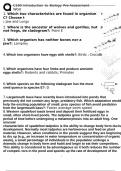
C190 Introduction to Biology Pre-Assessment
WGU
1. Which two characteristics are found in organism wo answers.-
C? Choose t
: Jaw and Lungs
2. Where is the ancestor of wolves and gorillas, but picted on
not frogs, de cladogram?: Point E this
3. Which organism has neither bones nor a
jaw?: Lamprey
lian
4.Which two organisms have eggs with shells?: Birds ; Crocodi
s
5.Which organisms have four limbs and produce amniotic without
eggs shells?: Rodents and rabbits; Primates
6.Which species on the following cladogram has the most ar DNA se-
simil quence to species E?: D
7.Largemouth bass have recently been introduced into ponds that
previously did not contain any large, predatory fish. Which adaptation would
help the existing population of small, prey species of fish avoid predation
from the largemouth bass?: Faster average swim speed
8.Western spadefoot toads breed and deposit their fertilized eggs in
small, often short-lived ponds. The tadpoles grow in the ponds for a
period of time before undergoing a metamorphosis into an adult frog. One
unusual
characteristic of spadefoot tadpoles is the ability to change body form during
development. Normally most tadpoles are herbivorous and feed on plant
material. However, when conditions in the ponds suggest they are beginning
to dry up (e.g., an increase in water temperature or concentration of organic
waste), a small percentage of individuals in the population undergo a
dramatic change in body form and habit and begin to eat their competitors.
This ability is considered to be advantageous as it both reduces the number
of competi- tors in the pond and speeds up the rate of development of the
1/
11
, C190 Introduction to Biology Pre-Assessment
WGU
transformed tadpoles.If global climate change continues (as predicted) to
increase the
2/
11
WGU
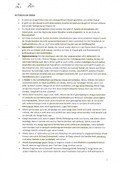
1. Which two characteristics are found in organism wo answers.-
C? Choose t
: Jaw and Lungs
2. Where is the ancestor of wolves and gorillas, but picted on
not frogs, de cladogram?: Point E this
3. Which organism has neither bones nor a
jaw?: Lamprey
lian
4.Which two organisms have eggs with shells?: Birds ; Crocodi
s
5.Which organisms have four limbs and produce amniotic without
eggs shells?: Rodents and rabbits; Primates
6.Which species on the following cladogram has the most ar DNA se-
simil quence to species E?: D
7.Largemouth bass have recently been introduced into ponds that
previously did not contain any large, predatory fish. Which adaptation would
help the existing population of small, prey species of fish avoid predation
from the largemouth bass?: Faster average swim speed
8.Western spadefoot toads breed and deposit their fertilized eggs in
small, often short-lived ponds. The tadpoles grow in the ponds for a
period of time before undergoing a metamorphosis into an adult frog. One
unusual
characteristic of spadefoot tadpoles is the ability to change body form during
development. Normally most tadpoles are herbivorous and feed on plant
material. However, when conditions in the ponds suggest they are beginning
to dry up (e.g., an increase in water temperature or concentration of organic
waste), a small percentage of individuals in the population undergo a
dramatic change in body form and habit and begin to eat their competitors.
This ability is considered to be advantageous as it both reduces the number
of competi- tors in the pond and speeds up the rate of development of the
1/
11
, C190 Introduction to Biology Pre-Assessment
WGU
transformed tadpoles.If global climate change continues (as predicted) to
increase the
2/
11