CBP Entrance Exam Study Guide questions
and answers with solutions
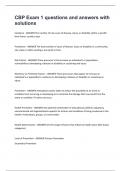
Some 480,000 immigrants were living in a certain country in 1999. Although most of these
immigrants were not employed in professional occupations, many of them were. For instance,
many of them were engineers and many of them were nurses. Very few of these immigrants were
librarians, another professional occupation.
From the information given above, it can validly concluded that, in 1999, in the country
described above:
A) Most immigrants were either engineers or nurses
B) It is not the case that some of the nurses were immigrants
C) None of the engineers were immigrants
D) Some of the engineers were immigrants - ANSWER D) Some of the engineers were
immigrants
A trucking company can act as a 'common carrier' - for hire to the general public at published
rates. As a common carrier, the trucking company is liable for any cargo damage, unless the
company can show that it was not negligent. If the company can demonstrate that it was not
negligent, then it is not liable for cargo damage. In contrast, a 'contract carrier' ( a trucking
company hired by a shipper under a specific contract) is only responsible for cargo damage
spelled out in the contract. A Claus Inc. tractor-trailer, acting under common carrier authority,
was in a 5-vehivle accident that damaged its cargo. A Nichlos Inc. tractor-trailer, acting under
contract carrier authority, was involved in the same accident, and its cargo was also damaged.
From the information given above, it can be validly concluded that, in reference to the accident:
A) If Claus Inc. is liable, then it can show that it was not negligent - ANSWER C) If Claus Inc.
can show that it was not negligent, then it is not liable
A rapidly changing technical environment in government is promoting greater reliance on
electronic mail (e-mail) systems. As this usage grows, there are increasing chances of conflict
between the users' expectations of privacy and public access rights. In some investigation, access
to ALL e-mail, including those messages stored in archival files and messages outside the scope
of the investigation, has been sought and granted. In spite of this, some people send messages
through e-mail that would never be said face-to-face or written formally.
From the information given above, it CANNOT be validly concluded that:
, A) Some e-mails messages that have been requested as part of investigations have contained
messages that would neve be said face-to-face
B) Some messages that people would never say face-to-face are sent in e-mail messages
C) Some e-mail messages have been requested as part of investigations
D) E-mail m - ANSWER A) Some e-mails messages that have been requested as part of
investigations have contained messages that would neve be said face-to-face
Often, crimes are characterized as either "malum in se"-inherently evil-or "malum prohibitum"-
criminal because they are declared as offenses by a legislature. Murder is an example of the
former. Failing to file a tax return illustrates the later. Some jurisdictions no longer distinguish
between crimes "malum in se" and "malum prohibitum", although many still do.
From the information given above, it can be validly concluded that:
A) Many jurisdictions no longer distinguish between crimes "malum in se" and "malum
prohibitum"
B) Some jurisdictions still distinguish between crimes "malum in se" and "malum prohibitum"
C) Some crimes characterized as "malum in se" are not inherently evil
D) Some crimes characterized as "malum prohibitum" are not declared by a legislature to be an
offense
E) Sometimes failing to file a tax return is characterized as 'malum in se' - ANSWER B) Some
jurisdictions still distinguish between crimes "malum in se" and "malum prohibitum"
Phyllis T. is a former Federal employee who was entitled to benefits under the Federal Employee
Compensation Act because of a job-related, disabling injury. When an eligible Federal employee
has such an injury, the benefit is determined by this test: If the beneficiary is married or has
dependents, benefits are 3/4 of the person's salary at the time of the injury; otherwise, benefits
are set at 2/3 of the salary. Phyllis T.'s benefits were 2/3 of her salary when she was injured.
From the information given above, it can be validly concluded that, when Phyllis T. was injured,
she:
A) Was married but without dependents
B) Was not married and had no dependents
and answers with solutions
Some 480,000 immigrants were living in a certain country in 1999. Although most of these
immigrants were not employed in professional occupations, many of them were. For instance,
many of them were engineers and many of them were nurses. Very few of these immigrants were
librarians, another professional occupation.
From the information given above, it can validly concluded that, in 1999, in the country
described above:
A) Most immigrants were either engineers or nurses
B) It is not the case that some of the nurses were immigrants
C) None of the engineers were immigrants
D) Some of the engineers were immigrants - ANSWER D) Some of the engineers were
immigrants
A trucking company can act as a 'common carrier' - for hire to the general public at published
rates. As a common carrier, the trucking company is liable for any cargo damage, unless the
company can show that it was not negligent. If the company can demonstrate that it was not
negligent, then it is not liable for cargo damage. In contrast, a 'contract carrier' ( a trucking
company hired by a shipper under a specific contract) is only responsible for cargo damage
spelled out in the contract. A Claus Inc. tractor-trailer, acting under common carrier authority,
was in a 5-vehivle accident that damaged its cargo. A Nichlos Inc. tractor-trailer, acting under
contract carrier authority, was involved in the same accident, and its cargo was also damaged.
From the information given above, it can be validly concluded that, in reference to the accident:
A) If Claus Inc. is liable, then it can show that it was not negligent - ANSWER C) If Claus Inc.
can show that it was not negligent, then it is not liable
A rapidly changing technical environment in government is promoting greater reliance on
electronic mail (e-mail) systems. As this usage grows, there are increasing chances of conflict
between the users' expectations of privacy and public access rights. In some investigation, access
to ALL e-mail, including those messages stored in archival files and messages outside the scope
of the investigation, has been sought and granted. In spite of this, some people send messages
through e-mail that would never be said face-to-face or written formally.
From the information given above, it CANNOT be validly concluded that:
, A) Some e-mails messages that have been requested as part of investigations have contained
messages that would neve be said face-to-face
B) Some messages that people would never say face-to-face are sent in e-mail messages
C) Some e-mail messages have been requested as part of investigations
D) E-mail m - ANSWER A) Some e-mails messages that have been requested as part of
investigations have contained messages that would neve be said face-to-face
Often, crimes are characterized as either "malum in se"-inherently evil-or "malum prohibitum"-
criminal because they are declared as offenses by a legislature. Murder is an example of the
former. Failing to file a tax return illustrates the later. Some jurisdictions no longer distinguish
between crimes "malum in se" and "malum prohibitum", although many still do.
From the information given above, it can be validly concluded that:
A) Many jurisdictions no longer distinguish between crimes "malum in se" and "malum
prohibitum"
B) Some jurisdictions still distinguish between crimes "malum in se" and "malum prohibitum"
C) Some crimes characterized as "malum in se" are not inherently evil
D) Some crimes characterized as "malum prohibitum" are not declared by a legislature to be an
offense
E) Sometimes failing to file a tax return is characterized as 'malum in se' - ANSWER B) Some
jurisdictions still distinguish between crimes "malum in se" and "malum prohibitum"
Phyllis T. is a former Federal employee who was entitled to benefits under the Federal Employee
Compensation Act because of a job-related, disabling injury. When an eligible Federal employee
has such an injury, the benefit is determined by this test: If the beneficiary is married or has
dependents, benefits are 3/4 of the person's salary at the time of the injury; otherwise, benefits
are set at 2/3 of the salary. Phyllis T.'s benefits were 2/3 of her salary when she was injured.
From the information given above, it can be validly concluded that, when Phyllis T. was injured,
she:
A) Was married but without dependents
B) Was not married and had no dependents