| OnlineExams | TestPrep | StudyResources | AcademicSuccess | ExamPreparation | QuizTime | LearningTools | Education | StudentSupport
In today's fast-paced educational landscape, students need reliable resources to excel in their studies.
5.0
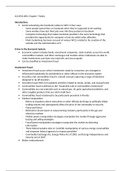
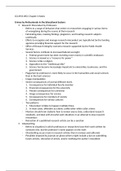
NRSG 3200 FINAL QUESTIONS WITH DETAILED
VERIFIED ANSWERS (100% CORRECT ANSWERS)
/ALREADY GRADED A+
Ways to maintain confidentiality
Ans: HIPPA, confidentiality agreements, closing charts when leaving
computer, and training.
Difference between justice and veracity, examples
Ans: Justice is fairness Veracity: truth
Difference between assault and battery
Ans: Assault: Verbal abuse/threats Battery: Physical abuse/harm and injury
RN role with obtaining consents
Ans: Only witness
Rules of proper delegation and prioritization
Ans: Delegation: RN delegate to other RN, LPN, or CNA. Tasks need to remain
in the scope of practice for each person. RN is the only one to assess.
Prioritization: Deciding what/who needs to be done/seen first.
Examples of ethical dilemmas in every day nursing, what is our role and
obligation?
Sunday, 02 March 2025
,Ans: Patient freedom vs. nurse control Advocate for the patient and let them
make choices, but also be there to support them and help them do what is
best. Pediatric patients
What is professionalism in nursing
Ans: Your professionalism will be judged in your personal behaviors and how
you present yourself to all those around you, and through those behaviors,
you tell the world who you are. Components of your professionalism include
your attitude, your appearance and your willingness to help others
Bipolar disorder: characteristics and nursing interventions
Ans: S/S: mood swings from profound depression to extreme euphoria with
intervening periods of normalcy. NI: Encourage therapies, ECT, give lithium
(and watch for toxicity)
Delirium: causes, manifestations, nursing interventions
Ans: Causes: serious medical, surgical, or neurological conditions. (falls,
elder abuse, medications/withdrawal, alcohol, cannabis). Hypoxia, anoxia,
diabetic problems, and electrolyte imbalances. CM: Confusion, excitement,
disorientation, and a clouding of consciousness. NI: Treat the underlying
cause.
how does delirium differ from dementia?
Ans: Delirium has a quick onset and is a mental state characterized by a
disturbance of cognition, which is manifested by confusion, excitement,
disorientation, and a clouding of consciousness. Hallucinations and illusions
are common.
Examstudy - Stuvia US
,Nursing interventions in patients displaying signs of depression
Ans: Therapies, MAOI's (used when other drugs have failed), TCA's (used less
because they produce severe side effects at high doses), SSRI's (stops
obsessive thought and gets rid of depression and anxiety), Heterocyclics
(patient can become suicide-prone) Serotonin (helps control anxiety and
depression),
Difference between major depressive disorder and dysthymia
Ans: MDD is having a depressed mood or loss of interest in daily activities for
at least 2 weeks with a SIGNIFICANT change in person's normal mood.
Dysthymia is milder to MDD, and is being "down in the dumps" or chronically
depressed and just sad for most of the day and it happens more days than
not.
Signs and symptoms of serotonin syndrome
Ans: Confusion, agitation, dilated pupils, headache, changes in BP,
nausea/vomiting, diarrhea, tachycardia, tremors, loss of muscle control and
heavy sweating.
Nursing consideration and lithium administration
Ans: toxicity - Can happen from taking too much lithium when treating
depression/anxiety. s/s= diarrhea, vomiting, anorexia, muscle weakness,
lethargy, giddiness, milk shakiness. Monitor levels and administer slowly
Examstudy - Stuvia US
, Erikson's theory of psychosocial development - stages (name, stage of
life, age)
Ans: Infancy Birth- 18 months, Trust vs. Mistrust, Hope, Emotional
dissatisfaction with self and others. Early Childhood 18 months- 3 years,
Autonomy vs. shame and doubt, Will, Lack of self-confidence.Late
Childhood, 3 - 6 years, Initiative vs. guilt, Purpose, Feelings of inadequacy
and a sense of defeat. School Age, 6 - 12 year, Industry vs. inferiority,
Competence+ Difficulty in interpersonal relationships because of feelings of
personal inadequacy. Adolescence, 12 - 20 years, Identity vs. Role confusion
Fidelity, Sense of self-consciousness, doubt, and confusion about one's role in
life. Young Adulthood, 20 - 30 years, Intimacy vs. isolation, Love , Withdrawal,
social isolation, and aloneness. Adulthood, 30 - 65 years, Generativity vs.
stagnation, Care Lack of concern for the welfare of others and total
preoccupation with the self. Old Age 65 - death, Ego integrity vs. despair,
Wisdom, Sense of self-contempt and disgust with how life has progressed.
Characterize disorders and symptomatology for personality disorders
by clusters
Ans: Odd and eccentric: Mistrusting, social withdrawal, discomfort with
human interaction, suspiciousness, and overly sensitive. Erratic and dramatic:
Socially irresponsible, guiltless, disregard for others rights, highly impulsive,
excessive emotionally, attention-seeking, excitable, emotional, dramatic.
Fearful and avoidant: Socially withdrawn, clinging with fears of separation,
pattern of perfectionism with inflexibility.
What are successful outcomes for each type of personality disorder?
Include nursing interventions
Examstudy - Stuvia US
In today's fast-paced educational landscape, students need reliable resources to excel in their studies.
5.0
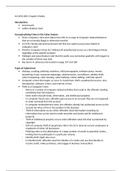
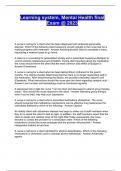
NRSG 3200 FINAL QUESTIONS WITH DETAILED
VERIFIED ANSWERS (100% CORRECT ANSWERS)
/ALREADY GRADED A+
Ways to maintain confidentiality
Ans: HIPPA, confidentiality agreements, closing charts when leaving
computer, and training.
Difference between justice and veracity, examples
Ans: Justice is fairness Veracity: truth
Difference between assault and battery
Ans: Assault: Verbal abuse/threats Battery: Physical abuse/harm and injury
RN role with obtaining consents
Ans: Only witness
Rules of proper delegation and prioritization
Ans: Delegation: RN delegate to other RN, LPN, or CNA. Tasks need to remain
in the scope of practice for each person. RN is the only one to assess.
Prioritization: Deciding what/who needs to be done/seen first.
Examples of ethical dilemmas in every day nursing, what is our role and
obligation?
Sunday, 02 March 2025
,Ans: Patient freedom vs. nurse control Advocate for the patient and let them
make choices, but also be there to support them and help them do what is
best. Pediatric patients
What is professionalism in nursing
Ans: Your professionalism will be judged in your personal behaviors and how
you present yourself to all those around you, and through those behaviors,
you tell the world who you are. Components of your professionalism include
your attitude, your appearance and your willingness to help others
Bipolar disorder: characteristics and nursing interventions
Ans: S/S: mood swings from profound depression to extreme euphoria with
intervening periods of normalcy. NI: Encourage therapies, ECT, give lithium
(and watch for toxicity)
Delirium: causes, manifestations, nursing interventions
Ans: Causes: serious medical, surgical, or neurological conditions. (falls,
elder abuse, medications/withdrawal, alcohol, cannabis). Hypoxia, anoxia,
diabetic problems, and electrolyte imbalances. CM: Confusion, excitement,
disorientation, and a clouding of consciousness. NI: Treat the underlying
cause.
how does delirium differ from dementia?
Ans: Delirium has a quick onset and is a mental state characterized by a
disturbance of cognition, which is manifested by confusion, excitement,
disorientation, and a clouding of consciousness. Hallucinations and illusions
are common.
Examstudy - Stuvia US
,Nursing interventions in patients displaying signs of depression
Ans: Therapies, MAOI's (used when other drugs have failed), TCA's (used less
because they produce severe side effects at high doses), SSRI's (stops
obsessive thought and gets rid of depression and anxiety), Heterocyclics
(patient can become suicide-prone) Serotonin (helps control anxiety and
depression),
Difference between major depressive disorder and dysthymia
Ans: MDD is having a depressed mood or loss of interest in daily activities for
at least 2 weeks with a SIGNIFICANT change in person's normal mood.
Dysthymia is milder to MDD, and is being "down in the dumps" or chronically
depressed and just sad for most of the day and it happens more days than
not.
Signs and symptoms of serotonin syndrome
Ans: Confusion, agitation, dilated pupils, headache, changes in BP,
nausea/vomiting, diarrhea, tachycardia, tremors, loss of muscle control and
heavy sweating.
Nursing consideration and lithium administration
Ans: toxicity - Can happen from taking too much lithium when treating
depression/anxiety. s/s= diarrhea, vomiting, anorexia, muscle weakness,
lethargy, giddiness, milk shakiness. Monitor levels and administer slowly
Examstudy - Stuvia US
, Erikson's theory of psychosocial development - stages (name, stage of
life, age)
Ans: Infancy Birth- 18 months, Trust vs. Mistrust, Hope, Emotional
dissatisfaction with self and others. Early Childhood 18 months- 3 years,
Autonomy vs. shame and doubt, Will, Lack of self-confidence.Late
Childhood, 3 - 6 years, Initiative vs. guilt, Purpose, Feelings of inadequacy
and a sense of defeat. School Age, 6 - 12 year, Industry vs. inferiority,
Competence+ Difficulty in interpersonal relationships because of feelings of
personal inadequacy. Adolescence, 12 - 20 years, Identity vs. Role confusion
Fidelity, Sense of self-consciousness, doubt, and confusion about one's role in
life. Young Adulthood, 20 - 30 years, Intimacy vs. isolation, Love , Withdrawal,
social isolation, and aloneness. Adulthood, 30 - 65 years, Generativity vs.
stagnation, Care Lack of concern for the welfare of others and total
preoccupation with the self. Old Age 65 - death, Ego integrity vs. despair,
Wisdom, Sense of self-contempt and disgust with how life has progressed.
Characterize disorders and symptomatology for personality disorders
by clusters
Ans: Odd and eccentric: Mistrusting, social withdrawal, discomfort with
human interaction, suspiciousness, and overly sensitive. Erratic and dramatic:
Socially irresponsible, guiltless, disregard for others rights, highly impulsive,
excessive emotionally, attention-seeking, excitable, emotional, dramatic.
Fearful and avoidant: Socially withdrawn, clinging with fears of separation,
pattern of perfectionism with inflexibility.
What are successful outcomes for each type of personality disorder?
Include nursing interventions
Examstudy - Stuvia US