Abduction and Adduction Anatomy Quiz
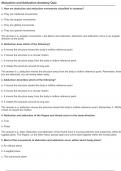
1. How are abduction and adduction movements classified in anatomy?
a. They are rotational movements
b. They are angular movements
c. They are gliding movements
d. They are special movements
The answer is b, angular movements. Like flexion and extension, abduction and adduction move in an angular
direction at the joints.
2. Abduction does which of the following?
a. It moves the structure toward the body’s midline reference point
b. It moves the structure in a circular motion
c. It moves the structure away from the body’s midline reference point
d. It rotates the structure around its long axis
The answer is c, abduction moves the structure away from the body’s midline reference point. Remember, when
you are abducted, you are being taken away.
3. Adduction describes which of the following?
a. It moves the structure toward the body’s midline reference point
b. It moves the structure in a circular motion
c. It moves the structure away from the body’s midline reference point
d. It rotates the structure around its long axis
The answer is a, adduction moves the structure toward the body’s midline reference point. Remember, it “ADDs
it back to toward the midline.
4. Abduction and adduction of the fingers and thumb occur in the same direction.
a. True
b. False
The answer is b, false. Abduction and adduction of the thumb have it moving anteriorly and posteriorly, within th
sagittal plane. The fingers, on the other hand, spread apart and come back together within the frontal plane.
5. Most of the movements of abduction and adduction occur within which body plane?
a. An oblique plane
b. A sagittal plane
c. The transverse plane
1. How are abduction and adduction movements classified in anatomy?
a. They are rotational movements
b. They are angular movements
c. They are gliding movements
d. They are special movements
The answer is b, angular movements. Like flexion and extension, abduction and adduction move in an angular
direction at the joints.
2. Abduction does which of the following?
a. It moves the structure toward the body’s midline reference point
b. It moves the structure in a circular motion
c. It moves the structure away from the body’s midline reference point
d. It rotates the structure around its long axis
The answer is c, abduction moves the structure away from the body’s midline reference point. Remember, when
you are abducted, you are being taken away.
3. Adduction describes which of the following?
a. It moves the structure toward the body’s midline reference point
b. It moves the structure in a circular motion
c. It moves the structure away from the body’s midline reference point
d. It rotates the structure around its long axis
The answer is a, adduction moves the structure toward the body’s midline reference point. Remember, it “ADDs
it back to toward the midline.
4. Abduction and adduction of the fingers and thumb occur in the same direction.
a. True
b. False
The answer is b, false. Abduction and adduction of the thumb have it moving anteriorly and posteriorly, within th
sagittal plane. The fingers, on the other hand, spread apart and come back together within the frontal plane.
5. Most of the movements of abduction and adduction occur within which body plane?
a. An oblique plane
b. A sagittal plane
c. The transverse plane