NURS 230 EXAM 3 questions with complete
solutions already passed
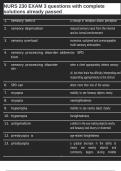
1. sensory deficit a change in reception and/or perception
2. sensory deprivation reduced sensory input from the internal
and ex- ternal environment
3. sensory overload excessive, sustained and unmanageable
multi sensory stimulation
4. sensory processing disorder abbrevia- SPD
tion
5. sensory processing disorder when a client appropriately detects sensory
stim-
uli, but their brain has diflculty interpreting and
responding appropriately to the stimuli
6. SPD can attect more than one of the senses
7. myopia inability to see faraway objects clearly
8. myopia nearsightedness
9. hyperopia inability to see nearby object clearly
10. hyperopia farsightedness
11. astigmatism a defect in the eye making objects nearby
and faraway look blurry or distorted
12. presbyopia is age-related farsightedness
13. presbyopia a gradual decrease in the ability to
clearly see nearby objects and
commonly begins during middle
1/
33
,NURS 230 EXAM 3 questions with complete
solutions already passed
adulthood
14. presbyopia
2/
33
,NURS 230 EXAM 3 questions with complete
solutions already passed
caused by the loss of flexibility of the lens of the
eye due to aging
15. cataract a clouding of the lens of the eye that causes
the client's vision to be blurry, hazy, or less
colorful
16. cataracts develop slowly and may occur in one or both
eyes
17. diabetic retinopathy damage to the blood vessels of the retinna,
lead- ing to blood leaking from the vessels
18. diabetic retinopathy most common cause of impaired
vision and blindness during
adulthood
19. glaucoma an increase in intraocular pressure due to
the buildup of fluid, or aqeuous humor,
that causes compression of the optic
nerve
20. one of the first manifestations glaucoma
of
is the loss of peripheral
vision
21. macular degeneration attects the macula
22. macular degeneration degeneration of the macula leads to a
loss of central vision as clients age
23. tinnitus the experience of hearing sound when no
3/
33
, NURS 230 EXAM 3 questions with complete
solutions already passed
exter- nal sound is present
24. tinnitus generally caused by age-related hearing
loss, an injury to the ear, cerumen
blockage, or a problem with the circulatory
system
25. SNHL
4/
33
solutions already passed
1. sensory deficit a change in reception and/or perception
2. sensory deprivation reduced sensory input from the internal
and ex- ternal environment
3. sensory overload excessive, sustained and unmanageable
multi sensory stimulation
4. sensory processing disorder abbrevia- SPD
tion
5. sensory processing disorder when a client appropriately detects sensory
stim-
uli, but their brain has diflculty interpreting and
responding appropriately to the stimuli
6. SPD can attect more than one of the senses
7. myopia inability to see faraway objects clearly
8. myopia nearsightedness
9. hyperopia inability to see nearby object clearly
10. hyperopia farsightedness
11. astigmatism a defect in the eye making objects nearby
and faraway look blurry or distorted
12. presbyopia is age-related farsightedness
13. presbyopia a gradual decrease in the ability to
clearly see nearby objects and
commonly begins during middle
1/
33
,NURS 230 EXAM 3 questions with complete
solutions already passed
adulthood
14. presbyopia
2/
33
,NURS 230 EXAM 3 questions with complete
solutions already passed
caused by the loss of flexibility of the lens of the
eye due to aging
15. cataract a clouding of the lens of the eye that causes
the client's vision to be blurry, hazy, or less
colorful
16. cataracts develop slowly and may occur in one or both
eyes
17. diabetic retinopathy damage to the blood vessels of the retinna,
lead- ing to blood leaking from the vessels
18. diabetic retinopathy most common cause of impaired
vision and blindness during
adulthood
19. glaucoma an increase in intraocular pressure due to
the buildup of fluid, or aqeuous humor,
that causes compression of the optic
nerve
20. one of the first manifestations glaucoma
of
is the loss of peripheral
vision
21. macular degeneration attects the macula
22. macular degeneration degeneration of the macula leads to a
loss of central vision as clients age
23. tinnitus the experience of hearing sound when no
3/
33
, NURS 230 EXAM 3 questions with complete
solutions already passed
exter- nal sound is present
24. tinnitus generally caused by age-related hearing
loss, an injury to the ear, cerumen
blockage, or a problem with the circulatory
system
25. SNHL
4/
33