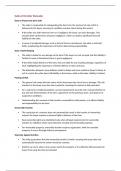
Duties of the Seller (Naturalia)
Duty to Protect the Item Sold
The seller is responsible for safeguarding the item from the moment of sale until it is
delivered to the buyer, ensuring its condition remains intact during this period.
If the seller acts with intent to harm or is negligent, the buyer can claim damages. This
includes both carelessness and gross negligence, which can lead to significant financial
liability for the seller.
In cases of accidental damage, such as Acts of God or coincidences, the seller is not held
liable, emphasizing the importance of fault in determining responsibility.
Duty of Safe-Keeping
The seller is liable for any damage to the item if the buyer has not yet paid, but this liability is
limited to cases of intentional harm or gross negligence.
If the seller delays delivery of the item, they are liable for any resulting damage, regardless of
fault, highlighting the importance of timely delivery in sales contracts.
The distinction between mora debitoris (seller's delay) and mora creditoris (buyer's failure to
act) is crucial; the seller bears full liability in the former, while in the latter, liability is limited.
Passing of Risk
The general rule states that the owner of the item bears the risk of loss or damage. This risk
transfers to the buyer once the sale is perfecta, meaning the contract is fully executed.
For a sale to be considered perfecta, several requirements must be met: mutual intention to
buy and sell, determination of the item, agreement on the purchase price, and absence of
suspensive conditions.
Understanding the moment of risk transfer is essential for both parties, as it affects liability
and responsibility for the item.
Ownership Transfer
The conclusion of a contract does not automatically result in the transfer of ownership;
instead, the buyer acquires a personal right to delivery of the item.
Real ownership rights are established only when all legal requirements for ownership
transfer are satisfied, which varies between movable and immovable property.
For immovable property, ownership transfer requires registration, while for movable
property, it occurs through delivery and payment.
Warranty Against Eviction
The seller guarantees that the ownership transfer is lawful, meaning the buyer does not
automatically become the owner merely by contract.
Eviction can occur when a true owner claims the property or if a defective title prevents the
buyer from using the item as intended.
Duty to Protect the Item Sold
The seller is responsible for safeguarding the item from the moment of sale until it is
delivered to the buyer, ensuring its condition remains intact during this period.
If the seller acts with intent to harm or is negligent, the buyer can claim damages. This
includes both carelessness and gross negligence, which can lead to significant financial
liability for the seller.
In cases of accidental damage, such as Acts of God or coincidences, the seller is not held
liable, emphasizing the importance of fault in determining responsibility.
Duty of Safe-Keeping
The seller is liable for any damage to the item if the buyer has not yet paid, but this liability is
limited to cases of intentional harm or gross negligence.
If the seller delays delivery of the item, they are liable for any resulting damage, regardless of
fault, highlighting the importance of timely delivery in sales contracts.
The distinction between mora debitoris (seller's delay) and mora creditoris (buyer's failure to
act) is crucial; the seller bears full liability in the former, while in the latter, liability is limited.
Passing of Risk
The general rule states that the owner of the item bears the risk of loss or damage. This risk
transfers to the buyer once the sale is perfecta, meaning the contract is fully executed.
For a sale to be considered perfecta, several requirements must be met: mutual intention to
buy and sell, determination of the item, agreement on the purchase price, and absence of
suspensive conditions.
Understanding the moment of risk transfer is essential for both parties, as it affects liability
and responsibility for the item.
Ownership Transfer
The conclusion of a contract does not automatically result in the transfer of ownership;
instead, the buyer acquires a personal right to delivery of the item.
Real ownership rights are established only when all legal requirements for ownership
transfer are satisfied, which varies between movable and immovable property.
For immovable property, ownership transfer requires registration, while for movable
property, it occurs through delivery and payment.
Warranty Against Eviction
The seller guarantees that the ownership transfer is lawful, meaning the buyer does not
automatically become the owner merely by contract.
Eviction can occur when a true owner claims the property or if a defective title prevents the
buyer from using the item as intended.