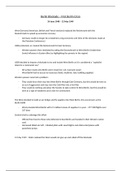
Berlin Blockade – First Berlin Crisis
24 June 1948 – 12 May 1949
West Germany (American, British and French sections) replaced the Reichsmark with the
Deutschmark to speed up economic recovery
- Germany could no longer be considered a sing economic unit (One of the decisions made at
the Potsdam Conference)
USSR protested, so created the Rentenmark for East Germany
- Western powers then retaliated by taking the Deutschmark to West Berlin (Undermine
Soviet influence in Eastern Bloc by highlighting the poverty in the region)
USSR decided to impose a blockade to try and isolate West Berlin as it is considered a “capitalist
island in a communist sea”
- All surface routes into Berlin were closed (ie: rail, road and canal)
- West Berlin had no access to resources (food, medicine, fuel, building supplies)
Western powers now had a problem:
- They could force their way into West Berlin through East Germany, but this would be seen as
an act of aggression and may turn the Cold War into a Hot War
- They could do nothing and allow the Soviets to take control fo West Berlin, but this would be
seen as a sign of weakness and a win for communism
The West decided to build an air bridge and fly supplies into West Berlin, this was known as the
Berlin Airlift
- West provided West Berlin with 2.5 million tonnes of supplies in a year – 277 000 flights over
327 days
Soviets tried to sabotage this effort
- Offered free food to those who defected to East Berlin and handed in their Western ration
card
- Harrassed Allied aircraft – blinded pilots with searchlights and obstructed planes with
parachute jumps
12 May 1949 – Stalin realised the West would not give up and called off the blockade
, Significance: Solidified the divide between Eastern and Western Germany (USA and USSR division
cemented)
West Germany became the German Federal Republic (GFR)
- Capital = Bonn
- Leader = Konrad Adenauer
East Germany became the German Democratic Republic (GDR)
- Capital = East Berlin
- Leader = Walter Ulbricht
USA decided they wanted to remain active in world affairs (ie: continue being a superpower) and
established NATO in 1949
This situation began a pattern for the Cold War – confrontation brought to the brink but no one is
willing to go to war (AKA: Brinkmanship)
The Blockade meant that Berlin became a flashpoint (potentially volatile area) in the Cold War
24 June 1948 – 12 May 1949
West Germany (American, British and French sections) replaced the Reichsmark with the
Deutschmark to speed up economic recovery
- Germany could no longer be considered a sing economic unit (One of the decisions made at
the Potsdam Conference)
USSR protested, so created the Rentenmark for East Germany
- Western powers then retaliated by taking the Deutschmark to West Berlin (Undermine
Soviet influence in Eastern Bloc by highlighting the poverty in the region)
USSR decided to impose a blockade to try and isolate West Berlin as it is considered a “capitalist
island in a communist sea”
- All surface routes into Berlin were closed (ie: rail, road and canal)
- West Berlin had no access to resources (food, medicine, fuel, building supplies)
Western powers now had a problem:
- They could force their way into West Berlin through East Germany, but this would be seen as
an act of aggression and may turn the Cold War into a Hot War
- They could do nothing and allow the Soviets to take control fo West Berlin, but this would be
seen as a sign of weakness and a win for communism
The West decided to build an air bridge and fly supplies into West Berlin, this was known as the
Berlin Airlift
- West provided West Berlin with 2.5 million tonnes of supplies in a year – 277 000 flights over
327 days
Soviets tried to sabotage this effort
- Offered free food to those who defected to East Berlin and handed in their Western ration
card
- Harrassed Allied aircraft – blinded pilots with searchlights and obstructed planes with
parachute jumps
12 May 1949 – Stalin realised the West would not give up and called off the blockade
, Significance: Solidified the divide between Eastern and Western Germany (USA and USSR division
cemented)
West Germany became the German Federal Republic (GFR)
- Capital = Bonn
- Leader = Konrad Adenauer
East Germany became the German Democratic Republic (GDR)
- Capital = East Berlin
- Leader = Walter Ulbricht
USA decided they wanted to remain active in world affairs (ie: continue being a superpower) and
established NATO in 1949
This situation began a pattern for the Cold War – confrontation brought to the brink but no one is
willing to go to war (AKA: Brinkmanship)
The Blockade meant that Berlin became a flashpoint (potentially volatile area) in the Cold War