Forgetting, Memory Construction, and Improving Memory
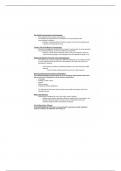
Forgetting
● Anterograde amnesia is the inability to form new memories
● Retrograde amnesia is an inability to retrieve information from one's past.
● Encoding failures explain that much of what we sense we never notice.
○ Example: Your friend doesn’t remember that Motorola produced
the first handheld cell phone in 1973 because she was posting on
Facebook during her professor’s lecture.
● Retrieval failure is an inability to access information in long-term memory.
○ Example: You see a fellow student at the local store. You’re sure
you know their name but aren’t able to recall it.
● The tip-of-the-tongue forgetting experienced most often by older adults
can best be explained in terms of the greater difficulty older people have with
retrieval.
○ Example: When you applied for a passport, you were embarrassed
by a momentary inability to remember your home address
● Proactive interference is the disruptive effect of prior learning on the recall
of new information.
○ Example: When trying to log in to your online class, you can’t
seem to remember your new password and you keep entering the
password you used last semester.
● Retroactive interference refers to the disruptive effect of new learning on
the recall of previously learned material.
○ Example: Your friend took French classes in high school and is
now taking Spanish in college. When asked to speak French, it
seems that he now confuses it with Spanish.
● Repression most clearly involves a failure in retrieval.
○ Example: In thinking about his high school and college years, your
brother is able to recall the names of all his instructors except the
tenth-grade English teacher who gave him a grade of D.
Memory construction errors
Forgetting
● Anterograde amnesia is the inability to form new memories
● Retrograde amnesia is an inability to retrieve information from one's past.
● Encoding failures explain that much of what we sense we never notice.
○ Example: Your friend doesn’t remember that Motorola produced
the first handheld cell phone in 1973 because she was posting on
Facebook during her professor’s lecture.
● Retrieval failure is an inability to access information in long-term memory.
○ Example: You see a fellow student at the local store. You’re sure
you know their name but aren’t able to recall it.
● The tip-of-the-tongue forgetting experienced most often by older adults
can best be explained in terms of the greater difficulty older people have with
retrieval.
○ Example: When you applied for a passport, you were embarrassed
by a momentary inability to remember your home address
● Proactive interference is the disruptive effect of prior learning on the recall
of new information.
○ Example: When trying to log in to your online class, you can’t
seem to remember your new password and you keep entering the
password you used last semester.
● Retroactive interference refers to the disruptive effect of new learning on
the recall of previously learned material.
○ Example: Your friend took French classes in high school and is
now taking Spanish in college. When asked to speak French, it
seems that he now confuses it with Spanish.
● Repression most clearly involves a failure in retrieval.
○ Example: In thinking about his high school and college years, your
brother is able to recall the names of all his instructors except the
tenth-grade English teacher who gave him a grade of D.
Memory construction errors