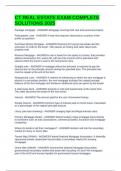
CT REAL ESTATE EXAM COMPLETE
SOLUTIONS 2025
Package mortgage - ANSWER-Mortgage covering both real and personal property
Participation Loan - ANSWER-A loan that requires interest plus a portion of the
profits as payment
Purchase Money Mortgage - ANSWER-financing for buying real estate and the
extension of credit to the buyer. Title passes at closing and seller takes back
property note
Reverse Mortgage - ANSWER-Loan is based on the equity in a home, that provides
elderly homeowners 62+ years old, with tax-free income and is paid back with
interest when the home is sold or the homeowner dies.
Straight note - ANSWER-A mortgage where the borrower is required to pay the
interest due on the principle amount during the specified term. The principle loan
must be repaid at the end of the term.
Wraparound Loan - ANSWER-A method of refinancing in which the new mortgage is
placed in a secondary position. the new mortgage includes the unpaid principal
balance of the first mortgage and whatever additional sums are given by the lender
A Sale lease back - ANSWER-property is sold and leased back at the same time.
The seller becomes the tenant of the new owner
Interest - ANSWER-The amount paid for the use of borrowed money.
Simple interest - ANSWER-Common type of interest paid on home loans. Calculated
as a percentage of the original principal amount
Usury (aka loan sharking) - ANSWER-charging high and illegal interest rates.
Primary Mortgage Market - ANSWER-Where lenders make mortgage loans directly
to borrowers such as loan associations, commercial banks, insurance and mortgage
companies.
Where do lenders sell their mortgages? - ANSWER-lenders sell into the secondary
market to Fanny or Ginny Mae
Fannie Mae (FNMA) - ANSWER-Federal National Mortgage Association. A federally-
sponsored private corporation that provides a secondary market for housing
mortgages.
Ginny Mae (GNMA) - ANSWER-Government National Mortgage Association.
governmental secondary market that deals with recycling VA and FHA mortgages.
part of the HUD and insures liquidity for government-issued mortgages
, The Savings and Loan Association - ANSWER-state or federally- chartered
middleman that accepts deposits from the public and invests funds in residential
mortgage loans
Insurance companies - ANSWER-prefer income-producing properties and long term
industrial properties. They demand a participation loan of interest plus a portion of
profit
Mortgage Broker - ANSWER-brings together lender and borrower for a fee. Creates
loans
Secondary Market - ANSWER-where lenders and investors buy and sell existing
mortgages. It is the resale market place for loans. Frees up funds for more mortgage
lending
FHA loans - ANSWER-Fixed or adjustable-rate loans insured by the HUD. Designed
to make housing more affordable for first time home buyers. Permit a lower down
payment than conventional loans. Single family homes or 1-4 unit condo
communities are eligible. loans are fully amortized
Conventional loan - ANSWER-not insured or guaranteed by the government
VA loan - ANSWER-used to buy a home, condo or townhouse. OR you can build a
home, make home improvements or refinance your mortgage. Loan rates are lower
interest rates than conventional loans and closing costs are low
Trust deed - ANSWER-Three-party system of securing a promissory note with a
Trustor, Trustee and beneficiary.
-Trustor: borrower with equitable title sings deed to give legal title to the trustee
-trustee recieves that legal title and holds onto it for the beneficiary
-beneficiary is the lender
Trustee in a trust deed - ANSWER-A title insurance company or attorney. the neutral
third party that receives legal title from trustor (borrower) and holds it for the trustee
(lender)
Equitable title - ANSWER-the right to possession and to acquire legal title once one
condition has been met such as paying off loan
Reconveyence deed - ANSWER-used with a trust deed to clear title of any liens
related to the note. It's evidence that you do not owe any more money
A Mortgage - ANSWER-A pledge of property to the lender as security on the
payment of a debt
Steps for Securing a Mortgage - ANSWER-qualifying a buyer by securing a credit
report and history of employment, good debt to income ratio, and appraising the
property
SOLUTIONS 2025
Package mortgage - ANSWER-Mortgage covering both real and personal property
Participation Loan - ANSWER-A loan that requires interest plus a portion of the
profits as payment
Purchase Money Mortgage - ANSWER-financing for buying real estate and the
extension of credit to the buyer. Title passes at closing and seller takes back
property note
Reverse Mortgage - ANSWER-Loan is based on the equity in a home, that provides
elderly homeowners 62+ years old, with tax-free income and is paid back with
interest when the home is sold or the homeowner dies.
Straight note - ANSWER-A mortgage where the borrower is required to pay the
interest due on the principle amount during the specified term. The principle loan
must be repaid at the end of the term.
Wraparound Loan - ANSWER-A method of refinancing in which the new mortgage is
placed in a secondary position. the new mortgage includes the unpaid principal
balance of the first mortgage and whatever additional sums are given by the lender
A Sale lease back - ANSWER-property is sold and leased back at the same time.
The seller becomes the tenant of the new owner
Interest - ANSWER-The amount paid for the use of borrowed money.
Simple interest - ANSWER-Common type of interest paid on home loans. Calculated
as a percentage of the original principal amount
Usury (aka loan sharking) - ANSWER-charging high and illegal interest rates.
Primary Mortgage Market - ANSWER-Where lenders make mortgage loans directly
to borrowers such as loan associations, commercial banks, insurance and mortgage
companies.
Where do lenders sell their mortgages? - ANSWER-lenders sell into the secondary
market to Fanny or Ginny Mae
Fannie Mae (FNMA) - ANSWER-Federal National Mortgage Association. A federally-
sponsored private corporation that provides a secondary market for housing
mortgages.
Ginny Mae (GNMA) - ANSWER-Government National Mortgage Association.
governmental secondary market that deals with recycling VA and FHA mortgages.
part of the HUD and insures liquidity for government-issued mortgages
, The Savings and Loan Association - ANSWER-state or federally- chartered
middleman that accepts deposits from the public and invests funds in residential
mortgage loans
Insurance companies - ANSWER-prefer income-producing properties and long term
industrial properties. They demand a participation loan of interest plus a portion of
profit
Mortgage Broker - ANSWER-brings together lender and borrower for a fee. Creates
loans
Secondary Market - ANSWER-where lenders and investors buy and sell existing
mortgages. It is the resale market place for loans. Frees up funds for more mortgage
lending
FHA loans - ANSWER-Fixed or adjustable-rate loans insured by the HUD. Designed
to make housing more affordable for first time home buyers. Permit a lower down
payment than conventional loans. Single family homes or 1-4 unit condo
communities are eligible. loans are fully amortized
Conventional loan - ANSWER-not insured or guaranteed by the government
VA loan - ANSWER-used to buy a home, condo or townhouse. OR you can build a
home, make home improvements or refinance your mortgage. Loan rates are lower
interest rates than conventional loans and closing costs are low
Trust deed - ANSWER-Three-party system of securing a promissory note with a
Trustor, Trustee and beneficiary.
-Trustor: borrower with equitable title sings deed to give legal title to the trustee
-trustee recieves that legal title and holds onto it for the beneficiary
-beneficiary is the lender
Trustee in a trust deed - ANSWER-A title insurance company or attorney. the neutral
third party that receives legal title from trustor (borrower) and holds it for the trustee
(lender)
Equitable title - ANSWER-the right to possession and to acquire legal title once one
condition has been met such as paying off loan
Reconveyence deed - ANSWER-used with a trust deed to clear title of any liens
related to the note. It's evidence that you do not owe any more money
A Mortgage - ANSWER-A pledge of property to the lender as security on the
payment of a debt
Steps for Securing a Mortgage - ANSWER-qualifying a buyer by securing a credit
report and history of employment, good debt to income ratio, and appraising the
property