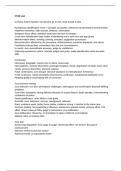
Ch12 Law
Criminal Justice System: low percent go to trial, most accept a plea
Eyewitness Identification: error = wrongful accusation, influences by personal & environmental
Imperfect memories: high arousal, distance, intoxication
Weapons focus effect: attention away from the face to weapon
Cross race identification bias: better at identifying one’s own race and age group
Misinformation effect: wording, priming, stressed, suggestive procedures
Reconstruction: affected by the procedure, distinctiveness, emotions displayed, and stress
Familiarity-induced bias: remembers face but not circumstances
In courts: Jury overestimate accuracy, judge by confidence
Improving eyewitness justice: educate judges and juries, make identification more accurate
Alibi
Confession
Interviews: polygraph: cannot rely on alone, inaccurate
Interrogations: sensory discomfort, prolonged isolation, threat, deprivation of sleep, food, other
needs, sensory discomfort, physical violence
False confessions: 1) to escape stressful situations 2) internalization 3) leniency
In the courtroom: Juries powerfully influenced by confession, fundamental attribution error.
Pleading guilty to avoid taking risk of conviction
Jury Decision making
Jury selection: voir dire, peremptory challenges: stereotypes and confirmation bias/self-fulfilling
prophecy
Juror Bias: sympathy, strong defense because of a good lawyer, death penalty, overestimating
confidence of police...
Death qualification: more likely to vote guilty
Scientific Juror Selection: surveys, background, attitudes
Race: evidence weak, prefer those similar; evidence strong = harsher to the same race
Decision making: Non-evidentiary influence: exposure to pretrial stories, primacy effect, CSI
effect, doesn’t always follow judge’s instructions: jury nullification
Jury deliberation: hierarchy, 1) orientation 2) open conflict 3) reconciliation
Majority rules vs leniency bias
Post-trial
Sentencing disparities: from judge to judge; anchoring effect, too lenient, the goal of
imprisonment
Decision control & process control
Adversal model vs inquisitorial model
Criminal Justice System: low percent go to trial, most accept a plea
Eyewitness Identification: error = wrongful accusation, influences by personal & environmental
Imperfect memories: high arousal, distance, intoxication
Weapons focus effect: attention away from the face to weapon
Cross race identification bias: better at identifying one’s own race and age group
Misinformation effect: wording, priming, stressed, suggestive procedures
Reconstruction: affected by the procedure, distinctiveness, emotions displayed, and stress
Familiarity-induced bias: remembers face but not circumstances
In courts: Jury overestimate accuracy, judge by confidence
Improving eyewitness justice: educate judges and juries, make identification more accurate
Alibi
Confession
Interviews: polygraph: cannot rely on alone, inaccurate
Interrogations: sensory discomfort, prolonged isolation, threat, deprivation of sleep, food, other
needs, sensory discomfort, physical violence
False confessions: 1) to escape stressful situations 2) internalization 3) leniency
In the courtroom: Juries powerfully influenced by confession, fundamental attribution error.
Pleading guilty to avoid taking risk of conviction
Jury Decision making
Jury selection: voir dire, peremptory challenges: stereotypes and confirmation bias/self-fulfilling
prophecy
Juror Bias: sympathy, strong defense because of a good lawyer, death penalty, overestimating
confidence of police...
Death qualification: more likely to vote guilty
Scientific Juror Selection: surveys, background, attitudes
Race: evidence weak, prefer those similar; evidence strong = harsher to the same race
Decision making: Non-evidentiary influence: exposure to pretrial stories, primacy effect, CSI
effect, doesn’t always follow judge’s instructions: jury nullification
Jury deliberation: hierarchy, 1) orientation 2) open conflict 3) reconciliation
Majority rules vs leniency bias
Post-trial
Sentencing disparities: from judge to judge; anchoring effect, too lenient, the goal of
imprisonment
Decision control & process control
Adversal model vs inquisitorial model