//
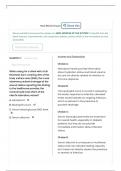
Hesi RN Exit Exam Share this
We are excited to announce the release of a NEW VERSION OF THE SYSTEM! To benefit from the
latest features, improvements, and component updates, please switch to the new system as soon
as possible.
Visit Latest Version
Answer and Explanation
Question 1: Report an Issue
Report Wrong Answer
Choice A:
Hematocrit levels provide information
While caring for a client with a full about hydration status and blood volume
thickness burn covering 40% of the but are not directly related to infection or
body surface area (BSA), the nurse immune response.
observes purulent drainage at the
wound. Before reporting this finding Choice B:
to the healthcare provider, the
nurse should note which of the The neutrophil count is crucial in assessing
client's laboratory values? the body's response to infection; elevated
levels would indicate an ongoing infection,
A. Hematocrit. which is relevant in the presence of
B. Neutrophil count. purulent drainage.
C. Serum blood glucose (BG) level.
Choice C:
D. Serum albumin. Serum blood glucose levels are important
for overall health, especially in diabetic
patients, but they do not provide
immediate information about infection
status.
Choice D:
Serum albumin is a measure of nutritional
status and can indicate healing capacity,
but it does not directly assess the presence
or severity of infection.
, Discussion Section
M Share insights...
0 Pulse Checks
No comments
Answer and Explanation
Question 2: Report an Issue
Report Wrong Answer
Choice A:
Shaking the inhaler is a proper practice to
A client with chronic obstructive ensure the medication is well mixed, so this
pulmonary disease (COPD) smokes statement does not indicate improper use.
two packs of cigarettes per day
and is admitted to the hospital for Choice B:
a respiratory infection. The client
reports difficulty controlling Squeezing the inhaler and swallowing
respiratory distress at home when indicates confusion about the inhaler’s use;
using the rescue inhaler. Which however, this does not indicate immediate
comment from the client indicates improper use.
to the nurse that the client is not
using the inhaler properly? Choice C:
A. "I always shake the inhaler Only using the inhaler when feeling short of
several times before I start." breath suggests the client is not using the
rescue inhaler proactively, which can lead
B. "After I squeeze the inhaler and
to worsened respiratory distress.
swallow, I always feel a slight wave
of nausea, but it goes away."
Choice D:
C. "I never use the inhaler unless I
Difficulty inhaling and holding breath can
am feeling really short of breath."
indicate technique issues, but the effort to
do their best shows an awareness of the
D. "I have a hard time inhaling and need to use the inhaler.
holding my breath after I squeeze
the inhaler, but I do my best."
Discussion Section
M Share insights...
0 Pulse Checks
No comments
, Answer and Explanation
Question 3: Report an Issue
Report Wrong Answer
Choice A:
While encouraging relaxation techniques
When the nurse attempts to teach can be helpful, the client’s immediate
self-administration of insulin expression of frustration indicates a need
injections to a client who is newly for the nurse to respect their request.
diagnosed with type 1 diabetes
mellitus (DM), the client tells the Choice B:
nurse in a loud voice to leave the
room. Which action should the Referring the client to a social worker may
nurse take? be beneficial in the long term but does not
address the immediate situation.
A. Encourage client to implement
relaxation techniques.
Choice C:
B. Refer client to the social worker
Leaving the client’s room and returning
for support therapy.
later respects the client's wishes and
C. Leave the client's room and allows for a more conducive environment
return later in the day. for teaching when the client is ready.
D. Explain that insulin is a life-
saving drug for the client. Choice D:
Explaining the importance of insulin may
not be effective if the client is currently
unwilling to engage in the discussion.
Discussion Section
M Share insights...
0 Pulse Checks
No comments
Answer and Explanation
Question 4: Report an Issue
Choice A:
Report Wrong Answer A full pitcher of water is concerning as
excessive fluid intake can exacerbate heart
A client is admitted with an failure by causing fluid overload, leading to
exacerbation of heart failure worsening edema and respiratory distress.
secondary to chronic obstructive
Choice B:
pulmonary disease (COPD). Which
observation(s) by the nurse require
, immediate intervention to reduce A saline lock is appropriate for maintaining
the likelihood of harm to this client? venous access and does not pose
Select all that apply. immediate harm to the client.
A. A full pitcher of water is on the
Choice C:
bedside table.
A low sodium diet tray is appropriate for
B. A saline lack is present in the
managing heart failure and is beneficial for
right forearm.
this client.
C. A low sodium diet tray was
Choice D:
brought to the room.
A bedside commode positioned near the
D. A bedside commode is
bed can facilitate safe toileting and is not
positioned near the bed.
harmful.
E. The client is lying in a supine
position in bed. Choice E:
Lying in a supine position can increase
venous return and exacerbate heart failure
symptoms; the client may require a more
elevated position to ease breathing and
reduce cardiac workload.
Discussion Section
M Share insights...
0 Pulse Checks
No comments
Answer and Explanation
Question 5: Report an Issue
Report Wrong Answer Choice A:
Assessing the level of consciousness is
A client with metastatic cancer important for monitoring sedation but
who was taking hydromorphone PO does not directly measure pain control.
at home is now receiving the
medication IV while in the hospital. Choice B:
To evaluate if the client is receiving
an equianalgesic dose of the Monitoring respiratory rate is crucial for
hydromorphone, which safety with opioid use, but it does not
assessment should the nurse assess the effectiveness of pain relief.
complete?
Choice C:
A. Level of consciousness.
Hesi RN Exit Exam Share this
We are excited to announce the release of a NEW VERSION OF THE SYSTEM! To benefit from the
latest features, improvements, and component updates, please switch to the new system as soon
as possible.
Visit Latest Version
Answer and Explanation
Question 1: Report an Issue
Report Wrong Answer
Choice A:
Hematocrit levels provide information
While caring for a client with a full about hydration status and blood volume
thickness burn covering 40% of the but are not directly related to infection or
body surface area (BSA), the nurse immune response.
observes purulent drainage at the
wound. Before reporting this finding Choice B:
to the healthcare provider, the
nurse should note which of the The neutrophil count is crucial in assessing
client's laboratory values? the body's response to infection; elevated
levels would indicate an ongoing infection,
A. Hematocrit. which is relevant in the presence of
B. Neutrophil count. purulent drainage.
C. Serum blood glucose (BG) level.
Choice C:
D. Serum albumin. Serum blood glucose levels are important
for overall health, especially in diabetic
patients, but they do not provide
immediate information about infection
status.
Choice D:
Serum albumin is a measure of nutritional
status and can indicate healing capacity,
but it does not directly assess the presence
or severity of infection.
, Discussion Section
M Share insights...
0 Pulse Checks
No comments
Answer and Explanation
Question 2: Report an Issue
Report Wrong Answer
Choice A:
Shaking the inhaler is a proper practice to
A client with chronic obstructive ensure the medication is well mixed, so this
pulmonary disease (COPD) smokes statement does not indicate improper use.
two packs of cigarettes per day
and is admitted to the hospital for Choice B:
a respiratory infection. The client
reports difficulty controlling Squeezing the inhaler and swallowing
respiratory distress at home when indicates confusion about the inhaler’s use;
using the rescue inhaler. Which however, this does not indicate immediate
comment from the client indicates improper use.
to the nurse that the client is not
using the inhaler properly? Choice C:
A. "I always shake the inhaler Only using the inhaler when feeling short of
several times before I start." breath suggests the client is not using the
rescue inhaler proactively, which can lead
B. "After I squeeze the inhaler and
to worsened respiratory distress.
swallow, I always feel a slight wave
of nausea, but it goes away."
Choice D:
C. "I never use the inhaler unless I
Difficulty inhaling and holding breath can
am feeling really short of breath."
indicate technique issues, but the effort to
do their best shows an awareness of the
D. "I have a hard time inhaling and need to use the inhaler.
holding my breath after I squeeze
the inhaler, but I do my best."
Discussion Section
M Share insights...
0 Pulse Checks
No comments
, Answer and Explanation
Question 3: Report an Issue
Report Wrong Answer
Choice A:
While encouraging relaxation techniques
When the nurse attempts to teach can be helpful, the client’s immediate
self-administration of insulin expression of frustration indicates a need
injections to a client who is newly for the nurse to respect their request.
diagnosed with type 1 diabetes
mellitus (DM), the client tells the Choice B:
nurse in a loud voice to leave the
room. Which action should the Referring the client to a social worker may
nurse take? be beneficial in the long term but does not
address the immediate situation.
A. Encourage client to implement
relaxation techniques.
Choice C:
B. Refer client to the social worker
Leaving the client’s room and returning
for support therapy.
later respects the client's wishes and
C. Leave the client's room and allows for a more conducive environment
return later in the day. for teaching when the client is ready.
D. Explain that insulin is a life-
saving drug for the client. Choice D:
Explaining the importance of insulin may
not be effective if the client is currently
unwilling to engage in the discussion.
Discussion Section
M Share insights...
0 Pulse Checks
No comments
Answer and Explanation
Question 4: Report an Issue
Choice A:
Report Wrong Answer A full pitcher of water is concerning as
excessive fluid intake can exacerbate heart
A client is admitted with an failure by causing fluid overload, leading to
exacerbation of heart failure worsening edema and respiratory distress.
secondary to chronic obstructive
Choice B:
pulmonary disease (COPD). Which
observation(s) by the nurse require
, immediate intervention to reduce A saline lock is appropriate for maintaining
the likelihood of harm to this client? venous access and does not pose
Select all that apply. immediate harm to the client.
A. A full pitcher of water is on the
Choice C:
bedside table.
A low sodium diet tray is appropriate for
B. A saline lack is present in the
managing heart failure and is beneficial for
right forearm.
this client.
C. A low sodium diet tray was
Choice D:
brought to the room.
A bedside commode positioned near the
D. A bedside commode is
bed can facilitate safe toileting and is not
positioned near the bed.
harmful.
E. The client is lying in a supine
position in bed. Choice E:
Lying in a supine position can increase
venous return and exacerbate heart failure
symptoms; the client may require a more
elevated position to ease breathing and
reduce cardiac workload.
Discussion Section
M Share insights...
0 Pulse Checks
No comments
Answer and Explanation
Question 5: Report an Issue
Report Wrong Answer Choice A:
Assessing the level of consciousness is
A client with metastatic cancer important for monitoring sedation but
who was taking hydromorphone PO does not directly measure pain control.
at home is now receiving the
medication IV while in the hospital. Choice B:
To evaluate if the client is receiving
an equianalgesic dose of the Monitoring respiratory rate is crucial for
hydromorphone, which safety with opioid use, but it does not
assessment should the nurse assess the effectiveness of pain relief.
complete?
Choice C:
A. Level of consciousness.