//
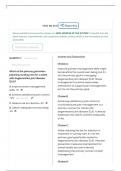
HESI RN EXIT Share this
We are excited to announce the release of a NEW VERSION OF THE SYSTEM! To benefit from the
latest features, improvements, and component updates, please switch to the new system as soon
as possible.
Visit Latest Version
Answer and Explanation
Question 1: Report an Issue
Report Wrong Answer
Choice A:
Improving stress management skills might
Which is the primary goal when be beneficial for overall well-being, but it's
planning nursing care for a client not the primary goal in managing
with degenerative joint disease degenerative joint disease (DJD. Stress
(DJD? management could be asecondary
A. Improve stress management intervention to support pain management,
skills. 7% but it's not the primary goal.
B. Achieve satisfactory pain control.
Choice B:
79% Most selected
Achieving satisfactory pain control is
C. Reduce risk for infection. 8%
crucial because pain management is a
D. Obtain adequate rest and sleep. primary concern for clients with
4% degenerative joint disease (DJD. It directly
addresses the client's comfort andquality
of life.
Choice C:
While reducing the risk for infection is
important in nursing care, it's not the
primary goal specifically related to
degenerative joint disease (DJD. Infection
prevention measures areimportant for
overall health but aren't directly
addressing the primary concern of pain
management.
Choice D:
, Obtaining adequate rest and sleep is
important for overall health, but it's not the
primary goal when planning nursing care
for a client with degenerative joint disease
(DJD. Pain controltypically takes
precedence in the care plan because pain
can significantly impact rest and sleep.
Discussion Section
M Share insights...
0 Pulse Checks
No comments
Answer and Explanation
Question 2: Report an Issue
Report Wrong Answer
Choice A:
Observing body language and movement
The nurse is caring for an older can provide valuable information about
adult client with a history of pain, but it doesn't directly assess the
osteoarthritis who is having quality of the pain. It's more indicative of
difficulty walking because of the client's physical response to pain
increased right knee pain. To rather than the pain itself.
assess the quality of the client's
knee pain, which approach should Choice B:
the nurse use?
Identifying effective pain relief measures is
A. Observe body language and important for pain management but
movement. 1% doesn't directly assess the quality of the
B. Identify effective pain relief pain. This approach focuses on
measures. 2% interventions rather than understanding
the nature of the pain.
C. Provide a numeric pain scale.
10%
Choice C:
D. Ask the client to describe the
pain. 85% Most selected Providing a numeric pain scale can
quantify the intensity of pain, but it doesn't
necessarily assess the quality of the pain.
While useful for tracking pain levels over
time, it doesn't provide insights into the
characteristics or nature of the pain.
Choice D:
, Asking the client to describe the pain
allows for a subjective assessment of its
quality,intensity, duration, and any
associated symptoms. This approach
provides valuable information for tailoring
pain management strategies and
understanding the client's experience.
Discussion Section
M Share insights...
0 Pulse Checks
No comments
Answer and Explanation
Question 3: Report an Issue
Report Wrong Answer
Choice A:
Administering the placebo as prescribed
The health care provider prescribes when the client reports pain is ethically
a placebo instead of pain questionable.Placebos are typically used in
medication. Which intervention research or clinical trials and should not be
should the nurse implement? administered without the client's informed
A. Administer the placebo as consent and understanding.
prescribed when the client reports
pain. 9% Choice B:
B. Tell the charge nurse about the While informing the charge nurse about
prescribed placebo and refuse to the prescribed placebo is appropriate,
administer it. 2% refusing to administer it without further
action may not address the ethical
C. Inform the client that the
concerns surrounding placebo use.
provider prescribed a placebo
instead of pain medication. 6%
Choice C:
D. Discuss ethical concerns about
placebo use with the healthcare Informing the client that the provider
provider. 81% Most selected prescribed a placebo instead of pain
medication is important for transparency
and informed consent. However, this
should be accompanied by discussing the
ethical considerations with the healthcare
provider.
, Choice D:
Discussing ethical concerns about placebo
use with the healthcare provider is the
most appropriate intervention. This ensures
that the nurse advocates for the client's
well-being and addresses any potential
ethical issues surrounding the use of
placebos in pain management.
Discussion Section
M Share insights...
0 Pulse Checks
No comments
Answer and Explanation
Question 4: Report an Issue
Report Wrong Answer
Choice A:
Providing protective undergarments may
An older adult client arrives at the be necessary as a temporary measure to
clinic describing a new onset of manage urinary incontinence, but it does
urinary incontinence. not address the underlying cause. It should
Which intervention should the not be the initial intervention.
nurse implement?
Choice B:
A. Provide protective
undergarments for the client. 1% Encouraging increased fluid intake may
exacerbate urinary incontinence if the
B. Encourage increased fluid intake
cause is related to an overactive bladder
for 24 hours. 0%
or other urinary tract issues. It's important
C. Evaluate the client's response to to determine the cause before
bladder training efforts. 11% recommending changes in fluid intake.
D. Obtain a clean, voided urine
specimen for analysis. 85% Choice C:
Most selected Evaluating the client's response to bladder
training efforts is a relevant intervention for
urinary incontinence, but it assumes that
bladder training is appropriate for the
client's condition. Before initiating bladder
training, it's essential to assess the client's
condition through proper evaluation.
HESI RN EXIT Share this
We are excited to announce the release of a NEW VERSION OF THE SYSTEM! To benefit from the
latest features, improvements, and component updates, please switch to the new system as soon
as possible.
Visit Latest Version
Answer and Explanation
Question 1: Report an Issue
Report Wrong Answer
Choice A:
Improving stress management skills might
Which is the primary goal when be beneficial for overall well-being, but it's
planning nursing care for a client not the primary goal in managing
with degenerative joint disease degenerative joint disease (DJD. Stress
(DJD? management could be asecondary
A. Improve stress management intervention to support pain management,
skills. 7% but it's not the primary goal.
B. Achieve satisfactory pain control.
Choice B:
79% Most selected
Achieving satisfactory pain control is
C. Reduce risk for infection. 8%
crucial because pain management is a
D. Obtain adequate rest and sleep. primary concern for clients with
4% degenerative joint disease (DJD. It directly
addresses the client's comfort andquality
of life.
Choice C:
While reducing the risk for infection is
important in nursing care, it's not the
primary goal specifically related to
degenerative joint disease (DJD. Infection
prevention measures areimportant for
overall health but aren't directly
addressing the primary concern of pain
management.
Choice D:
, Obtaining adequate rest and sleep is
important for overall health, but it's not the
primary goal when planning nursing care
for a client with degenerative joint disease
(DJD. Pain controltypically takes
precedence in the care plan because pain
can significantly impact rest and sleep.
Discussion Section
M Share insights...
0 Pulse Checks
No comments
Answer and Explanation
Question 2: Report an Issue
Report Wrong Answer
Choice A:
Observing body language and movement
The nurse is caring for an older can provide valuable information about
adult client with a history of pain, but it doesn't directly assess the
osteoarthritis who is having quality of the pain. It's more indicative of
difficulty walking because of the client's physical response to pain
increased right knee pain. To rather than the pain itself.
assess the quality of the client's
knee pain, which approach should Choice B:
the nurse use?
Identifying effective pain relief measures is
A. Observe body language and important for pain management but
movement. 1% doesn't directly assess the quality of the
B. Identify effective pain relief pain. This approach focuses on
measures. 2% interventions rather than understanding
the nature of the pain.
C. Provide a numeric pain scale.
10%
Choice C:
D. Ask the client to describe the
pain. 85% Most selected Providing a numeric pain scale can
quantify the intensity of pain, but it doesn't
necessarily assess the quality of the pain.
While useful for tracking pain levels over
time, it doesn't provide insights into the
characteristics or nature of the pain.
Choice D:
, Asking the client to describe the pain
allows for a subjective assessment of its
quality,intensity, duration, and any
associated symptoms. This approach
provides valuable information for tailoring
pain management strategies and
understanding the client's experience.
Discussion Section
M Share insights...
0 Pulse Checks
No comments
Answer and Explanation
Question 3: Report an Issue
Report Wrong Answer
Choice A:
Administering the placebo as prescribed
The health care provider prescribes when the client reports pain is ethically
a placebo instead of pain questionable.Placebos are typically used in
medication. Which intervention research or clinical trials and should not be
should the nurse implement? administered without the client's informed
A. Administer the placebo as consent and understanding.
prescribed when the client reports
pain. 9% Choice B:
B. Tell the charge nurse about the While informing the charge nurse about
prescribed placebo and refuse to the prescribed placebo is appropriate,
administer it. 2% refusing to administer it without further
action may not address the ethical
C. Inform the client that the
concerns surrounding placebo use.
provider prescribed a placebo
instead of pain medication. 6%
Choice C:
D. Discuss ethical concerns about
placebo use with the healthcare Informing the client that the provider
provider. 81% Most selected prescribed a placebo instead of pain
medication is important for transparency
and informed consent. However, this
should be accompanied by discussing the
ethical considerations with the healthcare
provider.
, Choice D:
Discussing ethical concerns about placebo
use with the healthcare provider is the
most appropriate intervention. This ensures
that the nurse advocates for the client's
well-being and addresses any potential
ethical issues surrounding the use of
placebos in pain management.
Discussion Section
M Share insights...
0 Pulse Checks
No comments
Answer and Explanation
Question 4: Report an Issue
Report Wrong Answer
Choice A:
Providing protective undergarments may
An older adult client arrives at the be necessary as a temporary measure to
clinic describing a new onset of manage urinary incontinence, but it does
urinary incontinence. not address the underlying cause. It should
Which intervention should the not be the initial intervention.
nurse implement?
Choice B:
A. Provide protective
undergarments for the client. 1% Encouraging increased fluid intake may
exacerbate urinary incontinence if the
B. Encourage increased fluid intake
cause is related to an overactive bladder
for 24 hours. 0%
or other urinary tract issues. It's important
C. Evaluate the client's response to to determine the cause before
bladder training efforts. 11% recommending changes in fluid intake.
D. Obtain a clean, voided urine
specimen for analysis. 85% Choice C:
Most selected Evaluating the client's response to bladder
training efforts is a relevant intervention for
urinary incontinence, but it assumes that
bladder training is appropriate for the
client's condition. Before initiating bladder
training, it's essential to assess the client's
condition through proper evaluation.