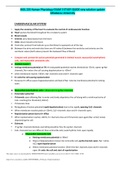
NR.210.600 Advanced
Physiology/Pathophysiology
Comprehensive Final Exam (Qns & Ans)
2025
1.
A 63-year-old male presents with crushing chest pain radiating to
his left arm and jaw. His ECG shows ST-segment elevation.
Which pathophysiological process most likely explains his
clinical presentation?
A) Stable atherosclerotic plaque
B) Coronary vasospasm
C) Plaque rupture with thrombus formation
D) Cardiac tamponade
©2025
,Correct ANS: C
Rationale: ST-segment elevation indicates an acute myocardial
infarction most often caused by rupture of an unstable plaque with
subsequent thrombus formation occluding a coronary artery.
2.
A patient develops acute glomerulonephritis following a
streptococcal throat infection. What type of hypersensitivity
reaction is primarily involved?
A) Type I hypersensitivity
B) Type II hypersensitivity
C) Type III hypersensitivity
D) Type IV hypersensitivity
Correct ANS: C
Rationale: Acute post-streptococcal glomerulonephritis involves
immune complex-mediated (Type III) hypersensitivity.
3.
A man with chronic bronchitis has PaCO₂ of 56 mmHg and pH
7.32. This represents which of the following?
A) Metabolic acidosis with compensation
©2025
,B) Respiratory alkalosis
C) Acute respiratory acidosis
D) Compensated respiratory acidosis
Correct ANS: C
Rationale: Elevated PaCO₂ and decreased pH indicate acute
respiratory acidosis due to hypoventilation.
4.
A 72-year-old woman with osteopenia has prolonged
immobilization after hip surgery. Which electrolyte disturbance is
she most at risk of developing?
A) Hypocalcemia
B) Hypercalcemia
C) Hypokalemia
D) Hypermagnesemia
Correct ANS: B
Rationale: Immobilization in patients with increased bone
resorption can lead to hypercalcemia.
5.
©2025
, A patient develops worsening dyspnea, productive cough, and
coarse crackles. Sputum culture reveals Pseudomonas aeruginosa.
Which condition most likely predisposed this patient?
A) Asthma
B) Tuberculosis
C) Cystic fibrosis
D) Chronic pulmonary embolism
Correct ANS: C
Rationale: Cystic fibrosis patients commonly develop recurrent
Pseudomonas infections due to impaired mucociliary clearance.
6.
A 28-year-old pregnant woman with type 1 diabetes is found
unresponsive. Blood glucose is 640 mg/dL, pH is 7.08, and urine
has ketones. What is the most immediate threat to her life?
A) Myocardial infarction
B) Hypokalemia
C) Severe dehydration and acidosis
D) Cerebral edema
Correct ANS: C
©2025
Physiology/Pathophysiology
Comprehensive Final Exam (Qns & Ans)
2025
1.
A 63-year-old male presents with crushing chest pain radiating to
his left arm and jaw. His ECG shows ST-segment elevation.
Which pathophysiological process most likely explains his
clinical presentation?
A) Stable atherosclerotic plaque
B) Coronary vasospasm
C) Plaque rupture with thrombus formation
D) Cardiac tamponade
©2025
,Correct ANS: C
Rationale: ST-segment elevation indicates an acute myocardial
infarction most often caused by rupture of an unstable plaque with
subsequent thrombus formation occluding a coronary artery.
2.
A patient develops acute glomerulonephritis following a
streptococcal throat infection. What type of hypersensitivity
reaction is primarily involved?
A) Type I hypersensitivity
B) Type II hypersensitivity
C) Type III hypersensitivity
D) Type IV hypersensitivity
Correct ANS: C
Rationale: Acute post-streptococcal glomerulonephritis involves
immune complex-mediated (Type III) hypersensitivity.
3.
A man with chronic bronchitis has PaCO₂ of 56 mmHg and pH
7.32. This represents which of the following?
A) Metabolic acidosis with compensation
©2025
,B) Respiratory alkalosis
C) Acute respiratory acidosis
D) Compensated respiratory acidosis
Correct ANS: C
Rationale: Elevated PaCO₂ and decreased pH indicate acute
respiratory acidosis due to hypoventilation.
4.
A 72-year-old woman with osteopenia has prolonged
immobilization after hip surgery. Which electrolyte disturbance is
she most at risk of developing?
A) Hypocalcemia
B) Hypercalcemia
C) Hypokalemia
D) Hypermagnesemia
Correct ANS: B
Rationale: Immobilization in patients with increased bone
resorption can lead to hypercalcemia.
5.
©2025
, A patient develops worsening dyspnea, productive cough, and
coarse crackles. Sputum culture reveals Pseudomonas aeruginosa.
Which condition most likely predisposed this patient?
A) Asthma
B) Tuberculosis
C) Cystic fibrosis
D) Chronic pulmonary embolism
Correct ANS: C
Rationale: Cystic fibrosis patients commonly develop recurrent
Pseudomonas infections due to impaired mucociliary clearance.
6.
A 28-year-old pregnant woman with type 1 diabetes is found
unresponsive. Blood glucose is 640 mg/dL, pH is 7.08, and urine
has ketones. What is the most immediate threat to her life?
A) Myocardial infarction
B) Hypokalemia
C) Severe dehydration and acidosis
D) Cerebral edema
Correct ANS: C
©2025