VETERINARY IMMUNOLOGY 380 FINAL
EXAM QUESTIONS AND ANSWER
Explain why blood typing and cross-matching are especially important before a blood
transfusion in some exotic breeds of cats. - Answer-a. Breeds and Blood Types of
Cats
i. Domestic long and short hair cats - mostly type A
ii. Exotic--Type B
1. Anti A natural- 1ml of type A blood into a type B cat will lead to shock and death
iii. Type AB rare
b. Before transfusing a cat, it is recommended to blood-type and cross-match
Explain why it has been said that you can do one transfusion without a cross-match
in the dog. - Answer-a. Upon first exposure there are NO NATURAL ANTIBODIES—
with the second transfusion it would almost immediately cause a reaction
b. No clinically significant natural antibody—1.1 and 1.2 though will cause issues on
second transfusion if mismatched
Explain the factors that result in hemolytic disease of the newborn. - Answer-a.
Immune-mediated destruction of a neonate 's RBC by maternal antibodies
i. Rh negative human mothers-- IgG (A and B are IgM and those cannot cross the
placenta) --Ag induces IgG in mother--problem on subsequent pregnancies
ii. A antigen in horses in immunogenic, so no natural antibody
1. Mare- no A Ag
2. Sire- A Ag
3. Foal- A Ag
a. Not a problem in utero because no Ab can past through the placenta, if during
partuition the mare is exposed to the A Ag twice
Describe a major difference between the condition in humans and in foals. - Answer-
a. Humans
i. In utero in human because IgG does cross the placenta. (Rh factor)
b. Foals
i. After colostrum in foals
Explain how Rhogam, in human medicine, prevents erythroblastosis fetalis in
humans and how we prevent hemolytic disease of the newborn (HDN) in veterinary
medicine. - Answer-a. Prevention of hemolytic disease of the fetus in humans is
done by giving any Rh- mother RhoGam.
i. RhoGam is passive antibody to the Rh factor. If the mother is exposed to the Rh
antigen the passive antibody will prevent her from having an immune response to the
Rh antigen.
, b. The passive antibody binds to the antigen and/or turns off B cells that would
recognize the antigen (antibody feedback).
For HDN in horses, explain what the best source for RBCs would be if a blood bank
was not an option and what preparation (in general terms) would be required before
giving the RBCs to the foal. - Answer-a. From the mother
b. Mare doesn't have the A antigen
(pic p4)
Two dogs, Wrigley and Bush, are in for intradermal skin testing for allergies. Explain
why Wrigley developed wheal and flare to ragweed and Bush did not and why they
both developed wheal and flare to histamine. - Answer-a. Wrigley- ragweed injected
and gets wheal (edema) and flare (red) because of IgE to Ragweed on mast cells
causing crosslinking and degranulation (seconds-histamine to minutes-LTB4)
(histamine causes vasodialation)
i. Mimicking mast cell degranulation
b. Bush- ragweed injection and no rxn because no IgE to ragweed
i. Mimicking mast cell degranulation
You explain to the owner that you will be blood-typing the cat and doing a major
cross-match before giving the cat a transfusion. Please explain:
a. Why do you do the major cross-match, i.e., what do you want to know? - Answer-i.
Want to know does the recipient have antibody to the RBCs of the donor
a. What do you mix together to do a major cross-match? - Answer-i. Donors—RBCs
and Recipients—Plasma
a. List two reactions of the cross-match that would indicate incompatibility? - Answer-
i. Agglutination
ii. Lysis of RBC because of complement
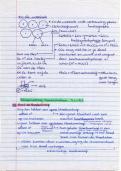
a. You blood type the cat using the card test with antibody against the red cell
antigen lyophilized on the card. There is agglutination under the B, and no
agglutination under the A. What is the cat's blood type? Draw a picture of the cells
and molecules leading to the result you see. - Answer-i. Blood type B
(pic p5)
a. If this cat is bred and the kittens have a different blood type than the queen, will
the kittens have a problem in utero? Explain. - Answer-i. Not problem in utero
because IgM doesn't cross the placenta in any species
Describe the intradermal allergy test, including what is injected (general terms), what
happens when an animal has an IgE-mediated allergy to what is injected, and why. -
Answer-a. What is injected: potential allergen, to get Th2 you need a protein to
initiate
EXAM QUESTIONS AND ANSWER
Explain why blood typing and cross-matching are especially important before a blood
transfusion in some exotic breeds of cats. - Answer-a. Breeds and Blood Types of
Cats
i. Domestic long and short hair cats - mostly type A
ii. Exotic--Type B
1. Anti A natural- 1ml of type A blood into a type B cat will lead to shock and death
iii. Type AB rare
b. Before transfusing a cat, it is recommended to blood-type and cross-match
Explain why it has been said that you can do one transfusion without a cross-match
in the dog. - Answer-a. Upon first exposure there are NO NATURAL ANTIBODIES—
with the second transfusion it would almost immediately cause a reaction
b. No clinically significant natural antibody—1.1 and 1.2 though will cause issues on
second transfusion if mismatched
Explain the factors that result in hemolytic disease of the newborn. - Answer-a.
Immune-mediated destruction of a neonate 's RBC by maternal antibodies
i. Rh negative human mothers-- IgG (A and B are IgM and those cannot cross the
placenta) --Ag induces IgG in mother--problem on subsequent pregnancies
ii. A antigen in horses in immunogenic, so no natural antibody
1. Mare- no A Ag
2. Sire- A Ag
3. Foal- A Ag
a. Not a problem in utero because no Ab can past through the placenta, if during
partuition the mare is exposed to the A Ag twice
Describe a major difference between the condition in humans and in foals. - Answer-
a. Humans
i. In utero in human because IgG does cross the placenta. (Rh factor)
b. Foals
i. After colostrum in foals
Explain how Rhogam, in human medicine, prevents erythroblastosis fetalis in
humans and how we prevent hemolytic disease of the newborn (HDN) in veterinary
medicine. - Answer-a. Prevention of hemolytic disease of the fetus in humans is
done by giving any Rh- mother RhoGam.
i. RhoGam is passive antibody to the Rh factor. If the mother is exposed to the Rh
antigen the passive antibody will prevent her from having an immune response to the
Rh antigen.
, b. The passive antibody binds to the antigen and/or turns off B cells that would
recognize the antigen (antibody feedback).
For HDN in horses, explain what the best source for RBCs would be if a blood bank
was not an option and what preparation (in general terms) would be required before
giving the RBCs to the foal. - Answer-a. From the mother
b. Mare doesn't have the A antigen
(pic p4)
Two dogs, Wrigley and Bush, are in for intradermal skin testing for allergies. Explain
why Wrigley developed wheal and flare to ragweed and Bush did not and why they
both developed wheal and flare to histamine. - Answer-a. Wrigley- ragweed injected
and gets wheal (edema) and flare (red) because of IgE to Ragweed on mast cells
causing crosslinking and degranulation (seconds-histamine to minutes-LTB4)
(histamine causes vasodialation)
i. Mimicking mast cell degranulation
b. Bush- ragweed injection and no rxn because no IgE to ragweed
i. Mimicking mast cell degranulation
You explain to the owner that you will be blood-typing the cat and doing a major
cross-match before giving the cat a transfusion. Please explain:
a. Why do you do the major cross-match, i.e., what do you want to know? - Answer-i.
Want to know does the recipient have antibody to the RBCs of the donor
a. What do you mix together to do a major cross-match? - Answer-i. Donors—RBCs
and Recipients—Plasma
a. List two reactions of the cross-match that would indicate incompatibility? - Answer-
i. Agglutination
ii. Lysis of RBC because of complement
a. You blood type the cat using the card test with antibody against the red cell
antigen lyophilized on the card. There is agglutination under the B, and no
agglutination under the A. What is the cat's blood type? Draw a picture of the cells
and molecules leading to the result you see. - Answer-i. Blood type B
(pic p5)
a. If this cat is bred and the kittens have a different blood type than the queen, will
the kittens have a problem in utero? Explain. - Answer-i. Not problem in utero
because IgM doesn't cross the placenta in any species
Describe the intradermal allergy test, including what is injected (general terms), what
happens when an animal has an IgE-mediated allergy to what is injected, and why. -
Answer-a. What is injected: potential allergen, to get Th2 you need a protein to
initiate