TEST BANK FOR
v v
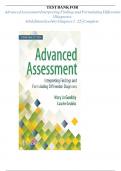
v Advanced Assessment Interpreting Findings and Formulating Differentia
v v v v v v
l Diagnoses
v v
4th Edition Goolsby Chapters 1 - 22 | Complete
v v v v v v v v v
, TABLE OF CONTENTS
v v
➢ Chapterv1.vAssessmentvandvClinicalvDecisionvMaking:vAnvOverview
➢ Chapterv2.vGenomicvAssessment:vInterpretingvFindingsvandvFormulatingvDifferentialvDiagnoses
➢ Chapterv3.vSkin
➢ Chapterv4.vHead,vFace,vandvNeck
➢ Chapterv5.vThevEye
➢ Chapterv6.vEar,vNose,vMouth,vandvThroat
➢ Chapterv7.vCardiacvandvPeripheralvVascularvSystems
➢ Chapterv8.vRespiratoryvSystem
➢ Chapterv9.vBreasts
➢ Chapterv10.vAbdomen
➢ Chapterv11.vGenitourinaryvSystem
➢ Chapterv12.vMalevReproductivevSystem
➢ Chapterv13.vFemalevReproductivevSystem
➢ Chapterv14.vMusculoskeletalvSystem
➢ Chapterv15.vNeurologicalvSystem
➢ Chapterv16.vNonspecificvComplaints
➢ Chapterv17.vPsychiatricvMentalvHealth
➢ Chapterv18.vPediatricvPatients
➢ Chapterv19.vPregnantvPatients
➢ Chapterv20.vAssessmentvofvthevTransgendervorvGendervDiversevAdult
➢ Chapterv21.vOldervPatients
➢ Chapterv22.vPersonsvWithvDisabilities
, ➢ Chapter 1. Assessment and Clinical Decision Making: An Overview
v v v v v v v v
Multiplev Choice
Identifyvthevchoicevthatvbestvcompletesvthevstatementvorvanswersvthevquestion.
v 1. Whichvtypevofvclinicalvdecision-makingvisvmostvreliable?
A. Intuitive
B. Analytical
C. Experiential
D. Augenblick
v 2. Whichvofvthevfollowingvisvfalse?vTovobtainvadequatevhistory,vhealth-carevprovidersvmustvbe:
A. Methodicalvandvsystematic
B. Attentivevtovthevpatient’svverbalvandvnonverbalvlanguage
C. Ablevtovaccuratelyvinterpretvthevpatient’svresponses
D. Adeptvatvreadingvintovthevpatient’svstatements
v 3. Essentialvpartsvofvavhealthvhistoryvincludevallvofvthevfollowingvexcept:
A. Chiefvcomplaint
B. Historyvofvthevpresentvillness
C. Currentvvitalvsigns
D. Allvofvthevabovevarevessentialvhistoryvcomponents
v 4. Whichvofvthevfollowingvisvfalse?vWhilevperformingvthevphysicalvexamination,vthevexaminervmustvbevablevto:
A. Differentiatevbetweenvnormalvandvabnormalvfindings
B. Recallvknowledgevofvavrangevofvconditionsvandvtheirvassociatedvsignsvandvsymptoms
C. Recognizevhowvcertainvconditionsvaffectvthevresponsevtovothervconditions
D. Foreseevunpredictablevfindings
v 5. Thevfollowingvisvthevleastvreliablevsourcevofvinformationvforvdiagnosticvstatistics:
A. Evidence-basedvinvestigations
B. Primaryvreportsvofvresearch
C. Estimationvbasedvonvavprovider’svexperience
D. Publishedvmeta-analyses
v 6. Thevfollowingvcanvbevusedvtovassistvinvsoundvclinicalvdecision-making:
A. Algorithmvpublishedvinvavpeer-reviewedvjournalvarticle
B. Clinicalvpracticevguidelines
C. Evidence-basedvresearch
D. Allvofvthevabove
v 7. Ifvavdiagnosticvstudyvhasvhighvsensitivity,v thisvindicatesva:
A. Highvpercentagevofvpersonsvwithvthevgivenvconditionvwillvhavevanvabnormalvresult
B. Lowvpercentagevofvpersonsvwithvthevgivenvconditionvwillvhavevanvabnormalvresult
C. Lowvlikelihoodvofvnormalvresultvinvpersonsvwithoutvavgivenvcondition
D. Nonevofvthevabove
v 8. Ifvavdiagnosticvstudyvhasvhighvspecificity,v thisvindicatesva:
A. Lowvpercentagevofvhealthyvindividualsvwillvshowvavnormalvresult
B. Highvpercentagevofvhealthyvindividualsvwillvshowvavnormalvresult
C. Highvpercentagevofvindividualsvwithvavdisordervwillvshowvavnormalvresult
D. Lowvpercentagevofvindividualsvwithvavdisordervwillvshowvanvabnormalvresult
v 9. Avlikelihoodvratiovabovev1vindicatesvthatvavdiagnosticvtestvshowingva:
A. Positivevresultvisvstronglyvassociatedvwithvthevdisease
B. Negativevresultvisvstronglyvassociatedvwithvabsencevofvthevdisease
C. Positivevresultvisvweaklyvassociatedvwithvthevdisease
D. Negativevresultvisvweaklyvassociatedvwithvabsencevofvthevdisease
, v 10. Whichvofvthevfollowingvclinicalvreasoningvtoolsvisvdefinedvasvevidence-basedvresourcevbasedvonvmathematicalvmodeling
tovexpressvthevlikelihoodvofvavconditionvinvselectvsituations,vsettings,vand/orvpatients?
v v
v Advanced Assessment Interpreting Findings and Formulating Differentia
v v v v v v
l Diagnoses
v v
4th Edition Goolsby Chapters 1 - 22 | Complete
v v v v v v v v v
, TABLE OF CONTENTS
v v
➢ Chapterv1.vAssessmentvandvClinicalvDecisionvMaking:vAnvOverview
➢ Chapterv2.vGenomicvAssessment:vInterpretingvFindingsvandvFormulatingvDifferentialvDiagnoses
➢ Chapterv3.vSkin
➢ Chapterv4.vHead,vFace,vandvNeck
➢ Chapterv5.vThevEye
➢ Chapterv6.vEar,vNose,vMouth,vandvThroat
➢ Chapterv7.vCardiacvandvPeripheralvVascularvSystems
➢ Chapterv8.vRespiratoryvSystem
➢ Chapterv9.vBreasts
➢ Chapterv10.vAbdomen
➢ Chapterv11.vGenitourinaryvSystem
➢ Chapterv12.vMalevReproductivevSystem
➢ Chapterv13.vFemalevReproductivevSystem
➢ Chapterv14.vMusculoskeletalvSystem
➢ Chapterv15.vNeurologicalvSystem
➢ Chapterv16.vNonspecificvComplaints
➢ Chapterv17.vPsychiatricvMentalvHealth
➢ Chapterv18.vPediatricvPatients
➢ Chapterv19.vPregnantvPatients
➢ Chapterv20.vAssessmentvofvthevTransgendervorvGendervDiversevAdult
➢ Chapterv21.vOldervPatients
➢ Chapterv22.vPersonsvWithvDisabilities
, ➢ Chapter 1. Assessment and Clinical Decision Making: An Overview
v v v v v v v v
Multiplev Choice
Identifyvthevchoicevthatvbestvcompletesvthevstatementvorvanswersvthevquestion.
v 1. Whichvtypevofvclinicalvdecision-makingvisvmostvreliable?
A. Intuitive
B. Analytical
C. Experiential
D. Augenblick
v 2. Whichvofvthevfollowingvisvfalse?vTovobtainvadequatevhistory,vhealth-carevprovidersvmustvbe:
A. Methodicalvandvsystematic
B. Attentivevtovthevpatient’svverbalvandvnonverbalvlanguage
C. Ablevtovaccuratelyvinterpretvthevpatient’svresponses
D. Adeptvatvreadingvintovthevpatient’svstatements
v 3. Essentialvpartsvofvavhealthvhistoryvincludevallvofvthevfollowingvexcept:
A. Chiefvcomplaint
B. Historyvofvthevpresentvillness
C. Currentvvitalvsigns
D. Allvofvthevabovevarevessentialvhistoryvcomponents
v 4. Whichvofvthevfollowingvisvfalse?vWhilevperformingvthevphysicalvexamination,vthevexaminervmustvbevablevto:
A. Differentiatevbetweenvnormalvandvabnormalvfindings
B. Recallvknowledgevofvavrangevofvconditionsvandvtheirvassociatedvsignsvandvsymptoms
C. Recognizevhowvcertainvconditionsvaffectvthevresponsevtovothervconditions
D. Foreseevunpredictablevfindings
v 5. Thevfollowingvisvthevleastvreliablevsourcevofvinformationvforvdiagnosticvstatistics:
A. Evidence-basedvinvestigations
B. Primaryvreportsvofvresearch
C. Estimationvbasedvonvavprovider’svexperience
D. Publishedvmeta-analyses
v 6. Thevfollowingvcanvbevusedvtovassistvinvsoundvclinicalvdecision-making:
A. Algorithmvpublishedvinvavpeer-reviewedvjournalvarticle
B. Clinicalvpracticevguidelines
C. Evidence-basedvresearch
D. Allvofvthevabove
v 7. Ifvavdiagnosticvstudyvhasvhighvsensitivity,v thisvindicatesva:
A. Highvpercentagevofvpersonsvwithvthevgivenvconditionvwillvhavevanvabnormalvresult
B. Lowvpercentagevofvpersonsvwithvthevgivenvconditionvwillvhavevanvabnormalvresult
C. Lowvlikelihoodvofvnormalvresultvinvpersonsvwithoutvavgivenvcondition
D. Nonevofvthevabove
v 8. Ifvavdiagnosticvstudyvhasvhighvspecificity,v thisvindicatesva:
A. Lowvpercentagevofvhealthyvindividualsvwillvshowvavnormalvresult
B. Highvpercentagevofvhealthyvindividualsvwillvshowvavnormalvresult
C. Highvpercentagevofvindividualsvwithvavdisordervwillvshowvavnormalvresult
D. Lowvpercentagevofvindividualsvwithvavdisordervwillvshowvanvabnormalvresult
v 9. Avlikelihoodvratiovabovev1vindicatesvthatvavdiagnosticvtestvshowingva:
A. Positivevresultvisvstronglyvassociatedvwithvthevdisease
B. Negativevresultvisvstronglyvassociatedvwithvabsencevofvthevdisease
C. Positivevresultvisvweaklyvassociatedvwithvthevdisease
D. Negativevresultvisvweaklyvassociatedvwithvabsencevofvthevdisease
, v 10. Whichvofvthevfollowingvclinicalvreasoningvtoolsvisvdefinedvasvevidence-basedvresourcevbasedvonvmathematicalvmodeling
tovexpressvthevlikelihoodvofvavconditionvinvselectvsituations,vsettings,vand/orvpatients?