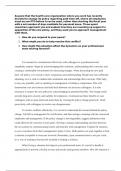
Assume that the health care organization where you work has recently
decided to change its policy regarding paid-time-off, where all employees
must accrue PTO before it can be used, rather than starting the fiscal year
with a set number of days available for personal leave. Three upset
coworkers approach you and explain how they are rounding up support in
opposition of the new policy, and they want you to approach management
with them.
1. How do you respond to your peers?
2. What might you do to help resolve this conflict?
3. How might this situation affect the dynamics on your professional
team moving forward?
It is essential to communicate effectively with colleagues in a professional and
empathetic manner. Begin by acknowledging their emotions, understanding their concerns, and
creating a comfortable environment for discussing changes. When discussing the new paid
time- off policy, it is crucial to show compassion and understanding. People may have difficulty
adjusting, so it is vital to validate their sentiments and acknowledge their concerns. Offer help
in any way possible, such as speaking to management or finding a compromise. This will
demonstrate care and concern and build trust between you and your colleagues. It is also
necessary to respect the new policy by acknowledging its potential benefits. The change could
provide long-term security and stability for employees. Communicate these benefits to your
colleagues with an open mind and assist them by viewing the policy change positively. Work
proactively with colleagues to resolve any disagreements.
To resolve conflicts effectively, it is crucial to understand the reasons behind the policy
change. Ask HR or management for clarification, and then arrange a meeting with the concerned
employees and management. If the policy change is non-negotiable, suggest alternatives that
could alleviate the concerns of your peers. Develop a mutual understanding and trust between
the two parties by communicating clearly and honestly with management. Explain the situation
to your coworkers from their management's point of view. Both parties can work together to find
a solution acceptable to everyone involved. Remember, open communication is not just a tool;
it's a way of making everyone feel included in finding a solution.
When facing a situation that impacts your professional team, it's crucial to handle it
appropriately to prevent a decline in trust and morale among team members. How the situation is
decided to change its policy regarding paid-time-off, where all employees
must accrue PTO before it can be used, rather than starting the fiscal year
with a set number of days available for personal leave. Three upset
coworkers approach you and explain how they are rounding up support in
opposition of the new policy, and they want you to approach management
with them.
1. How do you respond to your peers?
2. What might you do to help resolve this conflict?
3. How might this situation affect the dynamics on your professional
team moving forward?
It is essential to communicate effectively with colleagues in a professional and
empathetic manner. Begin by acknowledging their emotions, understanding their concerns, and
creating a comfortable environment for discussing changes. When discussing the new paid
time- off policy, it is crucial to show compassion and understanding. People may have difficulty
adjusting, so it is vital to validate their sentiments and acknowledge their concerns. Offer help
in any way possible, such as speaking to management or finding a compromise. This will
demonstrate care and concern and build trust between you and your colleagues. It is also
necessary to respect the new policy by acknowledging its potential benefits. The change could
provide long-term security and stability for employees. Communicate these benefits to your
colleagues with an open mind and assist them by viewing the policy change positively. Work
proactively with colleagues to resolve any disagreements.
To resolve conflicts effectively, it is crucial to understand the reasons behind the policy
change. Ask HR or management for clarification, and then arrange a meeting with the concerned
employees and management. If the policy change is non-negotiable, suggest alternatives that
could alleviate the concerns of your peers. Develop a mutual understanding and trust between
the two parties by communicating clearly and honestly with management. Explain the situation
to your coworkers from their management's point of view. Both parties can work together to find
a solution acceptable to everyone involved. Remember, open communication is not just a tool;
it's a way of making everyone feel included in finding a solution.
When facing a situation that impacts your professional team, it's crucial to handle it
appropriately to prevent a decline in trust and morale among team members. How the situation is