22/9
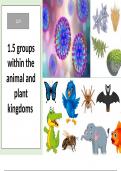
1.5 groups
within the
animal and
plant
kingdoms
, Learning objectives
1.3.2 State the main features used to place organisms into groups within the animal k
limited to:
a. the main groups of vertebrates: mammals, birds, reptiles, amphibians, fish.
b. the main groups of arthropods: myriapods, insects, arachnids, crustaceans
1.3.3 Classify organisms using the features identified in 1.3.2.
1.3.4 State the main features used to place all organisms into one of the five kingdom
animal, plant, fungus, prokaryote, Protoctista.
1.3.6 Classify organisms using the features identified in 1.3.4 and 1.3.5
, 1.5 groups within the
animal and plant
kingdoms
Within each kingdoms, biologists
classify organisms into small groups.
, • Animal kingdoms include
Vertebrates and arthropods
• Plant kingdom include
Flowering plants and non-flowering plants (ferns)
1.5 groups
within the
animal and
plant
kingdoms
, Learning objectives
1.3.2 State the main features used to place organisms into groups within the animal k
limited to:
a. the main groups of vertebrates: mammals, birds, reptiles, amphibians, fish.
b. the main groups of arthropods: myriapods, insects, arachnids, crustaceans
1.3.3 Classify organisms using the features identified in 1.3.2.
1.3.4 State the main features used to place all organisms into one of the five kingdom
animal, plant, fungus, prokaryote, Protoctista.
1.3.6 Classify organisms using the features identified in 1.3.4 and 1.3.5
, 1.5 groups within the
animal and plant
kingdoms
Within each kingdoms, biologists
classify organisms into small groups.
, • Animal kingdoms include
Vertebrates and arthropods
• Plant kingdom include
Flowering plants and non-flowering plants (ferns)