BYU PDBIO 305 - HANSEN EXAM 1
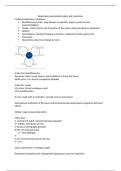
Describe the parts of a negative feedback system (sensor, control center, effector) -
CORRECT ANSWER-sensor: picks up changes in environment
control center: receives information from the sensor and directs changes accordingly
based on the set point
effector: makes a response to produce a desired effect
Explain how positive feedback works and its effect on homeostasis - CORRECT
ANSWER-positive feedback is when your sensor picks up a change in the environment
and then lets the control center know which then amplifies the initial change
Describe examples of positive feedback in the human body - CORRECT ANSWER-ex:
when a woman goes into labor her bodies picks up on the contractions and the
hypothalamus then amplifies the contractions and makes them close together in order
to help push the child out.
Describe the concept of homeostasis and how it relates to the regulation of
physiological processes - CORRECT ANSWER-our external environment is always
changing but in order to survive we must keep our internal environment the same.
Homeostasis is the maintaining of relatively constant conditions of the internal
environment. Our body adjusts based on the changing environment
Explain how negative feedback works its effect on homeostasis - CORRECT ANSWER-
negative feedback is what happens when our sensor recognizes a change it notifies the
control center (often the hypothalamus) which then makes a change in the body to
COUNTERACT the change in conditions.
Describe examples of negative feedback in the human body - CORRECT ANSWER-ex:
the weather is hot. your skin sensors recognize your body temperature is increasing and
notifies your hypothalamus which then tells your sweat glands (effector) to start
sweating to decrease body temperature
Describe feed-forward control and give examples - CORRECT ANSWER-feed forward
is a response that comes in anticipation to a change. For example when your mouth
waters before you eat lunch because your body is expecting to be fed.
ICF/ECF Osmolarity - CORRECT ANSWER-300 mOsm/L
, what is a biomolecule? - CORRECT ANSWER-molecules synthesized by living things
what do all biomolecules contain? - CORRECT ANSWER-CARBON
what are the 4 basic types of biomolecules? - CORRECT ANSWER-carbohydrates,
lipids, amino acids and proteins, nucleotides
what are carbohydrates composed of? - CORRECT ANSWER-carbon, hydrogen, and
oxygen
What is the major source of energy for the body? - CORRECT ANSWER-carbs
what is the general formula for carbs? - CORRECT ANSWER-(CH2O)n
what are the three types of carbs - CORRECT ANSWER-monosaccharides
disaccharides
polysaccharides
what makes carbs polar? - CORRECT ANSWER-the hydroxyl group
how are disaccharides bonded? - CORRECT ANSWER-covalent bonds
what are polysaccharides used for? - CORRECT ANSWER-storage of carbs
what is glycogen? - CORRECT ANSWER-storage form of glucose in animals
what prevents cells from swelling due to osmotic forces? - CORRECT ANSWER-
glycogen
what is starch? - CORRECT ANSWER-storage form of glucose in plants
what is cellulose? - CORRECT ANSWER-plant cell walls; dietary fiber
what elements are lipids primarily composed of? - CORRECT ANSWER-hydrogen and
carbon atoms
what type of bonds do lipids have? - CORRECT ANSWER-covalent
what are the 5 classes of lipids? - CORRECT ANSWER-triglycerides, ketones,
phospholipids, eicosanoids, steroids
what makes a triglyceride? - CORRECT ANSWER-3 fatty acids + a glycerol
what is a glycerol? - CORRECT ANSWER-a 3 carbon alcohol
Describe the parts of a negative feedback system (sensor, control center, effector) -
CORRECT ANSWER-sensor: picks up changes in environment
control center: receives information from the sensor and directs changes accordingly
based on the set point
effector: makes a response to produce a desired effect
Explain how positive feedback works and its effect on homeostasis - CORRECT
ANSWER-positive feedback is when your sensor picks up a change in the environment
and then lets the control center know which then amplifies the initial change
Describe examples of positive feedback in the human body - CORRECT ANSWER-ex:
when a woman goes into labor her bodies picks up on the contractions and the
hypothalamus then amplifies the contractions and makes them close together in order
to help push the child out.
Describe the concept of homeostasis and how it relates to the regulation of
physiological processes - CORRECT ANSWER-our external environment is always
changing but in order to survive we must keep our internal environment the same.
Homeostasis is the maintaining of relatively constant conditions of the internal
environment. Our body adjusts based on the changing environment
Explain how negative feedback works its effect on homeostasis - CORRECT ANSWER-
negative feedback is what happens when our sensor recognizes a change it notifies the
control center (often the hypothalamus) which then makes a change in the body to
COUNTERACT the change in conditions.
Describe examples of negative feedback in the human body - CORRECT ANSWER-ex:
the weather is hot. your skin sensors recognize your body temperature is increasing and
notifies your hypothalamus which then tells your sweat glands (effector) to start
sweating to decrease body temperature
Describe feed-forward control and give examples - CORRECT ANSWER-feed forward
is a response that comes in anticipation to a change. For example when your mouth
waters before you eat lunch because your body is expecting to be fed.
ICF/ECF Osmolarity - CORRECT ANSWER-300 mOsm/L
, what is a biomolecule? - CORRECT ANSWER-molecules synthesized by living things
what do all biomolecules contain? - CORRECT ANSWER-CARBON
what are the 4 basic types of biomolecules? - CORRECT ANSWER-carbohydrates,
lipids, amino acids and proteins, nucleotides
what are carbohydrates composed of? - CORRECT ANSWER-carbon, hydrogen, and
oxygen
What is the major source of energy for the body? - CORRECT ANSWER-carbs
what is the general formula for carbs? - CORRECT ANSWER-(CH2O)n
what are the three types of carbs - CORRECT ANSWER-monosaccharides
disaccharides
polysaccharides
what makes carbs polar? - CORRECT ANSWER-the hydroxyl group
how are disaccharides bonded? - CORRECT ANSWER-covalent bonds
what are polysaccharides used for? - CORRECT ANSWER-storage of carbs
what is glycogen? - CORRECT ANSWER-storage form of glucose in animals
what prevents cells from swelling due to osmotic forces? - CORRECT ANSWER-
glycogen
what is starch? - CORRECT ANSWER-storage form of glucose in plants
what is cellulose? - CORRECT ANSWER-plant cell walls; dietary fiber
what elements are lipids primarily composed of? - CORRECT ANSWER-hydrogen and
carbon atoms
what type of bonds do lipids have? - CORRECT ANSWER-covalent
what are the 5 classes of lipids? - CORRECT ANSWER-triglycerides, ketones,
phospholipids, eicosanoids, steroids
what makes a triglyceride? - CORRECT ANSWER-3 fatty acids + a glycerol
what is a glycerol? - CORRECT ANSWER-a 3 carbon alcohol