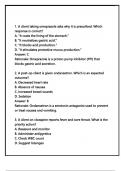
1. A nurse is educating a client on atorvastatin. What side effect
should the client report immediately?
A. Headache
B. Muscle pain
C. Drowsiness
D. Constipation
Answer: B
Rationale: Myopathy can occur with statins and may progress to
rhabdomyolysis. Report muscle pain immediately.
Answer Key
51.
2.
3.
4.
5.
6.
7.
8.
9.
10.
11.
12.
13.
14.
15.
16.
17.
18.
19.
20.
21.
,22.
23.
24.
25.
26.
27.
28.
29.
30.
31.
32.
33.
34.
35.
36.
37.
38.
39.
40.
41.
42.
43.
44.
45.
46.
47.
48.
49.
50.
2. A client is prescribed exenatide. What is a common side
effect?
A. Hyperglycemia
, B. Constipation
C. Nausea
D. Tachycardia
Answer: C
Rationale: Exenatide can cause nausea, especially when initiating
therapy. It’s an injectable incretin mimetic.
3. A client taking isoniazid (INH) for tuberculosis develops
numbness and tingling in their hands and feet. What should the
nurse anticipate?
A. The need for increased calcium
B. Administration of pyridoxine (vitamin B6)
C. Discontinuation of therapy
D. Addition of prednisone
Answer: B
Rationale: Isoniazid can cause peripheral neuropathy, often
prevented or treated with vitamin B6.
4. A client on sildenafil experiences chest pain during
intercourse. What is the nurse’s next action?
A. Administer nitroglycerin
B. Encourage rest and fluids
C. Call emergency services
D. Administer aspirin
Answer: C
Rationale: Sildenafil + nitrates can cause life-threatening
hypotension. Do not give nitro—call 911.
5. A nurse gives regular insulin subcutaneously at 0700. At what
time should the nurse monitor for signs of hypoglycemia?
A. 0715
B. 0800
C. 0930
should the client report immediately?
A. Headache
B. Muscle pain
C. Drowsiness
D. Constipation
Answer: B
Rationale: Myopathy can occur with statins and may progress to
rhabdomyolysis. Report muscle pain immediately.
Answer Key
51.
2.
3.
4.
5.
6.
7.
8.
9.
10.
11.
12.
13.
14.
15.
16.
17.
18.
19.
20.
21.
,22.
23.
24.
25.
26.
27.
28.
29.
30.
31.
32.
33.
34.
35.
36.
37.
38.
39.
40.
41.
42.
43.
44.
45.
46.
47.
48.
49.
50.
2. A client is prescribed exenatide. What is a common side
effect?
A. Hyperglycemia
, B. Constipation
C. Nausea
D. Tachycardia
Answer: C
Rationale: Exenatide can cause nausea, especially when initiating
therapy. It’s an injectable incretin mimetic.
3. A client taking isoniazid (INH) for tuberculosis develops
numbness and tingling in their hands and feet. What should the
nurse anticipate?
A. The need for increased calcium
B. Administration of pyridoxine (vitamin B6)
C. Discontinuation of therapy
D. Addition of prednisone
Answer: B
Rationale: Isoniazid can cause peripheral neuropathy, often
prevented or treated with vitamin B6.
4. A client on sildenafil experiences chest pain during
intercourse. What is the nurse’s next action?
A. Administer nitroglycerin
B. Encourage rest and fluids
C. Call emergency services
D. Administer aspirin
Answer: C
Rationale: Sildenafil + nitrates can cause life-threatening
hypotension. Do not give nitro—call 911.
5. A nurse gives regular insulin subcutaneously at 0700. At what
time should the nurse monitor for signs of hypoglycemia?
A. 0715
B. 0800
C. 0930