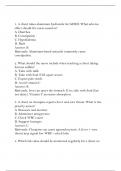
1. A client with asthma uses albuterol PRN. Which statement
shows proper understanding?
A. “I use this every morning and night.”
B. “I use this when I’m having shortness of breath.”
C. “I use it with my steroid inhaler at the same time.”
D. “I use this even if I’m not having symptoms.”
Answer: B
Rationale: Albuterol is a rescue inhaler used during asthma attacks
or acute symptoms.
2. A nurse is caring for a client prescribed lisinopril. Which lab
result should the nurse report to the provider?
A. Sodium 138 mEq/L
B. Potassium 5.8 mEq/L
C. Hemoglobin 14 g/dL
D. BUN 18 mg/dL
Answer: B
Rationale: Lisinopril, an ACE inhibitor, can cause hyperkalemia. A
potassium level of 5.8 is elevated and should be reported.
3. A nurse is preparing to administer metoprolol. Which
assessment is priority?
A. Respiratory rate
B. Heart rate
C. Oxygen saturation
D. Blood glucose
Answer: B
Rationale: Metoprolol can cause bradycardia. Always check HR
before administering.
4. A client taking furosemide reports muscle cramps. Which lab
,value correlates with this symptom?
A. Sodium 142
B. Potassium 2.9
C. Chloride 101
D. Magnesium 2.0
Answer: B
Rationale: Furosemide can cause hypokalemia, which leads to
muscle cramps. Normal potassium: 3.5–5.0.
5. A nurse monitors a client taking lamotrigine. What adverse
effect should prompt discontinuation?
A. Rash
B. Constipation
C. Nausea
D. Drowsiness
Answer: A
Rationale: Lamotrigine can cause a life-threatening rash (e.g.,
Stevens-Johnson syndrome). Report immediately.
6. A client with hypothyroidism takes levothyroxine. Which
statement indicates effective therapy?
A. “I feel cold all the time.”
B. “My heart rate is slower than usual.”
C. “I have more energy now.”
D. “I’m gaining weight quickly.”
Answer: C
Rationale: Increased energy suggests improved thyroid function.
7. A nurse is administering digoxin to a client. Which finding
requires immediate action?
A. HR 62 bpm
B. Blurred vision with yellow halos
C. BP 140/88 mmHg
, D. Urine output 400 mL in 8 hours
Answer: B
Rationale: Visual disturbances and halos are signs of digoxin
toxicity, especially when paired with bradycardia.
8. A client with myasthenia gravis is prescribed neostigmine.
Which finding indicates underdosing?
A. Bradycardia
B. Muscle weakness
C. Diarrhea
D. Excessive salivation
Answer: B
Rationale: Muscle weakness could indicate myasthenic crisis,
requiring dosage adjustment.
9. A nurse is educating a client on atorvastatin. What side effect
should the client report immediately?
A. Headache
B. Muscle pain
C. Drowsiness
D. Constipation
Answer: B
Rationale: Myopathy can occur with statins and may progress to
rhabdomyolysis. Report muscle pain immediately.
Answer Key
51.
2.
3.
4.
5.
6.
7.
8.
shows proper understanding?
A. “I use this every morning and night.”
B. “I use this when I’m having shortness of breath.”
C. “I use it with my steroid inhaler at the same time.”
D. “I use this even if I’m not having symptoms.”
Answer: B
Rationale: Albuterol is a rescue inhaler used during asthma attacks
or acute symptoms.
2. A nurse is caring for a client prescribed lisinopril. Which lab
result should the nurse report to the provider?
A. Sodium 138 mEq/L
B. Potassium 5.8 mEq/L
C. Hemoglobin 14 g/dL
D. BUN 18 mg/dL
Answer: B
Rationale: Lisinopril, an ACE inhibitor, can cause hyperkalemia. A
potassium level of 5.8 is elevated and should be reported.
3. A nurse is preparing to administer metoprolol. Which
assessment is priority?
A. Respiratory rate
B. Heart rate
C. Oxygen saturation
D. Blood glucose
Answer: B
Rationale: Metoprolol can cause bradycardia. Always check HR
before administering.
4. A client taking furosemide reports muscle cramps. Which lab
,value correlates with this symptom?
A. Sodium 142
B. Potassium 2.9
C. Chloride 101
D. Magnesium 2.0
Answer: B
Rationale: Furosemide can cause hypokalemia, which leads to
muscle cramps. Normal potassium: 3.5–5.0.
5. A nurse monitors a client taking lamotrigine. What adverse
effect should prompt discontinuation?
A. Rash
B. Constipation
C. Nausea
D. Drowsiness
Answer: A
Rationale: Lamotrigine can cause a life-threatening rash (e.g.,
Stevens-Johnson syndrome). Report immediately.
6. A client with hypothyroidism takes levothyroxine. Which
statement indicates effective therapy?
A. “I feel cold all the time.”
B. “My heart rate is slower than usual.”
C. “I have more energy now.”
D. “I’m gaining weight quickly.”
Answer: C
Rationale: Increased energy suggests improved thyroid function.
7. A nurse is administering digoxin to a client. Which finding
requires immediate action?
A. HR 62 bpm
B. Blurred vision with yellow halos
C. BP 140/88 mmHg
, D. Urine output 400 mL in 8 hours
Answer: B
Rationale: Visual disturbances and halos are signs of digoxin
toxicity, especially when paired with bradycardia.
8. A client with myasthenia gravis is prescribed neostigmine.
Which finding indicates underdosing?
A. Bradycardia
B. Muscle weakness
C. Diarrhea
D. Excessive salivation
Answer: B
Rationale: Muscle weakness could indicate myasthenic crisis,
requiring dosage adjustment.
9. A nurse is educating a client on atorvastatin. What side effect
should the client report immediately?
A. Headache
B. Muscle pain
C. Drowsiness
D. Constipation
Answer: B
Rationale: Myopathy can occur with statins and may progress to
rhabdomyolysis. Report muscle pain immediately.
Answer Key
51.
2.
3.
4.
5.
6.
7.
8.