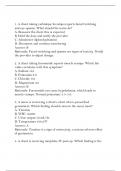
1. A client started on fluoxetine 5 days ago reports increased
energy and planning their funeral. What should the nurse do?
A. Encourage journaling
B. Monitor sleep
C. Notify the provider immediately
D. Provide distraction techniques
Answer: C
Rationale: Increased energy + suicidal ideation early in SSRI
therapy is dangerous and should be reported.
2. A client prescribed clopidogrel should avoid which over-the
counter medication?
A. Acetaminophen
B. Ibuprofen
C. Famotidine
D. Guaifenesin
Answer: B
Rationale: NSAIDs like ibuprofen increase bleeding risk when
combined with antiplatelet agents like clopidogrel.
3. A nurse is reviewing a client’s chart who is prescribed
gentamicin. Which finding should concern the nurse most?
A. Tinnitus
B. WBC 10,000
C. Urine output 50 mL/hr
D. Temperature 100.2°F
Answer: A
Rationale: Tinnitus is a sign of ototoxicity, a serious adverse effect
of gentamicin.
4. A client is receiving morphine IV post-op. Which finding is the
,priority?
A. Nausea
B. Respiratory rate of 8/min
C. Itching
D. Sedation score of 2
Answer: B
Rationale: Respiratory depression (<12/min) is the most life
threatening side effect of opioids.
5. A client with a penicillin allergy is prescribed cephalexin. What
is the nurse’s priority?
A. Administer as ordered
B. Ask about previous reaction type
C. Hold the dose for 30 minutes
D. Give with food
Answer: B
Rationale: Cross-sensitivity may occur. Ask if the client had a true
anaphylactic reaction before administering.
6. A nurse is caring for a client on glipizide. Which statement
indicates understanding?
A. “I can skip meals if I’m not hungry.”
B. “This medication will not cause low blood sugar.”
C. “I will avoid alcohol while taking this.”
D. “I can take this with grapefruit juice.”
Answer: C
Rationale: Alcohol with glipizide increases the risk of
hypoglycemia and a disulfiram-like reaction.
7. A client taking phenytoin shows swollen, bleeding gums. What
should the nurse recommend?
A. Discontinue the drug
B. Increase fluid intake
, C. Practice good oral hygiene
D. Reduce dietary sugar
Answer: C
Rationale: Gingival hyperplasia is a known side effect. Encourage
oral care, not discontinuation.
8. A post-op client is given ondansetron. Which is an expected
outcome?
A. Decreased heart rate
B. Absence of nausea
C. Increased bowel sounds
D. Sedation
Answer: B
Rationale: Ondansetron is a serotonin antagonist used to prevent
or treat nausea and vomiting.
9. A client receiving methotrexate for cancer reports mouth
sores. What is the nurse's best response?
A. “This is a normal side effect.”
B. “Increase intake of spicy food.”
C. “Use a soft toothbrush and rinse with saline.”
D. “Chew gum frequently.”
Answer: C
Rationale: Mouth sores (stomatitis) are common. Gentle oral care
is essential to prevent infection and discomfort.
10. A client is prescribed exenatide. What is a common side
effect?
A. Hyperglycemia
B. Constipation
C. Nausea
D. Tachycardia
Answer: C
energy and planning their funeral. What should the nurse do?
A. Encourage journaling
B. Monitor sleep
C. Notify the provider immediately
D. Provide distraction techniques
Answer: C
Rationale: Increased energy + suicidal ideation early in SSRI
therapy is dangerous and should be reported.
2. A client prescribed clopidogrel should avoid which over-the
counter medication?
A. Acetaminophen
B. Ibuprofen
C. Famotidine
D. Guaifenesin
Answer: B
Rationale: NSAIDs like ibuprofen increase bleeding risk when
combined with antiplatelet agents like clopidogrel.
3. A nurse is reviewing a client’s chart who is prescribed
gentamicin. Which finding should concern the nurse most?
A. Tinnitus
B. WBC 10,000
C. Urine output 50 mL/hr
D. Temperature 100.2°F
Answer: A
Rationale: Tinnitus is a sign of ototoxicity, a serious adverse effect
of gentamicin.
4. A client is receiving morphine IV post-op. Which finding is the
,priority?
A. Nausea
B. Respiratory rate of 8/min
C. Itching
D. Sedation score of 2
Answer: B
Rationale: Respiratory depression (<12/min) is the most life
threatening side effect of opioids.
5. A client with a penicillin allergy is prescribed cephalexin. What
is the nurse’s priority?
A. Administer as ordered
B. Ask about previous reaction type
C. Hold the dose for 30 minutes
D. Give with food
Answer: B
Rationale: Cross-sensitivity may occur. Ask if the client had a true
anaphylactic reaction before administering.
6. A nurse is caring for a client on glipizide. Which statement
indicates understanding?
A. “I can skip meals if I’m not hungry.”
B. “This medication will not cause low blood sugar.”
C. “I will avoid alcohol while taking this.”
D. “I can take this with grapefruit juice.”
Answer: C
Rationale: Alcohol with glipizide increases the risk of
hypoglycemia and a disulfiram-like reaction.
7. A client taking phenytoin shows swollen, bleeding gums. What
should the nurse recommend?
A. Discontinue the drug
B. Increase fluid intake
, C. Practice good oral hygiene
D. Reduce dietary sugar
Answer: C
Rationale: Gingival hyperplasia is a known side effect. Encourage
oral care, not discontinuation.
8. A post-op client is given ondansetron. Which is an expected
outcome?
A. Decreased heart rate
B. Absence of nausea
C. Increased bowel sounds
D. Sedation
Answer: B
Rationale: Ondansetron is a serotonin antagonist used to prevent
or treat nausea and vomiting.
9. A client receiving methotrexate for cancer reports mouth
sores. What is the nurse's best response?
A. “This is a normal side effect.”
B. “Increase intake of spicy food.”
C. “Use a soft toothbrush and rinse with saline.”
D. “Chew gum frequently.”
Answer: C
Rationale: Mouth sores (stomatitis) are common. Gentle oral care
is essential to prevent infection and discomfort.
10. A client is prescribed exenatide. What is a common side
effect?
A. Hyperglycemia
B. Constipation
C. Nausea
D. Tachycardia
Answer: C