C"diovascul" system and ex3cise
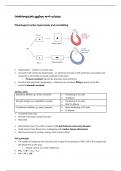
Physiological cardiac hypertrophy and remodelling
• Hypertrophy – increase in muscle mass
• Concentric left-ventricular hypertrophy – an abnormal increase in left ventricular myocardial mass
caused by a chronically increased workload on the heart
o Pressure overload induced by arteriolar vasoconstriction
• Eccentric left-ventricular hypertrophy – induced by an increased filling pressure of the left
ventricle (diastolic overload)
Athlete’s Heart
Endurance athlete e.g. runner, swimmer • Thickening of LV walls
• LV dilation
Strength athlete e.g. weightlifter, wrestler • Thickening of LV walls
• Mild LV dilation
Combination athlete e.g. rower, canoeist • Gross thickening of LV walls
• LV dilation
• Increased heart mass
• Normal of increased cardiac function
• Reversible
• Elite athletes have 10 to 20% increases in LV wall thickness and cavity diameter
• Small amount have dimensions overlapping with cardiac disease dimensions
• Most pronounced in cycling, rowing, cross-country skiing
Fick’s principle
• The uptake of oxygen by the lung (mL/min) is equal to the product of AVO2 diff of the oxygen and
the blood flow to the lung
o Arterial-venous O2 content difference
• 𝑽𝑶𝟐 = 𝑪𝑶 × (𝑪𝜶 − 𝑪𝒗 )
• 𝑪𝑶 = 𝑺𝑽 × 𝑯𝑹
, • Maximum heart rate = age-dependent (220 – age)
• Stroke volume = exercise dependent
A. Endurance athlete – isotonic/ dynamic/ endurance exercise
(1) Increased:
• Atrial/ventricular inotropy – increased contractile force of the walls due to epinephrine secretion
• Lusitropy – the rate of myocardial relaxation (diastolic function)
• Frank-Starling effect – increase in venous return leads to a greater stretch of muscle fibres =
stronger contraction
• Peripheral vascular dilation
• Skeletal and abdominothoracic pump activity
• Venous constriction
(2) Volume overload – expansion of plasma volume which elevates the blood volume that returns to
the heart
• Larger vascular volume for greater cardiac filling + SV + cardiovascular stability during exercise
Blood return to the Heart
• Venous return – the flow of blood from the periphery back to the RA
• More blood returning, more blood pumped out = major determinant of cardiac output
Muscle contraction • Rhythmical contraction of limb muscles promotes venous return
by the muscle pump mechanism
• Veins surround skeletal muscle and contain a one-way valve that
only opens for upward flow
o Prevents blood from
flowing down again once
muscles relax
• PA uses this to increase cardiac
output to compensate for the
body’s needs
Decreased venous The ability of a vein to adjust the BP and increase V of blood
compliance • Sympathetic activation of veins = decrease venous compliance,
increased central venous pressure and promotes venous return
(Frank-Starling mechanism)
• When blood vessels throughout the body are constricted
(sympathetic activation) = increased resistance causes BP to rise
o Rise in BP overrides
venous resistances,
causing increased
venous return
Physiological cardiac hypertrophy and remodelling
• Hypertrophy – increase in muscle mass
• Concentric left-ventricular hypertrophy – an abnormal increase in left ventricular myocardial mass
caused by a chronically increased workload on the heart
o Pressure overload induced by arteriolar vasoconstriction
• Eccentric left-ventricular hypertrophy – induced by an increased filling pressure of the left
ventricle (diastolic overload)
Athlete’s Heart
Endurance athlete e.g. runner, swimmer • Thickening of LV walls
• LV dilation
Strength athlete e.g. weightlifter, wrestler • Thickening of LV walls
• Mild LV dilation
Combination athlete e.g. rower, canoeist • Gross thickening of LV walls
• LV dilation
• Increased heart mass
• Normal of increased cardiac function
• Reversible
• Elite athletes have 10 to 20% increases in LV wall thickness and cavity diameter
• Small amount have dimensions overlapping with cardiac disease dimensions
• Most pronounced in cycling, rowing, cross-country skiing
Fick’s principle
• The uptake of oxygen by the lung (mL/min) is equal to the product of AVO2 diff of the oxygen and
the blood flow to the lung
o Arterial-venous O2 content difference
• 𝑽𝑶𝟐 = 𝑪𝑶 × (𝑪𝜶 − 𝑪𝒗 )
• 𝑪𝑶 = 𝑺𝑽 × 𝑯𝑹
, • Maximum heart rate = age-dependent (220 – age)
• Stroke volume = exercise dependent
A. Endurance athlete – isotonic/ dynamic/ endurance exercise
(1) Increased:
• Atrial/ventricular inotropy – increased contractile force of the walls due to epinephrine secretion
• Lusitropy – the rate of myocardial relaxation (diastolic function)
• Frank-Starling effect – increase in venous return leads to a greater stretch of muscle fibres =
stronger contraction
• Peripheral vascular dilation
• Skeletal and abdominothoracic pump activity
• Venous constriction
(2) Volume overload – expansion of plasma volume which elevates the blood volume that returns to
the heart
• Larger vascular volume for greater cardiac filling + SV + cardiovascular stability during exercise
Blood return to the Heart
• Venous return – the flow of blood from the periphery back to the RA
• More blood returning, more blood pumped out = major determinant of cardiac output
Muscle contraction • Rhythmical contraction of limb muscles promotes venous return
by the muscle pump mechanism
• Veins surround skeletal muscle and contain a one-way valve that
only opens for upward flow
o Prevents blood from
flowing down again once
muscles relax
• PA uses this to increase cardiac
output to compensate for the
body’s needs
Decreased venous The ability of a vein to adjust the BP and increase V of blood
compliance • Sympathetic activation of veins = decrease venous compliance,
increased central venous pressure and promotes venous return
(Frank-Starling mechanism)
• When blood vessels throughout the body are constricted
(sympathetic activation) = increased resistance causes BP to rise
o Rise in BP overrides
venous resistances,
causing increased
venous return