En#gy metabolism and en#gy balance
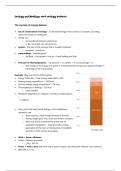
The concept of energy balance
• law of conservation of energy – (1) the total energy in the universe is constant, (2) energy
cannot be created or destroyed
• energy can:
o be transferred between substances
o or be converted into various forms
• system – the part of the universe that is studied/ observed
o reactants + products
• surroundings – everything eels
o the flask + the student + the air + hand holding the flask
• First Law of Thermodynamics – D E universe = D E system + D E surroundings = 0
o Any change in the energy of a system is accompanied by an equal and opposite change in
the energy of the surroundings
Example: 70kg man TEE of 2500 kcal/day
• Energy intake (EI) = Total energy expenditure (TEE)
+/- Adapt
• Resting energy expenditure = 1500 kcal
• Activity-related energy expenditure = 750 kcal TEF
• Thermogenesis of feeding = 250 kcal
o Least variable
AEE
• Metabolic adaptation to negative or positive energy balance
=
+/-250kcal
• Every cell in the body needs energy + has metabolism/ REE/RMR
metabolic rate
o Brain requires a high energy demand to function
o During weight gain/ loss, brain size remains constant
o Brain size and EE are preserved at the cost of
peripheral metabolism – body prioritizes energy
generation of the brain at the expense of metabolic
activities in other tissues and organs
% kcal/ day
• Work = force x distance
• Joules = Newton per meter
o 1 kg = 9.81 N
• Power = work / time (the work rate or power output, describing the intensity of an exercise)
• Watt (W) = J / sec
,• Work and power measured using ergometers e.g. bench test, cycle ergometer (cycling against
resistance), treadmill
Calorimetry
• Measure heat involved in respiration of guinea pig
• Guinea pig > closed central compartment surrounded by ice
• Over time, ice melted but body temp remained stable
• Warm air exhaled by animal = warm air produced by combustion of charcoal
o Respiration = combustion rxn
Energy found in food:
• Bomb calorimeter
• Sample of food is burned with oxygen, mimic oxidation in body
• Heat release > rise in temp of water
• Represents amount of energy in food sample > can compare input to output
• 1 kcal = the amount of energy to raise 1 kg of water by 1°C
Direct calorimetry Indirect calorimetry
• Closed system surrounded by water jacket • Measures respiratory gases = O2 and CO2
• Heat energy transferred from person to content of ambient air and O2 and CO2
water > warmed content of expired air
• Measure energy expenditure based on how • Air flow must be continuous and at a known
much water was warmed by 1°C fixed rate
• Nutrients + O2 (indirect calorimetry) ® heat
+ CO2 + H2O (direct calorimetry)
• Uses Hess’s law – direct relationship
between O2 consumption and heat
production
The Energy cost of exercise
• VO2 – volume of oxygen consumed per minute (L/min)
• VCO2 – the volume of carbon dioxide produced per minute (L/min)
𝑽𝑪𝑶𝟐
• Respiratory exchange ratio (RER) = 𝑽𝑶𝟐
o RER for glucose oxidation = 1
o RER for palmitic acid oxidation = 0.7
o RER for protein oxidation = 0.83
• Glycolysis is faster compared to protein and fat
o More oxygen is required to yield the same amount of energy
o For proteins, oxidation yields two moles of ammonia which is converted to urea; ATP is
required for conversion
, • Respiratory Exchange ® Energy expenditure by indirect calorimetry
o Measure VO2 and VCO2 in steady state
o Determine RER
o Apply caloric equivalent at a given RER (kJ/ L oxygen consumed)
o VO2 (L/min) x kJ/L x minutes = kJ energy expenditure
The double-labelled water (DLW)
• Using non-radioactive isotope 2H2O18
• O18 exchanges between oxygen in water and carbon dioxide, recycled between them
• Hydrogen leaves the body mainly as water
• CO2 is exhaled so [O18] decreases, but 2H remains in H2O
o Difference in that rat of turnover of the 2 labelled formed of H2O = a measure of
production rate of CO2
o Loss is measured by saliva sample at day 14
o Measure ratio of 2 water isotopes
• Yields VCO2 over a period of days
o To determine EE ® solve for VO2 over the same period ® determine the caloric
equivalent
• RER = VCO2/ VO2
o Two unknowns, so must determine the Food Quotient (FQ)
o Food Quotient – the ratio of VCO2/VO2 if all food eaten is oxidized
o Substitute FQ for RER, then can solve for VO2 then work out EE from caloric equivalent
Assumptions that need to be met in direct calorimetry
• All O2 is used to oxidise degradable fuels, therefore all CO2 is recovered
• Gas exchange is in non-acidolic, steady-state conditions
• There is no time delay for the evolution of Cos from the body’s bicarb pool
• Unaccounted for energy loss is minor – e.g. protein loss from hair, nails, skin/ energy loss from
sweat solutes/ incomplete oxidation of alcohol and methane
• Error in caloric equivalents for oxygen, carbon dioxide and nitrogen/ error in caloric equivalents
for weight lost or gained
Energy expenditure measurement techniques:
Accuracy and precision
Ease of administration
Metabolic chambers – an airtight room in which participants reside for a set period of time
Doubly labelled water – an isotope-based technique for the measurement of energy expenditure
Heart rate monitors – detect or measure heart/ pulse rate
Accelerometers – measures the vibration or acceleration of motion of a structure
Physical activity questionnaires
The concept of energy balance
• law of conservation of energy – (1) the total energy in the universe is constant, (2) energy
cannot be created or destroyed
• energy can:
o be transferred between substances
o or be converted into various forms
• system – the part of the universe that is studied/ observed
o reactants + products
• surroundings – everything eels
o the flask + the student + the air + hand holding the flask
• First Law of Thermodynamics – D E universe = D E system + D E surroundings = 0
o Any change in the energy of a system is accompanied by an equal and opposite change in
the energy of the surroundings
Example: 70kg man TEE of 2500 kcal/day
• Energy intake (EI) = Total energy expenditure (TEE)
+/- Adapt
• Resting energy expenditure = 1500 kcal
• Activity-related energy expenditure = 750 kcal TEF
• Thermogenesis of feeding = 250 kcal
o Least variable
AEE
• Metabolic adaptation to negative or positive energy balance
=
+/-250kcal
• Every cell in the body needs energy + has metabolism/ REE/RMR
metabolic rate
o Brain requires a high energy demand to function
o During weight gain/ loss, brain size remains constant
o Brain size and EE are preserved at the cost of
peripheral metabolism – body prioritizes energy
generation of the brain at the expense of metabolic
activities in other tissues and organs
% kcal/ day
• Work = force x distance
• Joules = Newton per meter
o 1 kg = 9.81 N
• Power = work / time (the work rate or power output, describing the intensity of an exercise)
• Watt (W) = J / sec
,• Work and power measured using ergometers e.g. bench test, cycle ergometer (cycling against
resistance), treadmill
Calorimetry
• Measure heat involved in respiration of guinea pig
• Guinea pig > closed central compartment surrounded by ice
• Over time, ice melted but body temp remained stable
• Warm air exhaled by animal = warm air produced by combustion of charcoal
o Respiration = combustion rxn
Energy found in food:
• Bomb calorimeter
• Sample of food is burned with oxygen, mimic oxidation in body
• Heat release > rise in temp of water
• Represents amount of energy in food sample > can compare input to output
• 1 kcal = the amount of energy to raise 1 kg of water by 1°C
Direct calorimetry Indirect calorimetry
• Closed system surrounded by water jacket • Measures respiratory gases = O2 and CO2
• Heat energy transferred from person to content of ambient air and O2 and CO2
water > warmed content of expired air
• Measure energy expenditure based on how • Air flow must be continuous and at a known
much water was warmed by 1°C fixed rate
• Nutrients + O2 (indirect calorimetry) ® heat
+ CO2 + H2O (direct calorimetry)
• Uses Hess’s law – direct relationship
between O2 consumption and heat
production
The Energy cost of exercise
• VO2 – volume of oxygen consumed per minute (L/min)
• VCO2 – the volume of carbon dioxide produced per minute (L/min)
𝑽𝑪𝑶𝟐
• Respiratory exchange ratio (RER) = 𝑽𝑶𝟐
o RER for glucose oxidation = 1
o RER for palmitic acid oxidation = 0.7
o RER for protein oxidation = 0.83
• Glycolysis is faster compared to protein and fat
o More oxygen is required to yield the same amount of energy
o For proteins, oxidation yields two moles of ammonia which is converted to urea; ATP is
required for conversion
, • Respiratory Exchange ® Energy expenditure by indirect calorimetry
o Measure VO2 and VCO2 in steady state
o Determine RER
o Apply caloric equivalent at a given RER (kJ/ L oxygen consumed)
o VO2 (L/min) x kJ/L x minutes = kJ energy expenditure
The double-labelled water (DLW)
• Using non-radioactive isotope 2H2O18
• O18 exchanges between oxygen in water and carbon dioxide, recycled between them
• Hydrogen leaves the body mainly as water
• CO2 is exhaled so [O18] decreases, but 2H remains in H2O
o Difference in that rat of turnover of the 2 labelled formed of H2O = a measure of
production rate of CO2
o Loss is measured by saliva sample at day 14
o Measure ratio of 2 water isotopes
• Yields VCO2 over a period of days
o To determine EE ® solve for VO2 over the same period ® determine the caloric
equivalent
• RER = VCO2/ VO2
o Two unknowns, so must determine the Food Quotient (FQ)
o Food Quotient – the ratio of VCO2/VO2 if all food eaten is oxidized
o Substitute FQ for RER, then can solve for VO2 then work out EE from caloric equivalent
Assumptions that need to be met in direct calorimetry
• All O2 is used to oxidise degradable fuels, therefore all CO2 is recovered
• Gas exchange is in non-acidolic, steady-state conditions
• There is no time delay for the evolution of Cos from the body’s bicarb pool
• Unaccounted for energy loss is minor – e.g. protein loss from hair, nails, skin/ energy loss from
sweat solutes/ incomplete oxidation of alcohol and methane
• Error in caloric equivalents for oxygen, carbon dioxide and nitrogen/ error in caloric equivalents
for weight lost or gained
Energy expenditure measurement techniques:
Accuracy and precision
Ease of administration
Metabolic chambers – an airtight room in which participants reside for a set period of time
Doubly labelled water – an isotope-based technique for the measurement of energy expenditure
Heart rate monitors – detect or measure heart/ pulse rate
Accelerometers – measures the vibration or acceleration of motion of a structure
Physical activity questionnaires