M&M Proposition 2
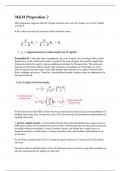
This proposition suggests that the Capital structure does not have impact on Cost of Capital
or WACC.
If the values are same the realized returns would be same.
Proposition II: Under the same assumptions, the cost of equity for a leveraged firm (a firm
financed by a mix of debt and equity) is equal to the cost of equity for an unleveraged firm
(financed entirely by equity), plus an additional premium for financial risk. This premium
increases as the firm's debt-to-equity ratio increases. Essentially, as a firm takes on more
debt, its equity becomes riskier since debt holders have priority over equity holders for the
firm's earnings and assets. Therefore, shareholders demand a higher return to compensate for
this increased risk.
So the first term on the RHS is basic but the second term is premium given to shareholders of
holding debt in the firm. Greater the value of D, the more the risk premium (compensation for
holding extra risk)
A perfect capital market is a theoretical concept where all participants have equal access to
information, there are no transaction costs or taxes, and all securities are fairly priced and can
be traded without restrictions. In such a market, buyers and sellers have equal access to
financial securities, and the prices of these securities reflect all available information at any
given time.
So in Perfect capital market WACC would be equal to Return on Unlevered Firm & Return
on Asset.
The more debt we add the Equity Cost of Capital goes up as we have to pay them premium or
pay the compensation for taking on extra risk.
This proposition suggests that the Capital structure does not have impact on Cost of Capital
or WACC.
If the values are same the realized returns would be same.
Proposition II: Under the same assumptions, the cost of equity for a leveraged firm (a firm
financed by a mix of debt and equity) is equal to the cost of equity for an unleveraged firm
(financed entirely by equity), plus an additional premium for financial risk. This premium
increases as the firm's debt-to-equity ratio increases. Essentially, as a firm takes on more
debt, its equity becomes riskier since debt holders have priority over equity holders for the
firm's earnings and assets. Therefore, shareholders demand a higher return to compensate for
this increased risk.
So the first term on the RHS is basic but the second term is premium given to shareholders of
holding debt in the firm. Greater the value of D, the more the risk premium (compensation for
holding extra risk)
A perfect capital market is a theoretical concept where all participants have equal access to
information, there are no transaction costs or taxes, and all securities are fairly priced and can
be traded without restrictions. In such a market, buyers and sellers have equal access to
financial securities, and the prices of these securities reflect all available information at any
given time.
So in Perfect capital market WACC would be equal to Return on Unlevered Firm & Return
on Asset.
The more debt we add the Equity Cost of Capital goes up as we have to pay them premium or
pay the compensation for taking on extra risk.