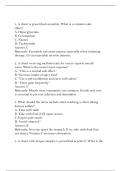
1. A client is started on lorazepam for anxiety. Which teaching
point is essential?
A. “Avoid grapefruit juice.”
B. “Take with NSAIDs.”
C. “Do not stop abruptly.”
D. “It may take weeks to work.”
Answer: C
Rationale: Benzodiazepines must be tapered to prevent
withdrawal symptoms and seizures.
2. A nurse is preparing to administer metoprolol. Which
assessment is priority?
A. Respiratory rate
B. Heart rate
C. Oxygen saturation
D. Blood glucose
Answer: B
Rationale: Metoprolol can cause bradycardia. Always check HR
before administering.
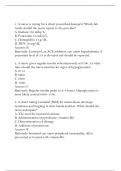
3. A client with a penicillin allergy is prescribed cephalexin. What
is the nurse’s priority?
A. Administer as ordered
B. Ask about previous reaction type
C. Hold the dose for 30 minutes
D. Give with food
Answer: B
Rationale: Cross-sensitivity may occur. Ask if the client had a true
anaphylactic reaction before administering.
4. A nurse is caring for a client on glipizide. Which statement
,indicates understanding?
A. “I can skip meals if I’m not hungry.”
B. “This medication will not cause low blood sugar.”
C. “I will avoid alcohol while taking this.”
D. “I can take this with grapefruit juice.”
Answer: C
Rationale: Alcohol with glipizide increases the risk of
hypoglycemia and a disulfiram-like reaction.
5. Which statement indicates proper understanding of
enoxaparin (Lovenox) administration?
A. “I will inject it into my thigh muscle.”
B. “I will rub the site after injection.”
C. “I will inject it into my belly fat.”
D. “I must monitor my INR daily.”
Answer: C
Rationale: Enoxaparin is given subcutaneously, preferably in the
abdomen, and INR monitoring is not required.
6. A nurse is educating a client on atorvastatin. What side effect
should the client report immediately?
A. Headache
B. Muscle pain
C. Drowsiness
D. Constipation
Answer: B
Rationale: Myopathy can occur with statins and may progress to
rhabdomyolysis. Report muscle pain immediately.
7. A client is prescribed loratadine for seasonal allergies. What is
A. key difference from diphenhydramine?
A. Loratadine causes more drowsiness
B. Loratadine causes GI upset
, C. Loratadine is non-sedating
D. Loratadine is only available IV
Answer: C
Rationale: Second-generation antihistamines like loratadine are
non-sedating.
8. A client uses sublingual nitroglycerin. Which instruction is
correct?
A. Swallow the pill with water
B. Take up to 3 doses, 5 minutes apart
C. Store it in a warm area
D. Use it once weekly
Answer: B
Rationale: For chest pain, take 1 tablet every 5 minutes, up to 3
doses, and call 911 if no relief after the first.
9. A client asks about insulin glargine (Lantus). What is the
correct response?
A. “It works immediately.”
B. “It peaks in 4 hours.”
C. “It has no peak and lasts 24 hours.”
D. “It must be mixed with regular insulin.”
Answer: C
Rationale: Glargine is a long-acting insulin with no pronounced
peak, providing steady glucose control.
10. A client with herpes simplex is prescribed acyclovir. What is the
most important teaching?
A. "Take on an empty stomach."
B. "Drink plenty of fluids."
C. "Discontinue when symptoms improve."
D. "Expect yellowing of the eyes."
Answer: B
point is essential?
A. “Avoid grapefruit juice.”
B. “Take with NSAIDs.”
C. “Do not stop abruptly.”
D. “It may take weeks to work.”
Answer: C
Rationale: Benzodiazepines must be tapered to prevent
withdrawal symptoms and seizures.
2. A nurse is preparing to administer metoprolol. Which
assessment is priority?
A. Respiratory rate
B. Heart rate
C. Oxygen saturation
D. Blood glucose
Answer: B
Rationale: Metoprolol can cause bradycardia. Always check HR
before administering.
3. A client with a penicillin allergy is prescribed cephalexin. What
is the nurse’s priority?
A. Administer as ordered
B. Ask about previous reaction type
C. Hold the dose for 30 minutes
D. Give with food
Answer: B
Rationale: Cross-sensitivity may occur. Ask if the client had a true
anaphylactic reaction before administering.
4. A nurse is caring for a client on glipizide. Which statement
,indicates understanding?
A. “I can skip meals if I’m not hungry.”
B. “This medication will not cause low blood sugar.”
C. “I will avoid alcohol while taking this.”
D. “I can take this with grapefruit juice.”
Answer: C
Rationale: Alcohol with glipizide increases the risk of
hypoglycemia and a disulfiram-like reaction.
5. Which statement indicates proper understanding of
enoxaparin (Lovenox) administration?
A. “I will inject it into my thigh muscle.”
B. “I will rub the site after injection.”
C. “I will inject it into my belly fat.”
D. “I must monitor my INR daily.”
Answer: C
Rationale: Enoxaparin is given subcutaneously, preferably in the
abdomen, and INR monitoring is not required.
6. A nurse is educating a client on atorvastatin. What side effect
should the client report immediately?
A. Headache
B. Muscle pain
C. Drowsiness
D. Constipation
Answer: B
Rationale: Myopathy can occur with statins and may progress to
rhabdomyolysis. Report muscle pain immediately.
7. A client is prescribed loratadine for seasonal allergies. What is
A. key difference from diphenhydramine?
A. Loratadine causes more drowsiness
B. Loratadine causes GI upset
, C. Loratadine is non-sedating
D. Loratadine is only available IV
Answer: C
Rationale: Second-generation antihistamines like loratadine are
non-sedating.
8. A client uses sublingual nitroglycerin. Which instruction is
correct?
A. Swallow the pill with water
B. Take up to 3 doses, 5 minutes apart
C. Store it in a warm area
D. Use it once weekly
Answer: B
Rationale: For chest pain, take 1 tablet every 5 minutes, up to 3
doses, and call 911 if no relief after the first.
9. A client asks about insulin glargine (Lantus). What is the
correct response?
A. “It works immediately.”
B. “It peaks in 4 hours.”
C. “It has no peak and lasts 24 hours.”
D. “It must be mixed with regular insulin.”
Answer: C
Rationale: Glargine is a long-acting insulin with no pronounced
peak, providing steady glucose control.
10. A client with herpes simplex is prescribed acyclovir. What is the
most important teaching?
A. "Take on an empty stomach."
B. "Drink plenty of fluids."
C. "Discontinue when symptoms improve."
D. "Expect yellowing of the eyes."
Answer: B