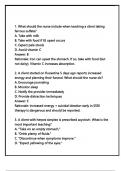
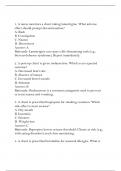
1. A client is prescribed loratadine for seasonal allergies. What is a
key difference from diphenhydramine?
A. Loratadine causes more drowsiness
B. Loratadine causes GI upset
C. Loratadine is non-sedating
D. Loratadine is only available IV
Answer: C
Rationale: Second-generation antihistamines like loratadine are
non-sedating.
2. A client taking warfarin has an INR of 4.2. Which action should
the nurse take?
A. Administer the next dose of warfarin
B. Hold the dose and notify the provider
C. Give vitamin K IV immediately
D. Prepare for platelet transfusion
Answer: B
Rationale: An INR >3.0 indicates increased bleeding risk. The
nurse should hold the medication and notify the provider.
3. A nurse is caring for a client on glipizide. Which statement
indicates understanding?
A. “I can skip meals if I’m not hungry.”
B. “This medication will not cause low blood sugar.”
C. “I will avoid alcohol while taking this.”
D. “I can take this with grapefruit juice.”
,Answer: C
Rationale: Alcohol with glipizide increases the risk of
hypoglycemia and a disulfiram-like reaction.
4. A client is taking diphenhydramine. Which side effect is most
likely?
A. Hypertension
B. Drowsiness
C. Diarrhea
D. Insomnia
Answer: B
Rationale: First-generation antihistamines like diphenhydramine
cause sedation and drowsiness.
5. A client taking carbidopa/levodopa reports facial twitching and
eye spasms. What should the nurse do?
A. Reassure the client this is expected
B. Hold the dose and notify the provider
C. Administer diphenhydramine
D. Document and continue monitoring
Answer: B
Rationale: Facial twitching and spasms are signs of toxicity. Notify
the provider to adjust dosage.
6. A client taking furosemide reports muscle cramps. Which lab
value correlates with this symptom?
A. Sodium 142
B. Potassium 2.9
, C. Chloride 101
D. Magnesium 2.0
Answer: B
Rationale: Furosemide can cause hypokalemia, which leads to
muscle cramps. Normal potassium: 3.5–5.0.
7. A nurse is teaching a client about hydroxychloroquine for lupus.
What adverse effect should be reported immediately?
A. Dizziness
B. Blurred vision
C. Dry mouth
D. Rash
Answer: B
Rationale: Retinal damage is a serious side effect. Clients need
regular eye exams.
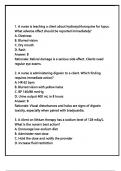
8. A nurse gives regular insulin subcutaneously at 0700. At what
time should the nurse monitor for signs of hypoglycemia?
A. 0715
B. 0800
C. 0930
D. 1200
Answer: C
Rationale: Regular insulin peaks in 2–4 hours. Hypoglycemia is
most likely around 0930–1100.
9. A client with COPD is on prednisone. Which instruction is
appropriate?
key difference from diphenhydramine?
A. Loratadine causes more drowsiness
B. Loratadine causes GI upset
C. Loratadine is non-sedating
D. Loratadine is only available IV
Answer: C
Rationale: Second-generation antihistamines like loratadine are
non-sedating.
2. A client taking warfarin has an INR of 4.2. Which action should
the nurse take?
A. Administer the next dose of warfarin
B. Hold the dose and notify the provider
C. Give vitamin K IV immediately
D. Prepare for platelet transfusion
Answer: B
Rationale: An INR >3.0 indicates increased bleeding risk. The
nurse should hold the medication and notify the provider.
3. A nurse is caring for a client on glipizide. Which statement
indicates understanding?
A. “I can skip meals if I’m not hungry.”
B. “This medication will not cause low blood sugar.”
C. “I will avoid alcohol while taking this.”
D. “I can take this with grapefruit juice.”
,Answer: C
Rationale: Alcohol with glipizide increases the risk of
hypoglycemia and a disulfiram-like reaction.
4. A client is taking diphenhydramine. Which side effect is most
likely?
A. Hypertension
B. Drowsiness
C. Diarrhea
D. Insomnia
Answer: B
Rationale: First-generation antihistamines like diphenhydramine
cause sedation and drowsiness.
5. A client taking carbidopa/levodopa reports facial twitching and
eye spasms. What should the nurse do?
A. Reassure the client this is expected
B. Hold the dose and notify the provider
C. Administer diphenhydramine
D. Document and continue monitoring
Answer: B
Rationale: Facial twitching and spasms are signs of toxicity. Notify
the provider to adjust dosage.
6. A client taking furosemide reports muscle cramps. Which lab
value correlates with this symptom?
A. Sodium 142
B. Potassium 2.9
, C. Chloride 101
D. Magnesium 2.0
Answer: B
Rationale: Furosemide can cause hypokalemia, which leads to
muscle cramps. Normal potassium: 3.5–5.0.
7. A nurse is teaching a client about hydroxychloroquine for lupus.
What adverse effect should be reported immediately?
A. Dizziness
B. Blurred vision
C. Dry mouth
D. Rash
Answer: B
Rationale: Retinal damage is a serious side effect. Clients need
regular eye exams.
8. A nurse gives regular insulin subcutaneously at 0700. At what
time should the nurse monitor for signs of hypoglycemia?
A. 0715
B. 0800
C. 0930
D. 1200
Answer: C
Rationale: Regular insulin peaks in 2–4 hours. Hypoglycemia is
most likely around 0930–1100.
9. A client with COPD is on prednisone. Which instruction is
appropriate?