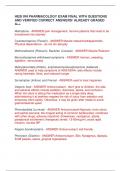
HESI RN PHARMACOLOGY EXAM FINAL WITH QUESTIONS
AND VERIFIED CORRECT ANSWERS/ ALREADY GRADED
A++
Methadone - ANSWER pain management, heroine patients that need to be
transitioned into sobriety
Cyclobenzaprine (Flexeril) - ANSWER Muscle relaxant/antispasmodic,
Physical dependence - do not d/c abruptly
Methocarbamol (Robaxin), Baclofen (Lioresal) - ANSWER Muscle Relaxant
Benzodiazepines withdrawal symptoms - ANSWER tremors, sweating,
agitation, nervousness
Methylphenidate (Ritalin), amphetamine/dexaphetamine (Adderall) -
ANSWER used to help symptoms of ADD/ADHA, side effects include
racing heartrate, thirst, and reduced hunger
Sumatriptan (Imitrex) and Fioricet - ANSWER used to treat migraines
Valporic Acid - ANSWER Anticonvulsant - don't give to children, the side
and adverse effects include sedation, dizziness, ataxia, and confusion.
When the client is taking this medication as a single daily dose,
administering it at bedtime negates the risk of injury from sedation and
enhances client safety. Otherwise, it may be given after meals to avoid
gastrointestinal upset.
Phenobarbital (Luminal) - ANSWER Anticonvulsant/Hypnotic; tonic-clonic
and partial seizures; the longest acting of common barbiturates; combined
with other drugs; adverse reactions: drowsiness, nystagmus, ataxia,
paradoxical excitement; therapeutic levels: 15-60mcg/ml; avoid rapid
infusion, monitor BP
Keppra (levetiracetam) - ANSWER Anticonvulsant, kid friendly
Phenytoin (Dilantin) - ANSWER Anticonvulsant. SEs: Nysagmus, diplopia,
EOM palsies, ataxia, gingival hyperplasia.
,Gabapentin (Neurontin) - ANSWER An anticonvulsant used to treat
neuropathic pain, with super high doses good for anxiety, the patient will be
drowsy, given with other anticonvulsant drugs
Pregabalin (Lyrica) - ANSWER used to treat neuropathic pain
Loratidine (Claritin), Cetrizine (Zyrtec) - ANSWER antihistamines, tx for
allergies
Benzonatate (Tessalon Perles), Codeine, dextromethorphan - ANSWER
antitussives helps to reduce cough
Guaifenesin (Mucinex) - ANSWER Category: Expectorant, Use: Productive
and nonproductive cough, Precautions: Increase fluids if possible
Pseudoephedrine (Sudafed) - ANSWER decongestant (alpha-1 adrenergic
agonist)
Oxymetazoline (Afrin) - ANSWER nasal decongestant; may cause rebound
congestion if used for more than 3-5 days
Warfarin (Coumadin) - ANSWER Anticoagulant that thins the blood, need
to check INR/PT blood values, antidote is vitamin k, if showing signs of
bleeding check your INR, limit leafy green vegetables
Metronidazole (Flagyl) - ANSWER Antiprotozoal. Use: trichomoniasis and
giardiasis. Clostridium difficile, amebic dysentery, PID, vaginosis.
Precautions: take with food, do not consume alcohol during therapy or 48
hr after completion of regimen. Violent vomiting from patient means they
drank while taking.
Finasteride (Proscar) and Tamsulosin (Flomax) - ANSWER Prostate Anti-
inflammatory, treats BPH
calcium carbonate (Tums) and famotidine (Pepcid) - ANSWER antacid,
treatment is effective if heartburn is relieved, if taken with heart medications
or Synthroid it will reduce the effectiveness of the drugs, decreases
absorption of the medication
,Amiodarone (Cordarone) - ANSWER Antidysrhythmic agent. Prolongs
repolarization, relaxes smooth muscles, decreases vascular resistance. For
ventricular fibrillation and unstable ventricular tachycardia. Incompatible
with heparin, may be given in PO maintenance dose, monitor for
respiratory complications.
Norepinephrine (Levophed) - ANSWER *class*: vasopressor
*Indication*: treatment of severe hypotension and shock
*Action*: increase blood pressure and cardiac output by stimulating alpha-
adrenergic receptors in the blood vessels, demonstrates minor beta activity
*Nursing Considerations*:
- monitor BP continuously if possible or every couple of minutes
- double check all concentrations with additional nurse
- may result in rebound hypotension due to tissue ischemia when
discontinued
- monitor EKG and CVP if possible
- if patient is awake instruct them to report headaches, dizziness, or chest
pain
Glargine (Lantus) - ANSWER Long-acting insulin Onset 1 hour Peak
(minimal) Duration up to 24 hours, check blood sugar before giving any
insulin, do not mix Lantas with any other insulin
Humalog (insulin lispro) - ANSWER Classification: Anti-diabetic pancreatic
hormone Onset < 15 min, Peak 1-2 hours, duration 3-6 hours, do not give
sooner than 15 minutes before a meal, Adverse Reactions: hypoglycemia
Humalin R (regular) - ANSWER onset: 30-60min, peak: 2-4 hrs, duration:
5-8 hrs, mix regular insulin first then immediate insulin last, cloudy then
clear if hanging IV check blood sugar every hour, usually given to NPO
patients
Bisphosphonates (Fosamax) - ANSWER used to treat osteoporosis, sit up
for 30 mins after taking and take with a full glass of water on an empty
stomach
Simvastatin (Zocor) and atorvastatin (Lipitor) - ANSWER management of
hypercholesterolimia, Therapeutic effects: lowers LDL and TG levels,
slightly elevates HDL
, Side effects: headache, rash, GI distress; rare: myopathy, rhabdomylosis,
hepatotoxicity, peripheral neuropathy, monitor liver function, usually taken
in the evening on an empty stomach
amlodipine (Norvasc) - ANSWER calcium channel blocker, appropriate for
african american, don't consume grapefruit juice, decreases BP
metoprolol (Lopressor) and atenolol (Tenormin), carvedilol (Coreg),
propranolol - ANSWER beta-blockers, decreases heart-rate and blood-
pressure, monitor both before giving
Lisinopril (Prinivil) - ANSWER ACE Inhibitor, anti-hypertensive, used to
treat hypertension, management of CHF, Action: block conversion of
angiotensin I to angiotensin II, increases renin levels and decreases
aldosterone leading to vasodilation Nursing Considerations:
-A dry cough is normal, helps preserve their kidney function
- monitor blood pressure often
- monitor weight and fluid status
Lidocaine (Xylocaine) - ANSWER Local anesthetic can be used topically for
pain, injection for pain, and used IV for ventricular dysrhythmias
Furosemide (Lasix) and Bumetanide - ANSWER loop diuretic, treats
hypertension, fluid retention, and heart failure, replace potassium
Spironolactone (Aldactone) and triamterene (Dyrenium) - ANSWER
potassium sparing diuretic, don't take salt substitutes and you don't need to
increase your consumption of potassium rich foods
Mannitol (Osmitrol) - ANSWER Osmotic diuretics. Pull fluid back into the
vascular and extravascular space by increasing serum osmolality to
promote osmotic changes. Used to prevent renal failure related to
hypovolemia. Decrease intracranial pressure related to cerebral edema.
Decrease intraocular pressure.
Lithium - ANSWER treats manic depression, can create a high sodium
content, don't do high active sport, check liver, creatinine, lithium toxicity
signs include nausea, diarrhea, shaking of the hands, dizziness, twitching,
AND VERIFIED CORRECT ANSWERS/ ALREADY GRADED
A++
Methadone - ANSWER pain management, heroine patients that need to be
transitioned into sobriety
Cyclobenzaprine (Flexeril) - ANSWER Muscle relaxant/antispasmodic,
Physical dependence - do not d/c abruptly
Methocarbamol (Robaxin), Baclofen (Lioresal) - ANSWER Muscle Relaxant
Benzodiazepines withdrawal symptoms - ANSWER tremors, sweating,
agitation, nervousness
Methylphenidate (Ritalin), amphetamine/dexaphetamine (Adderall) -
ANSWER used to help symptoms of ADD/ADHA, side effects include
racing heartrate, thirst, and reduced hunger
Sumatriptan (Imitrex) and Fioricet - ANSWER used to treat migraines
Valporic Acid - ANSWER Anticonvulsant - don't give to children, the side
and adverse effects include sedation, dizziness, ataxia, and confusion.
When the client is taking this medication as a single daily dose,
administering it at bedtime negates the risk of injury from sedation and
enhances client safety. Otherwise, it may be given after meals to avoid
gastrointestinal upset.
Phenobarbital (Luminal) - ANSWER Anticonvulsant/Hypnotic; tonic-clonic
and partial seizures; the longest acting of common barbiturates; combined
with other drugs; adverse reactions: drowsiness, nystagmus, ataxia,
paradoxical excitement; therapeutic levels: 15-60mcg/ml; avoid rapid
infusion, monitor BP
Keppra (levetiracetam) - ANSWER Anticonvulsant, kid friendly
Phenytoin (Dilantin) - ANSWER Anticonvulsant. SEs: Nysagmus, diplopia,
EOM palsies, ataxia, gingival hyperplasia.
,Gabapentin (Neurontin) - ANSWER An anticonvulsant used to treat
neuropathic pain, with super high doses good for anxiety, the patient will be
drowsy, given with other anticonvulsant drugs
Pregabalin (Lyrica) - ANSWER used to treat neuropathic pain
Loratidine (Claritin), Cetrizine (Zyrtec) - ANSWER antihistamines, tx for
allergies
Benzonatate (Tessalon Perles), Codeine, dextromethorphan - ANSWER
antitussives helps to reduce cough
Guaifenesin (Mucinex) - ANSWER Category: Expectorant, Use: Productive
and nonproductive cough, Precautions: Increase fluids if possible
Pseudoephedrine (Sudafed) - ANSWER decongestant (alpha-1 adrenergic
agonist)
Oxymetazoline (Afrin) - ANSWER nasal decongestant; may cause rebound
congestion if used for more than 3-5 days
Warfarin (Coumadin) - ANSWER Anticoagulant that thins the blood, need
to check INR/PT blood values, antidote is vitamin k, if showing signs of
bleeding check your INR, limit leafy green vegetables
Metronidazole (Flagyl) - ANSWER Antiprotozoal. Use: trichomoniasis and
giardiasis. Clostridium difficile, amebic dysentery, PID, vaginosis.
Precautions: take with food, do not consume alcohol during therapy or 48
hr after completion of regimen. Violent vomiting from patient means they
drank while taking.
Finasteride (Proscar) and Tamsulosin (Flomax) - ANSWER Prostate Anti-
inflammatory, treats BPH
calcium carbonate (Tums) and famotidine (Pepcid) - ANSWER antacid,
treatment is effective if heartburn is relieved, if taken with heart medications
or Synthroid it will reduce the effectiveness of the drugs, decreases
absorption of the medication
,Amiodarone (Cordarone) - ANSWER Antidysrhythmic agent. Prolongs
repolarization, relaxes smooth muscles, decreases vascular resistance. For
ventricular fibrillation and unstable ventricular tachycardia. Incompatible
with heparin, may be given in PO maintenance dose, monitor for
respiratory complications.
Norepinephrine (Levophed) - ANSWER *class*: vasopressor
*Indication*: treatment of severe hypotension and shock
*Action*: increase blood pressure and cardiac output by stimulating alpha-
adrenergic receptors in the blood vessels, demonstrates minor beta activity
*Nursing Considerations*:
- monitor BP continuously if possible or every couple of minutes
- double check all concentrations with additional nurse
- may result in rebound hypotension due to tissue ischemia when
discontinued
- monitor EKG and CVP if possible
- if patient is awake instruct them to report headaches, dizziness, or chest
pain
Glargine (Lantus) - ANSWER Long-acting insulin Onset 1 hour Peak
(minimal) Duration up to 24 hours, check blood sugar before giving any
insulin, do not mix Lantas with any other insulin
Humalog (insulin lispro) - ANSWER Classification: Anti-diabetic pancreatic
hormone Onset < 15 min, Peak 1-2 hours, duration 3-6 hours, do not give
sooner than 15 minutes before a meal, Adverse Reactions: hypoglycemia
Humalin R (regular) - ANSWER onset: 30-60min, peak: 2-4 hrs, duration:
5-8 hrs, mix regular insulin first then immediate insulin last, cloudy then
clear if hanging IV check blood sugar every hour, usually given to NPO
patients
Bisphosphonates (Fosamax) - ANSWER used to treat osteoporosis, sit up
for 30 mins after taking and take with a full glass of water on an empty
stomach
Simvastatin (Zocor) and atorvastatin (Lipitor) - ANSWER management of
hypercholesterolimia, Therapeutic effects: lowers LDL and TG levels,
slightly elevates HDL
, Side effects: headache, rash, GI distress; rare: myopathy, rhabdomylosis,
hepatotoxicity, peripheral neuropathy, monitor liver function, usually taken
in the evening on an empty stomach
amlodipine (Norvasc) - ANSWER calcium channel blocker, appropriate for
african american, don't consume grapefruit juice, decreases BP
metoprolol (Lopressor) and atenolol (Tenormin), carvedilol (Coreg),
propranolol - ANSWER beta-blockers, decreases heart-rate and blood-
pressure, monitor both before giving
Lisinopril (Prinivil) - ANSWER ACE Inhibitor, anti-hypertensive, used to
treat hypertension, management of CHF, Action: block conversion of
angiotensin I to angiotensin II, increases renin levels and decreases
aldosterone leading to vasodilation Nursing Considerations:
-A dry cough is normal, helps preserve their kidney function
- monitor blood pressure often
- monitor weight and fluid status
Lidocaine (Xylocaine) - ANSWER Local anesthetic can be used topically for
pain, injection for pain, and used IV for ventricular dysrhythmias
Furosemide (Lasix) and Bumetanide - ANSWER loop diuretic, treats
hypertension, fluid retention, and heart failure, replace potassium
Spironolactone (Aldactone) and triamterene (Dyrenium) - ANSWER
potassium sparing diuretic, don't take salt substitutes and you don't need to
increase your consumption of potassium rich foods
Mannitol (Osmitrol) - ANSWER Osmotic diuretics. Pull fluid back into the
vascular and extravascular space by increasing serum osmolality to
promote osmotic changes. Used to prevent renal failure related to
hypovolemia. Decrease intracranial pressure related to cerebral edema.
Decrease intraocular pressure.
Lithium - ANSWER treats manic depression, can create a high sodium
content, don't do high active sport, check liver, creatinine, lithium toxicity
signs include nausea, diarrhea, shaking of the hands, dizziness, twitching,