GLPH 271 - FINAL EXAM REVIEW COMPLETE
UPDATE Queen's University
, death)
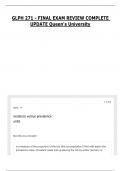
incidence -
cases/ person- time or cases/ population-at - risk
prevalence -
cases/ total population (whether newly diagnoses cases or cases developing
sometime in the past)
1. All- cause mortality rate: a measurement of all deaths in a population
2. Cause- specific mortality rate: a measurement of deaths in a population for a
specific disease
- In the numerator, only deaths of individuals in the sub- group are included
- In the denominator, only the total number of individuals that meet sub- group
criteria are included
Don't know?
2 of 229
Term
how should we broaden our understanding of health
Give this one a try later!
count of all the deaths over a specified time period divided by the population at the
mid- point of the time period in question. This is often reported per 100,000 people/
year
, - Environmental factors (occupational, housing and environmental threats)
- Social influence (education, family, SES, war/ conflict)
- Other internal & external factors that affect health
- Most common nutritional disorder in the world
- Effects of iron deficiency anemia range from impaired development in children to
decreased work productivity in adults
- Rarely fatal but can have staggering impact on entire economies sucking the life
out of development
traditionally, we think of health in medical terms. In reality we should view
health socially and address changes to social and economic conditions that
will have positive impacts on health
Don't know?
3 of 229
Term
what year was the first international conference on health promotion
Give this one a try later!
1986 1978
1990 2000
, Don't know?
4 of 229
Term
being ___ is a critical component of advocacy
Give this one a try later!
indifferent selfish
aggressive empathetic
Don't know?
5 of 229
Term
provincial and territorial health insurance plans (Medicare) in Canada
are required to provide insured persons coverage of insured health
services, which are:
Give this one a try later!
UPDATE Queen's University
, death)
incidence -
cases/ person- time or cases/ population-at - risk
prevalence -
cases/ total population (whether newly diagnoses cases or cases developing
sometime in the past)
1. All- cause mortality rate: a measurement of all deaths in a population
2. Cause- specific mortality rate: a measurement of deaths in a population for a
specific disease
- In the numerator, only deaths of individuals in the sub- group are included
- In the denominator, only the total number of individuals that meet sub- group
criteria are included
Don't know?
2 of 229
Term
how should we broaden our understanding of health
Give this one a try later!
count of all the deaths over a specified time period divided by the population at the
mid- point of the time period in question. This is often reported per 100,000 people/
year
, - Environmental factors (occupational, housing and environmental threats)
- Social influence (education, family, SES, war/ conflict)
- Other internal & external factors that affect health
- Most common nutritional disorder in the world
- Effects of iron deficiency anemia range from impaired development in children to
decreased work productivity in adults
- Rarely fatal but can have staggering impact on entire economies sucking the life
out of development
traditionally, we think of health in medical terms. In reality we should view
health socially and address changes to social and economic conditions that
will have positive impacts on health
Don't know?
3 of 229
Term
what year was the first international conference on health promotion
Give this one a try later!
1986 1978
1990 2000
, Don't know?
4 of 229
Term
being ___ is a critical component of advocacy
Give this one a try later!
indifferent selfish
aggressive empathetic
Don't know?
5 of 229
Term
provincial and territorial health insurance plans (Medicare) in Canada
are required to provide insured persons coverage of insured health
services, which are:
Give this one a try later!