Contract Law
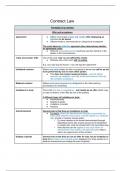
Formation of a contract
Offer and acceptance
Agreement ● Offeror must make a clear and certain offer displaying an
intention to be bound
● Offeree needs to communicate an unequivocal acceptance
The court takes an objective approach when determining whether
an agreement exists
● What the reasonable person would say was the intention of the
parties in the circumstances
‘Clear and certain’ offer Use of the word ‘may’ is not sufficiently certain
● Whereas use of the word ‘will’ is certain
E.g. ‘you may buy the house’ v ‘you will sign the agreement’
Unilateral contract Where one party makes an offer or proposal in terms that call for an act
to be performed by one or more other parties.
● This does not involve mutual promises - only the offeror
assumes an obligation, and only actual performance of the act
will constitute acceptance
Bilateral contract Where each party assumes an obligation to the other party by
promising to do something
Invitations to treat This is the first step in negotiations - not treated as an offer (which may
or may not lead to a firm offer by one of the parties)
4 different types of invitations to treat:
● Advertisements
● Display of goods
● Invitations to tender
● Auctions
Advertisements General rule is that they are invitations to treat
● Exception: where the advertisement includes a prescribed act
and a clear intention to be bound, it will be treated as a unilateral
offer (Carlill v Carbolic Smoke Ball)
○ E.g here intention to be bound demonstrated through
depositing money into a bank account to be distributed
to people who used the smoke ball in the prescribed way
○ Note that this can be applied to any case where an
advertisement was made to the general public what is
said is an express term of the contract
Display of goods General rule is that they are not an offer for sale, but an invitation to
treat (this includes price-marked goods displayed in a shop window or in
distance transactions just stating the price of goods)
,Invitations to tender This is where a company/public body wants to purchase a major item or
service, and invites tenders (offers) from those interested
This is treated as an invitation to treat
● Exception: where the invitation expressly contains an
undertaking to accept the highest or lowest bid
○ This is treated as a unilateral contract
● Also treated as a binding contractual obligation to consider
tenders where:
○ The tenders have been solicited from specified parties
who were known to the requesting parties
○ There was an absolute deadline for submission
○ The requesting party had non-negotiables
○ This is an obligation to CONSIDER, not an obligation
to accept
Auction sales An auctioneer’s request for bids is an invitation to treat
● Accepting a bid is indicated by the fall of the auctioneer’s
hammer - offeror can revoke any time before this
An auction with reserve price: if no bid is above this price, it is not
binding.
However, if it is an auction without a reserve/minimum price, the
seller promises to sell to the highest bidder (regardless of what that
bid is)
● Here, there are 2 contracts:
○ Bilateral contract for sale: this determines entitlement
to the goods - bidder offers, auctioneer accepts or
rejects
○ Unilateral contract: this is based on the promise to
accept the highest bid
● So the bidder can sue for not having their offer accepted, but
cannot sue for the actual goods
Termination of an offer An offer can be terminated through the following methods:
● Rejection
● Lapse
● Revocation
After any of these occurs, the offer is incapable of acceptance
Rejection The same offer can’t be accepted after rejection (but the offeror can
remake an offer on the same terms)
Rejection does not take effect until it is communicated to the offeror
Where an offeree makes a counteroffer, the OG offer is deemed to
be rejected and cannot be accepted
● This is different from a request for information (seeking to
clarify the offer)
● A request for further information does not negate the OG offer
Lapse An offer can lapse in 2 ways:
● Passage of time
, ○ Offer is not accepted within the period prescribed by the
offeror
○ If no period is prescribed, an offer will lapse within ‘a
reasonable time’ (this depends on the circumstances)
● Death of a party
○ If the offeror dies: if the offeree knows that the offeror
has died, the offer will lapse, whereas if the offeree is
unaware, the offer probably will not
○ If the offeree dies: offer can’t be accepted by offeror’s
estate
Revocation An offer can be revoked any time before acceptance, not after
● Revocation is only effective upon actual notice of it reaching the
offeree
The means of communication do not matter (can be by words or by
conduct) and can also be by a third party (provided the third party has
authority)
Revocation of a unilateral offer is possible before the offeree
completes the prescribed act
● Partial performance of the act will prevent revocation (also
required for the offeree to be willing and able to complete the
offer)
Revocation of unilateral offers made to the whole world is pretty
much impossible (like in Carlill)
● But e.g. an advertisement to the whole world stating that the offer
is no longer valid will suffice
Rules relating to ● Acceptance must be in response to the offer
acceptance ○ Can’t accept an offer that wasn’t meant for you
○ If the offer is made to the world at large, everyone with
notice of the offer can accept
● Acceptance must be unqualified
○ Mirror image rule - acceptance must reflect the offer
exactly
○ If the acceptance is qualified, it will be treated as a
counteroffer or request for further information
● May be necessary to follow a prescribed mode of
acceptance
○ Clear words are required to make a mode of acceptance
mandatory
■ If this is satisfied, no other mode will suffice
○ Without a prescribed mode, offeree can decide for
themselves (and only requirement is that the mode of
acceptance is no less advantageous to the offeror)
● Acceptance must be communicated
○ Mere assent is not sufficient
○ The acceptance must be communicated - silence cannot
constitute acceptance unless the offeror clearly states
this is not required
Third party This is fine, provided that the third party has authority
communication of
, acceptance
The postal rule Where post is used to communicate acceptance, acceptance is effective
from when it is properly posted (not when received)
● Applies even if the acceptance is lost or delayed in the post
● DOES NOT apply if it is not reasonable to use post (e.g. where
prompt acceptance is required)
● DOES NOT apply to letters revoking offers
● DOES NOT apply if the letter is incorrectly addressed
● DOES NOT applied if ousted by the offeror
Communication by instantaneous methods (e.g. email) is effective
when received, not when sent.
Communication and Communication not necessary - performance is sufficient
unilateral offers
Consideration
Consideration There must be some sort of exchange
Two types of o (a) Executory consideration –contracting parties make promises
consideration to each other to perform something in the future after the contract
has been formed.
o (b) Executed consideration - at the time of the formation of the
contract the consideration has already been performed.
▪ E.g. a unilateral contract where the promise of a
reward is made and the 'price paid' in exchange for that
promise is performance of the act stipulated in the offer.
Rules governing ● Must not be past
consideration ● Must move from the promisee
● Need not be adequate
● But must be sufficient
Must not be past General rule is that it is not possible to use an act that has taken
place prior to the promise as consideration
● Exception: 3 conditions that must be satisfied for past
consideration to be sufficient
○ The act must have been done at the promisor’s
request
○ The parties must have understood that the act was to
be rewarded by payment/other benefit
○ The payment/other benefit must have been legally
enforceable if it was promised in advance
Must move from the A party who has not provided consideration may not enforce the
promisee contract
Consideration need not Courts will not interfere with a bargain freely reached by the parties
be adequate ● So even if the consideration is for something of small value
Consideration must be Must have ‘some value’ in the eyes of the law - must be worth
Formation of a contract
Offer and acceptance
Agreement ● Offeror must make a clear and certain offer displaying an
intention to be bound
● Offeree needs to communicate an unequivocal acceptance
The court takes an objective approach when determining whether
an agreement exists
● What the reasonable person would say was the intention of the
parties in the circumstances
‘Clear and certain’ offer Use of the word ‘may’ is not sufficiently certain
● Whereas use of the word ‘will’ is certain
E.g. ‘you may buy the house’ v ‘you will sign the agreement’
Unilateral contract Where one party makes an offer or proposal in terms that call for an act
to be performed by one or more other parties.
● This does not involve mutual promises - only the offeror
assumes an obligation, and only actual performance of the act
will constitute acceptance
Bilateral contract Where each party assumes an obligation to the other party by
promising to do something
Invitations to treat This is the first step in negotiations - not treated as an offer (which may
or may not lead to a firm offer by one of the parties)
4 different types of invitations to treat:
● Advertisements
● Display of goods
● Invitations to tender
● Auctions
Advertisements General rule is that they are invitations to treat
● Exception: where the advertisement includes a prescribed act
and a clear intention to be bound, it will be treated as a unilateral
offer (Carlill v Carbolic Smoke Ball)
○ E.g here intention to be bound demonstrated through
depositing money into a bank account to be distributed
to people who used the smoke ball in the prescribed way
○ Note that this can be applied to any case where an
advertisement was made to the general public what is
said is an express term of the contract
Display of goods General rule is that they are not an offer for sale, but an invitation to
treat (this includes price-marked goods displayed in a shop window or in
distance transactions just stating the price of goods)
,Invitations to tender This is where a company/public body wants to purchase a major item or
service, and invites tenders (offers) from those interested
This is treated as an invitation to treat
● Exception: where the invitation expressly contains an
undertaking to accept the highest or lowest bid
○ This is treated as a unilateral contract
● Also treated as a binding contractual obligation to consider
tenders where:
○ The tenders have been solicited from specified parties
who were known to the requesting parties
○ There was an absolute deadline for submission
○ The requesting party had non-negotiables
○ This is an obligation to CONSIDER, not an obligation
to accept
Auction sales An auctioneer’s request for bids is an invitation to treat
● Accepting a bid is indicated by the fall of the auctioneer’s
hammer - offeror can revoke any time before this
An auction with reserve price: if no bid is above this price, it is not
binding.
However, if it is an auction without a reserve/minimum price, the
seller promises to sell to the highest bidder (regardless of what that
bid is)
● Here, there are 2 contracts:
○ Bilateral contract for sale: this determines entitlement
to the goods - bidder offers, auctioneer accepts or
rejects
○ Unilateral contract: this is based on the promise to
accept the highest bid
● So the bidder can sue for not having their offer accepted, but
cannot sue for the actual goods
Termination of an offer An offer can be terminated through the following methods:
● Rejection
● Lapse
● Revocation
After any of these occurs, the offer is incapable of acceptance
Rejection The same offer can’t be accepted after rejection (but the offeror can
remake an offer on the same terms)
Rejection does not take effect until it is communicated to the offeror
Where an offeree makes a counteroffer, the OG offer is deemed to
be rejected and cannot be accepted
● This is different from a request for information (seeking to
clarify the offer)
● A request for further information does not negate the OG offer
Lapse An offer can lapse in 2 ways:
● Passage of time
, ○ Offer is not accepted within the period prescribed by the
offeror
○ If no period is prescribed, an offer will lapse within ‘a
reasonable time’ (this depends on the circumstances)
● Death of a party
○ If the offeror dies: if the offeree knows that the offeror
has died, the offer will lapse, whereas if the offeree is
unaware, the offer probably will not
○ If the offeree dies: offer can’t be accepted by offeror’s
estate
Revocation An offer can be revoked any time before acceptance, not after
● Revocation is only effective upon actual notice of it reaching the
offeree
The means of communication do not matter (can be by words or by
conduct) and can also be by a third party (provided the third party has
authority)
Revocation of a unilateral offer is possible before the offeree
completes the prescribed act
● Partial performance of the act will prevent revocation (also
required for the offeree to be willing and able to complete the
offer)
Revocation of unilateral offers made to the whole world is pretty
much impossible (like in Carlill)
● But e.g. an advertisement to the whole world stating that the offer
is no longer valid will suffice
Rules relating to ● Acceptance must be in response to the offer
acceptance ○ Can’t accept an offer that wasn’t meant for you
○ If the offer is made to the world at large, everyone with
notice of the offer can accept
● Acceptance must be unqualified
○ Mirror image rule - acceptance must reflect the offer
exactly
○ If the acceptance is qualified, it will be treated as a
counteroffer or request for further information
● May be necessary to follow a prescribed mode of
acceptance
○ Clear words are required to make a mode of acceptance
mandatory
■ If this is satisfied, no other mode will suffice
○ Without a prescribed mode, offeree can decide for
themselves (and only requirement is that the mode of
acceptance is no less advantageous to the offeror)
● Acceptance must be communicated
○ Mere assent is not sufficient
○ The acceptance must be communicated - silence cannot
constitute acceptance unless the offeror clearly states
this is not required
Third party This is fine, provided that the third party has authority
communication of
, acceptance
The postal rule Where post is used to communicate acceptance, acceptance is effective
from when it is properly posted (not when received)
● Applies even if the acceptance is lost or delayed in the post
● DOES NOT apply if it is not reasonable to use post (e.g. where
prompt acceptance is required)
● DOES NOT apply to letters revoking offers
● DOES NOT apply if the letter is incorrectly addressed
● DOES NOT applied if ousted by the offeror
Communication by instantaneous methods (e.g. email) is effective
when received, not when sent.
Communication and Communication not necessary - performance is sufficient
unilateral offers
Consideration
Consideration There must be some sort of exchange
Two types of o (a) Executory consideration –contracting parties make promises
consideration to each other to perform something in the future after the contract
has been formed.
o (b) Executed consideration - at the time of the formation of the
contract the consideration has already been performed.
▪ E.g. a unilateral contract where the promise of a
reward is made and the 'price paid' in exchange for that
promise is performance of the act stipulated in the offer.
Rules governing ● Must not be past
consideration ● Must move from the promisee
● Need not be adequate
● But must be sufficient
Must not be past General rule is that it is not possible to use an act that has taken
place prior to the promise as consideration
● Exception: 3 conditions that must be satisfied for past
consideration to be sufficient
○ The act must have been done at the promisor’s
request
○ The parties must have understood that the act was to
be rewarded by payment/other benefit
○ The payment/other benefit must have been legally
enforceable if it was promised in advance
Must move from the A party who has not provided consideration may not enforce the
promisee contract
Consideration need not Courts will not interfere with a bargain freely reached by the parties
be adequate ● So even if the consideration is for something of small value
Consideration must be Must have ‘some value’ in the eyes of the law - must be worth