ADVOCACY SKELETON:
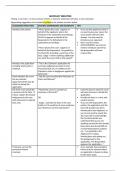
Timing: 1 min intro, 1.5 min summary of facts, 2 mins per submission (8 mins), 1 min conclusion
Signposting suggestions are included in yellow in the outline structure below.
SUGGESTED STRUCTURE EXAMPLE EXPRESSIONS AND SIGNPOSTS TIPS
Introduce the parties. “May it please the court, I appear on If you are the applicant, there is
behalf of the Applicant, who is the no need to give your name; the
Claimant in the substantive proceedings. court system will have that
Mr/Ms X appears on behalf of the already. You only need to
Respondent, the Defendant in the introduce your opponent.
substantive proceedings.” Don’t use first names.
AS the DEFENCE, you will not
“May it please the court, I appear on need to introduce yourself as
behalf of the Respondent. I’m grateful to the prosecution will have
my friend for providing a summary of the covered this.
facts. Judge- is there anything additional I
can assist the court with in that regard?”
Introduce the application “This is the Claimant’s application for
including which party is summary judgment pursuant to Civil
making it. Procedure Rule 24.2 in relation to the
Claimant’s claim of negligence against the
Defendant.”
Check whether the court “Has the court received the Particulars of
has any relevant Claim and Defence?”
paperwork which may be
relied on during the
application.
Ask if the court would like “Would the court be assisted by a Limit the facts to what the court
a summary of the facts. If summary of the facts?” will need to know to decide the
it does, explain the factual application.
background to the case OR Provide the facts in a clear and
with reference to material neutral manner.
facts only. “Judge, I can take the facts in the case If you are the Respondent, the
briefly or if it would be of more assistance parties, the application and the
turn directly to my first submission?” facts will already have been
introduced by the Applicant, so
you do not need to repeat this.
You may wish to acknowledge
this (to demonstrate you
understand that as you are
speaking second this has already
been done) and should still set
out the Respondent’s position;
e.g. “I am grateful to the
Applicant for making
introductions and setting out
the background to this
application. The Respondent
opposes the application…”
If relevant, set out the As an example, the procedural
procedural history history may be relevant where
concisely. an application is based on delay
by the other party.
, If the procedural history is not
relevant, it might be worth
telling the court that you do not
intend to rehearse it for that
reason.
Set out the legal test, rule “Moving now to the test for the The order in which you set out
or guidelines to be applied application. the issues and legal test can be
by the court in deciding The test for summary judgment is set out interchanged.
the application. in CPR 24.2:
The court may give summary judgment
against a defendant on the whole of a
claim or on a particular issue if:
(a) It considers that –
(ii) that defendant has no real
prospect of successfully
defending the claim or issue;
and
(b) There is no other compelling
reason why the case or issue
should be disposed of at trial.”
Make submissions on each “I am going to make my submissions A number of legal tests require a
of the relevant limbs of the according to the limbs of the test in CPR sequential analysis of the
test / rule / guidance in 24.2 in turn.” various steps of the test. The
turn. steps of the test are commonly
called the ‘limbs’ of the test.
For each limb of the test: “Turning now to the first limb of the test: Signpost to each limb.
State your position whether the defendant has no real In general terms, you should
/ argument. prospect of successfully defending the make your position clear and
THEN claim or issue. THEN provide reasoning in
Justify your support of your position. You
position with I have four submissions. will repeat this pattern
evidence / throughout your advocacy. This
common sense / My first submission is that the defendant will be easier for the judge to
authority clearly had a duty of care to the Claimant. digest and follow, rather than
wherever you This is not in issue and is a well- waiting until the end for your
have those in established principle. conclusion.
support. When you move to each limb of
State your My second submission is that there is the test, tell the judge how
conclusion. cogent evidence that the defendant has many submissions you have on
breached their duty of care to the that limb. Then ensure you
Claimant. There are two points in support: come to each submission in
Firstly….. turn, signposting as you
Secondly…. proceed.
When you move to a particular
My third submission is that …. submission, tell the judge how
many points you have to justify
My fourth submission is that….etc a particular submission. Then
ensure you cover those
Therefore, to conclude on this limb of the submissions / points, with
test, it can be seen that…. appropriate signposting.
When directing a judge to some
I am now moving to the second limb of paperwork, say: “Judge, if I
the test, whether there is any other could respectfully direct the
compelling reason why the case should be court to para [X] of the witness
, disposed of at trial. statement…. Are you with me
Judge?”
I have two submissions…etc”
Briefly conclude your [Briefly summarise your case, whilst
application. taking care not to overly repeat what you
have already said]
Therefore, X seeks [ASK THE COURT TO
GRANT YOUR APPLICATION]
“Unless I can assist the court any further,
those are my submissions”
OBSTACLE EXAMPLE EXPRESSIONS TIPS
Modes of address The Judges listed below should be
addressed as ‘Judge’:
- High Court Masters
- Upper Tribunal Judges
- Judges of the Employment
Appeal Tribunal
- District Judges
- District Judges (Magistrates
Courts)
- First-Tier Tribunal Judges
- Employment Judges
Magistrates should be addressed as 'Your
Worship(s)' or 'Sir' or 'Madam'.
Circuit Judges should be addressed as
'Your Honour'.
High Court and Court of Appeal Judges
should be addressed as ‘My Lord’ or 'My
Lady'.
In the tribunals, non-legal members of the
Bench should be addressed as ‘Sir or
Madam’.
You should refer to your opponent as 'my
learned friend' of they are a barrister or
'my friend' if they are a solicitor or other
advocate.
Asking for a minute in “Judge I am obliged/ grateful for the Don’t make an answer up! Better to
response to Q from judge question, please may I be allowed a take a moment to check
moment to gather my thoughts/check my
papers?”
“I’m grateful”
If you don’t know the “Forgive me I am unable to assist the
answer to a question court at this time, however I will
endeavour to get the answer to you as
soon as possible”
Timing: 1 min intro, 1.5 min summary of facts, 2 mins per submission (8 mins), 1 min conclusion
Signposting suggestions are included in yellow in the outline structure below.
SUGGESTED STRUCTURE EXAMPLE EXPRESSIONS AND SIGNPOSTS TIPS
Introduce the parties. “May it please the court, I appear on If you are the applicant, there is
behalf of the Applicant, who is the no need to give your name; the
Claimant in the substantive proceedings. court system will have that
Mr/Ms X appears on behalf of the already. You only need to
Respondent, the Defendant in the introduce your opponent.
substantive proceedings.” Don’t use first names.
AS the DEFENCE, you will not
“May it please the court, I appear on need to introduce yourself as
behalf of the Respondent. I’m grateful to the prosecution will have
my friend for providing a summary of the covered this.
facts. Judge- is there anything additional I
can assist the court with in that regard?”
Introduce the application “This is the Claimant’s application for
including which party is summary judgment pursuant to Civil
making it. Procedure Rule 24.2 in relation to the
Claimant’s claim of negligence against the
Defendant.”
Check whether the court “Has the court received the Particulars of
has any relevant Claim and Defence?”
paperwork which may be
relied on during the
application.
Ask if the court would like “Would the court be assisted by a Limit the facts to what the court
a summary of the facts. If summary of the facts?” will need to know to decide the
it does, explain the factual application.
background to the case OR Provide the facts in a clear and
with reference to material neutral manner.
facts only. “Judge, I can take the facts in the case If you are the Respondent, the
briefly or if it would be of more assistance parties, the application and the
turn directly to my first submission?” facts will already have been
introduced by the Applicant, so
you do not need to repeat this.
You may wish to acknowledge
this (to demonstrate you
understand that as you are
speaking second this has already
been done) and should still set
out the Respondent’s position;
e.g. “I am grateful to the
Applicant for making
introductions and setting out
the background to this
application. The Respondent
opposes the application…”
If relevant, set out the As an example, the procedural
procedural history history may be relevant where
concisely. an application is based on delay
by the other party.
, If the procedural history is not
relevant, it might be worth
telling the court that you do not
intend to rehearse it for that
reason.
Set out the legal test, rule “Moving now to the test for the The order in which you set out
or guidelines to be applied application. the issues and legal test can be
by the court in deciding The test for summary judgment is set out interchanged.
the application. in CPR 24.2:
The court may give summary judgment
against a defendant on the whole of a
claim or on a particular issue if:
(a) It considers that –
(ii) that defendant has no real
prospect of successfully
defending the claim or issue;
and
(b) There is no other compelling
reason why the case or issue
should be disposed of at trial.”
Make submissions on each “I am going to make my submissions A number of legal tests require a
of the relevant limbs of the according to the limbs of the test in CPR sequential analysis of the
test / rule / guidance in 24.2 in turn.” various steps of the test. The
turn. steps of the test are commonly
called the ‘limbs’ of the test.
For each limb of the test: “Turning now to the first limb of the test: Signpost to each limb.
State your position whether the defendant has no real In general terms, you should
/ argument. prospect of successfully defending the make your position clear and
THEN claim or issue. THEN provide reasoning in
Justify your support of your position. You
position with I have four submissions. will repeat this pattern
evidence / throughout your advocacy. This
common sense / My first submission is that the defendant will be easier for the judge to
authority clearly had a duty of care to the Claimant. digest and follow, rather than
wherever you This is not in issue and is a well- waiting until the end for your
have those in established principle. conclusion.
support. When you move to each limb of
State your My second submission is that there is the test, tell the judge how
conclusion. cogent evidence that the defendant has many submissions you have on
breached their duty of care to the that limb. Then ensure you
Claimant. There are two points in support: come to each submission in
Firstly….. turn, signposting as you
Secondly…. proceed.
When you move to a particular
My third submission is that …. submission, tell the judge how
many points you have to justify
My fourth submission is that….etc a particular submission. Then
ensure you cover those
Therefore, to conclude on this limb of the submissions / points, with
test, it can be seen that…. appropriate signposting.
When directing a judge to some
I am now moving to the second limb of paperwork, say: “Judge, if I
the test, whether there is any other could respectfully direct the
compelling reason why the case should be court to para [X] of the witness
, disposed of at trial. statement…. Are you with me
Judge?”
I have two submissions…etc”
Briefly conclude your [Briefly summarise your case, whilst
application. taking care not to overly repeat what you
have already said]
Therefore, X seeks [ASK THE COURT TO
GRANT YOUR APPLICATION]
“Unless I can assist the court any further,
those are my submissions”
OBSTACLE EXAMPLE EXPRESSIONS TIPS
Modes of address The Judges listed below should be
addressed as ‘Judge’:
- High Court Masters
- Upper Tribunal Judges
- Judges of the Employment
Appeal Tribunal
- District Judges
- District Judges (Magistrates
Courts)
- First-Tier Tribunal Judges
- Employment Judges
Magistrates should be addressed as 'Your
Worship(s)' or 'Sir' or 'Madam'.
Circuit Judges should be addressed as
'Your Honour'.
High Court and Court of Appeal Judges
should be addressed as ‘My Lord’ or 'My
Lady'.
In the tribunals, non-legal members of the
Bench should be addressed as ‘Sir or
Madam’.
You should refer to your opponent as 'my
learned friend' of they are a barrister or
'my friend' if they are a solicitor or other
advocate.
Asking for a minute in “Judge I am obliged/ grateful for the Don’t make an answer up! Better to
response to Q from judge question, please may I be allowed a take a moment to check
moment to gather my thoughts/check my
papers?”
“I’m grateful”
If you don’t know the “Forgive me I am unable to assist the
answer to a question court at this time, however I will
endeavour to get the answer to you as
soon as possible”