Exam 3 Study Guide
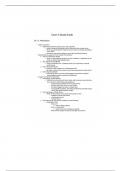
Ch. 11: Motivation
• Define motivation
o Differentiate between needs, drives, and incentives
▪ needs: inherently biological state of deficiency that compel drives
▪ drives: perceived state of urge that occurs when our bodies are deficien
some need
▪ incentives: any external object or event that motivates behavior
• Describe the key aspects of the models of Motivation
o The Drive Reduction Model
▪ when our physiological systems are out of balance or depleted, we are
driven to reduce this depleted state
o The Optimal Arousal Model
▪ yerkes and dodson law- moderate levels of arousal lead to optimal
performance
o The Evolutionary Model
▪ purpose of any organism is to perpetuate itself
▪ all major motives involve basic survival and reproduction needs and dr
o The Hierarchical Model
▪ needs range from most basic physiological necessities to highest
psychological needs for growth and fulfillment
• Hunger: Survival of the Individual
o The Biology of When We Eat
▪ Describe how the stomach, blood, brain, and hormones/neurochemica
are involved in determining eating behavior
• hunger causes stomach to have contractions
• glucose levels drop when we our hungry
• the brain triggers the drive to obtain food
• neuropeptide Y, gherkin, and endocannabinoids stimulate hunge
• insulin and leptin suppress hunger
o The Psychology of What We Eat
▪ What are the primary forces determining what we eat?
• shaped by nature and culture
• evolutionary forces
• cultural forces
o The Motive to Be Thin and the Tendency Toward Obesity
▪ Body Mass Index
• What is it?
o used to define obesity
• How is it calculated?
o takes into account height and weight
• What are the ranges for ideal, overweight, and obese?
, o ideal is 19-24, overweight is 25-29, obese is 30 and abo
• How does it compare to the Body Volume Indicator?
o does not consider muscle mass, and does not consider
circumference
o Common Myths About Dieting; Challenging Assumptions About Diet
▪ Myth 1: low-fat and low-carb is good; high-fat and high-carb is bad
• What is the reality? What is best?
o unsaturated fats are better than saturated
o complex carbs are better than simple carbs
▪ Myth 2: smaller, more frequent meals is a way to lose weight
• What is the reality? What is best?
o scientific evidence is mixed
o controlling portions while not adding more frequent me
does lead to weight loss
o What strategies work for weight loss?
▪ eat slowly, stop when you’re full
▪ log your eating and monitor weight
▪ low glycemic diet
▪ drink lots of water
▪ moderate physical activity
▪ sleep
▪ support
o Eating Disorders
▪ What does “disorder” imply?
• disfunction
• disturbing
• distressing
• deviant
▪ Differentiate between Anorexia Nervosa and Bulimia Nervosa
• anorexia: extreme fear of overweight, distorted body image, se
restriction of eating
• bulimia: binge, vomiting/laxatives, vigorous exercise
• Sex: Survival of the Species
o Describe the four phases of the Human Sexual Response
▪ Excitement: lubrication and erection
▪ Plateau: shorter for men
▪ Orgasm: women can have many; men have refractory period
▪ Resolution
• Differentiate between the Needs to Belong (Affiliation) and to Excel
o need to belong: humans are inherently social creatures, rejection can lead to
problems, need for social contact and belonging
o need to excel: achievement motivation-desire to do things well and overcom
obstacles
• Describe the three models of Motivation in the Workplace and give an example of e
o Extrinsic motivation: motivation that comes from outside a person and usua
involves rewards and praises
Ch. 11: Motivation
• Define motivation
o Differentiate between needs, drives, and incentives
▪ needs: inherently biological state of deficiency that compel drives
▪ drives: perceived state of urge that occurs when our bodies are deficien
some need
▪ incentives: any external object or event that motivates behavior
• Describe the key aspects of the models of Motivation
o The Drive Reduction Model
▪ when our physiological systems are out of balance or depleted, we are
driven to reduce this depleted state
o The Optimal Arousal Model
▪ yerkes and dodson law- moderate levels of arousal lead to optimal
performance
o The Evolutionary Model
▪ purpose of any organism is to perpetuate itself
▪ all major motives involve basic survival and reproduction needs and dr
o The Hierarchical Model
▪ needs range from most basic physiological necessities to highest
psychological needs for growth and fulfillment
• Hunger: Survival of the Individual
o The Biology of When We Eat
▪ Describe how the stomach, blood, brain, and hormones/neurochemica
are involved in determining eating behavior
• hunger causes stomach to have contractions
• glucose levels drop when we our hungry
• the brain triggers the drive to obtain food
• neuropeptide Y, gherkin, and endocannabinoids stimulate hunge
• insulin and leptin suppress hunger
o The Psychology of What We Eat
▪ What are the primary forces determining what we eat?
• shaped by nature and culture
• evolutionary forces
• cultural forces
o The Motive to Be Thin and the Tendency Toward Obesity
▪ Body Mass Index
• What is it?
o used to define obesity
• How is it calculated?
o takes into account height and weight
• What are the ranges for ideal, overweight, and obese?
, o ideal is 19-24, overweight is 25-29, obese is 30 and abo
• How does it compare to the Body Volume Indicator?
o does not consider muscle mass, and does not consider
circumference
o Common Myths About Dieting; Challenging Assumptions About Diet
▪ Myth 1: low-fat and low-carb is good; high-fat and high-carb is bad
• What is the reality? What is best?
o unsaturated fats are better than saturated
o complex carbs are better than simple carbs
▪ Myth 2: smaller, more frequent meals is a way to lose weight
• What is the reality? What is best?
o scientific evidence is mixed
o controlling portions while not adding more frequent me
does lead to weight loss
o What strategies work for weight loss?
▪ eat slowly, stop when you’re full
▪ log your eating and monitor weight
▪ low glycemic diet
▪ drink lots of water
▪ moderate physical activity
▪ sleep
▪ support
o Eating Disorders
▪ What does “disorder” imply?
• disfunction
• disturbing
• distressing
• deviant
▪ Differentiate between Anorexia Nervosa and Bulimia Nervosa
• anorexia: extreme fear of overweight, distorted body image, se
restriction of eating
• bulimia: binge, vomiting/laxatives, vigorous exercise
• Sex: Survival of the Species
o Describe the four phases of the Human Sexual Response
▪ Excitement: lubrication and erection
▪ Plateau: shorter for men
▪ Orgasm: women can have many; men have refractory period
▪ Resolution
• Differentiate between the Needs to Belong (Affiliation) and to Excel
o need to belong: humans are inherently social creatures, rejection can lead to
problems, need for social contact and belonging
o need to excel: achievement motivation-desire to do things well and overcom
obstacles
• Describe the three models of Motivation in the Workplace and give an example of e
o Extrinsic motivation: motivation that comes from outside a person and usua
involves rewards and praises