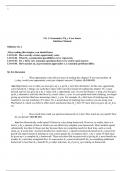
INTERIM EXAM 1 QUESTIONS WITH CORRECT ANSWERS |LATEST UPDATE 100%
SOLVED| GRADED A+
The proper oxygen flow rate in ventilating a patient with a BVM is ________ liters per minute
15
According to the AHA, in ventilating a patient with a bag-valve mask that has supplementary
oxygen, the volume administered should be sufficient to achieve visible chest rise
The first step in providing artificial ventilation of a stoma breather is to Clear any mucus or
secretion obstructing the stoma
flow-restricted, oxygen-powered ventilation device (FROPVD) should have all of the following
features EXCEPT:
- An audible alarm when ventilation is activated
- A trigger that enables the rescuer to use both hands
- A peak flow rate of up to 40 Liters per minute
- A rugged design and construction An audible alarm when ventilation is activated
The two most common airway adjuncts that EMTs use are the oropharyngeal airway (OPA) and
the nasopharyngeal airway (NPA)
An oropharyngeal airway should be inserted in All unconscious patients with no gag reflex
When suctioning a 19 year old patient who you suspect has bleeding into his throat, you should
never suction for longer than 15 seconds
The emergency situation in which the cardiovascular system fails to provide sufficient blood to
all the vital tissues is called Shock
,An insufficiency in the supply of oxygen to the body's tissues is called: Hypoxia
Before the oxygen cylinder's pressure gauge reads a minimum of __________ psi, you must
switch to a fresh cylinder. 200
When handling oxygen cylinders, the EMT should do all of the following EXCEPT:
- Have the cylinders hydrostatically tested every 5 years
- Ensure that valve seat inserts and gaskets are in good condition
- Store reserve cylinders in a warm, humid room
- Use medical-grade oxygen in all cylinders Store reserve cylinders in a warm, humid room
The best way to deliver high-concentration oxygen to a breathing patient is to use a
nonrebreather mask
A nasal cannula provides between ______ percent and _______ percent oxygen concentrations
24;44
You are assessing a 54 year old woman who is unconscious and has a noisy upper airway. If she
has dentures, during the airway procedures you should Leave them in unless they are loose
When managing the airway of a child, you should remember that the child's mouth and
nose are smaller and more easily obstructed
You are dealing with a patient who is in severe distress from a life-threating asthma attack. If
breathing stops completely, the patient is in Respiratory Arrest
Which of the following ventilation devices is contraindicated infants and children:
- BVM
, - Pediatric pocket mask
- Flow-restricted, oxygen-powered ventilation device
- Nonrebreather mask Flow-restricted, oxygen-powered ventilation device
A device that allows the control of oxygen in liters per minute is called a flowmeter
a type of flowmeter that has no gauge and allows for the adjustments of flow in liters per
minute and is stepped increments is called a constant flow selector valve
Why do some EMS systems use humidified oxygen? Lack of humidity can dry out the
patient's mucous membranes.
A patient in the end stage of respiratory disease may have switched over to hypoxic drive
you are talking with a patient who states that heh has had COPD for the past 10 years. What is
COPD? Chronic Pulmonary Disease
In using an air mattress, the patient is placed on the device and the air is ___________ by a
pump. The mattress will then form a ________ and conforming surface around the patient
withdrawn; rigid
The body system that is responsible for the breakdown of food into absorbable forms is the
_________ system Digestive
An agency privacy officer is required by the Health Insurance Portability and Accountability
Act
When an adult patient is breathing at a respiratory rate of 12 times per minute, you would
expect that the minute volume would approximately be _______ mL per minute 6000
SOLVED| GRADED A+
The proper oxygen flow rate in ventilating a patient with a BVM is ________ liters per minute
15
According to the AHA, in ventilating a patient with a bag-valve mask that has supplementary
oxygen, the volume administered should be sufficient to achieve visible chest rise
The first step in providing artificial ventilation of a stoma breather is to Clear any mucus or
secretion obstructing the stoma
flow-restricted, oxygen-powered ventilation device (FROPVD) should have all of the following
features EXCEPT:
- An audible alarm when ventilation is activated
- A trigger that enables the rescuer to use both hands
- A peak flow rate of up to 40 Liters per minute
- A rugged design and construction An audible alarm when ventilation is activated
The two most common airway adjuncts that EMTs use are the oropharyngeal airway (OPA) and
the nasopharyngeal airway (NPA)
An oropharyngeal airway should be inserted in All unconscious patients with no gag reflex
When suctioning a 19 year old patient who you suspect has bleeding into his throat, you should
never suction for longer than 15 seconds
The emergency situation in which the cardiovascular system fails to provide sufficient blood to
all the vital tissues is called Shock
,An insufficiency in the supply of oxygen to the body's tissues is called: Hypoxia
Before the oxygen cylinder's pressure gauge reads a minimum of __________ psi, you must
switch to a fresh cylinder. 200
When handling oxygen cylinders, the EMT should do all of the following EXCEPT:
- Have the cylinders hydrostatically tested every 5 years
- Ensure that valve seat inserts and gaskets are in good condition
- Store reserve cylinders in a warm, humid room
- Use medical-grade oxygen in all cylinders Store reserve cylinders in a warm, humid room
The best way to deliver high-concentration oxygen to a breathing patient is to use a
nonrebreather mask
A nasal cannula provides between ______ percent and _______ percent oxygen concentrations
24;44
You are assessing a 54 year old woman who is unconscious and has a noisy upper airway. If she
has dentures, during the airway procedures you should Leave them in unless they are loose
When managing the airway of a child, you should remember that the child's mouth and
nose are smaller and more easily obstructed
You are dealing with a patient who is in severe distress from a life-threating asthma attack. If
breathing stops completely, the patient is in Respiratory Arrest
Which of the following ventilation devices is contraindicated infants and children:
- BVM
, - Pediatric pocket mask
- Flow-restricted, oxygen-powered ventilation device
- Nonrebreather mask Flow-restricted, oxygen-powered ventilation device
A device that allows the control of oxygen in liters per minute is called a flowmeter
a type of flowmeter that has no gauge and allows for the adjustments of flow in liters per
minute and is stepped increments is called a constant flow selector valve
Why do some EMS systems use humidified oxygen? Lack of humidity can dry out the
patient's mucous membranes.
A patient in the end stage of respiratory disease may have switched over to hypoxic drive
you are talking with a patient who states that heh has had COPD for the past 10 years. What is
COPD? Chronic Pulmonary Disease
In using an air mattress, the patient is placed on the device and the air is ___________ by a
pump. The mattress will then form a ________ and conforming surface around the patient
withdrawn; rigid
The body system that is responsible for the breakdown of food into absorbable forms is the
_________ system Digestive
An agency privacy officer is required by the Health Insurance Portability and Accountability
Act
When an adult patient is breathing at a respiratory rate of 12 times per minute, you would
expect that the minute volume would approximately be _______ mL per minute 6000