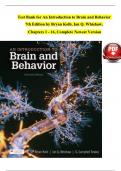
Test Bank For Textbook Of Diagnostic Microbiology
6th Edition By Connie R. Mahon
Chapters 1 - 41
, Mahon:qTextbookq ofqDiagnosticqMicrobiology,q 6thqEditionqTestqBank
Tableq ofq contents
Partq1:qIntroductionqtoqClinicalq Microbiology
Chapterq1.qBacterialqCellqStructure,qPhysiology,qMetabolism,qandqGenetics
Chapterq2.qHost-ParasiteqInteraction
Chapterq3.qTheqLaboratoryqRoleqinqInfectionqControl
Chapterq4.qControlqofqMicroorganisms:qDisinfection,qSterilization,qandqMicrobiologyqSafety
Chapterq5.qPerformanceqImprovementqinqtheqMicrobiologyqLaboratory
Chapterq6.qSpecimenqCollectionqandqProcessing
Chapterq7.qMicroscopicqExaminationqofqMaterialsqfromqInfectedqSites
Chapterq8.q UseqofqColonyqMorphologyqforqtheqPresumptiveqIdentificationqofqMicroorganisms
Chapterq9.q BiochemicalqIdentificationqofqGram-NegativeqBacteria
Chapterq10.qImmunodiagnosisqofqInfectiousqDiseases
Chapterq11.qApplicationsqofqMolecularqDiagnostics
Chapterq12.qAntibacterialqMechanismsqofqActionqandqBacterialqResistanceqMechanisms
Chapterq13.qAntimicrobialqSusceptibilityqTesting
Partq2:qLaboratoryqIdentificationqofqSignificantq Isolates
Chapterq14.qStaphylococci
Chapterq15.qStreptococcus,qEnterococcus,qandqOtherqCatalase-Negative,qGram-PositiveqCocci
Chapterq16.qAerobicqGram-PositiveqBacilli
Chapterq17.qNeisseriaqSpeciesqandqMoraxellaqcatarrhalis
Chapterq18.qHaemophilus,qHACEK,qLegionellaqandqOtherqFastidiousqGram-NegativeqBacilli
Chapterq19.qEnterobacteriaceae
Chapterq20.qVibrio,qAeromonas,qandqCampylobacterqSpecies
Chapterq21.qNonfermentingqandqMiscellaneousqGram-NegativeqBacilli
Chapterq22.qAnaerobesqofqClinicalq Importance
Chapterq23.qTheqSpirochetes
Chapterq24.qChlamydia,qRickettsia,qandqSimilarqOrganisms
Chapterq25.qMycoplasmaqandqUreaplasma
Chapterq26.qMycobacteriumqtuberculosisqandqNontuberculousqMycobacteria
Chapterq27.qMedicallyqSignificantqFungi
Chapterq28.qDiagnosticqParasitology
Chapterq29.qClinicalqVirology
Chapterq30.qAgentsqofqBioterrorqandqForensicq Microbiology
Chapterq31.qBiofilms:qArchitectsqofqDisease
Partq3:qLaboratoryqDiagnosisqofq InfectiousqDiseases:q andqOrganqSystemqApproachqtoq DiagnosticMicrobiolo
gy
Chapterq32.qUpperqandqLowerqRespiratoryqTractqInfections
Chapterq33.qSkinqandqSoftqTissueqInfections
Chapterq34.qGastrointestinalq InfectionsqandqFoodqPoisoning
Chapterq35.qInfectionsqofqtheqCentralqNervousqSystem
Chapterq36.qBacteremiaqandqSepsis
Chapterq37.qUrinaryqTractqInfections
Chapterq38.qGenitalqInfectionsqandqSexuallyqTransmittedqInfections
Chapterq39.qInfectionsqinqSpecialqPopulations
Chapterq40.qZoonoticq Diseases
Chapterq41.qOcularqInfections
-
,Chapterq01:qBacterialqCellqStructure,qPhysiology,qMetabolism,qandqGeneticqsMaho
n:qTextbookqofqDiagnosticqMicrobiology,q6thqEditionqTestqBank
MULTIPLEqCHOICE
1. Toqsurvive,qmicrobialqinhabitantsqhaveqlearnedqtoqadaptqbyqvaryingqallqofqtheqfollowing,q except
a. growthqrate.
b. growthqinqallqatmosphericqconditions.
c. growthqatqparticularqtemperatures.
d. bacterialqshape.
ANSWER:SqD
Theqchapterqbeginsqbyqdiscussingqtheqwayqmicrobialqinhabitantsqhaveqhadqtoqevolveqtoqsurvivqei
nqmanyqdifferentqnichesqandqhabitats.qItqdiscussesqslowqgrowers,qrapidqgrowers,qandqreplicaqtion
qwithqscarceqorqabundantqnutrients,qunderqdifferentqatmosphericqconditions,qtemperatureqrqequir
ements,qandqcellqstructure.qBacterialqshapeqasqaqformqofqevolutionqisqnotqdiscussed.
OBJ:q Levelq2:q Interpretation
2. Whoqwasqconsideredqtheqfatherqofqprotozoologyqandqbacteriology?
a. AntonqvanqLeeuwenhoek
b. LouisqPasteur
c. CarlqLandsteiner
d. MichaelqDouglas
ANSWER:SqA
TheqbookqdiscussesqAntonqvanqLeeuwenhoekqasqtheqinventorqofqtheqmicroscopeqandqtheqfirstqpe
rsonqtoqseeqtheq“beasties.”qSoqtheyqdubbedqhimqtheqfatherqofqprotozoologyqandqbacteriologqy.Th
eqotherqthreeqindividualsqwereqnotqdiscussed.
OBJ:q Levelq1:q Recall
3. Prokaryoticqcellsqhaveqwhichqofqtheqfollowingqstructuresqinqtheirqcytoplasm?
a. Golgiqapparatus
b. Ribosomes
c. Mitochondria
d. Endoplasmicqreticulum
ANSWER:SqB
Allqtheqstructuresqlistedqareqfoundqinqeukaryoticqcells,qbutqribosomesqareqtheqonlyqonesqthqat
applyqtoqprokaryoticqcells.
OBJ:q Levelq1:q Recall
4. ThisqformqofqDNAqisqcommonlyqfoundqinqeukaryoticqcells.
a. Linear
b. Circular
c. Plasmid
d. Colloid
TestBanks/SSolutionq Manualsq andSExa
, ANSWER:SqA
CircularqandqplasmidqDNAqarequsuallyqfoundqonlyqinqbacteria,qnotqeukaryoticqcells.qColloidqiqsa
qpropertyqofqproteinqmoleculesqandqisqnotqassociatedqwithqnucleotides.
OBJ:q Levelq1:q Recall
5. Theqnuclearqmembraneqinqprokaryotesqis
a. missing.
b. impenetrable.
c. aqclassicqmembrane.
d. aqlipidqbilayerSmembrane.
ANSWER:SqA
Prokaryoticqcellsqdoqnotqhaveqanyqmembrane-
boundqstructuresqinqtheqcytoplasmqincludingq astructuredqnucleus.
OBJ:q Levelq1:q Recall
6. Aqmicroorganismqthatqisqaqunicellularqorganismqandqlacksqaqnuclearqmembraneqandqtruqe
nucleusqbelongsqtoqwhichqclassification?
a. Fungi
b. Bacteria
c. Algae
d. Parasite
ANSWER:SqB
Fungi,qalgae,qandqparasitesqarequnicellularSeukaryoticqorganismsqthatqcontainqaqtrueqnucleuqs.B
acteriaqareqprokaryoticqandqdoqnotqcontainqaqtrueqnucleusqorqnuclearqmembrane.
OBJ:q Levelq1:q Recall
7. Inqtheqlaboratory,qtheqclinicalqmicrobiologistqisqresponsibleqforqallqtheqfollowing,q except
a. isolatingqmicroorganisms.
b. selectingqtreatmentqforqpatients.
c. identifyingqmicroorganisms.
d. analyzingqbacteriaqthatqcauseqdisease.
ANSWER:SqB
ClinicalqmicrobiologistsqdoqnotqselectqtheqtreatmentqforSpatients.qTheyqprovideqtheqdoctorqwitqht
heqnameqofqtheqorganismqandqtheqantibioticsqthatqcanqkillqtheqbacteria,qbutqnotqinqtheqfinalqsqelecti
onqofqtreatmentqprotocols.
OBJ:q Levelq2:q Recall
8. Whatqenablesqtheqmicrobiologistqtoqselectqtheqcorrectqmediaqforqprimaryqcultureqandqoptimizqet
heqchanceqofqisolatingqaqpathogenicqorganism?
a. Determiningqstainingqcharacteristics
b. Understandingqtheqcellqstructureqandqbiochemicalqpathwaysqofqanqorganism
c. Understandingqtheqgrowthqrequirementsqofqpotentialqpathogensqatqspecificqbodyqsite
d. Knowingqtheqdifferencesq inqcellqwallsqofqparticularqbacteria
ANSWER:SqC
6th Edition By Connie R. Mahon
Chapters 1 - 41
, Mahon:qTextbookq ofqDiagnosticqMicrobiology,q 6thqEditionqTestqBank
Tableq ofq contents
Partq1:qIntroductionqtoqClinicalq Microbiology
Chapterq1.qBacterialqCellqStructure,qPhysiology,qMetabolism,qandqGenetics
Chapterq2.qHost-ParasiteqInteraction
Chapterq3.qTheqLaboratoryqRoleqinqInfectionqControl
Chapterq4.qControlqofqMicroorganisms:qDisinfection,qSterilization,qandqMicrobiologyqSafety
Chapterq5.qPerformanceqImprovementqinqtheqMicrobiologyqLaboratory
Chapterq6.qSpecimenqCollectionqandqProcessing
Chapterq7.qMicroscopicqExaminationqofqMaterialsqfromqInfectedqSites
Chapterq8.q UseqofqColonyqMorphologyqforqtheqPresumptiveqIdentificationqofqMicroorganisms
Chapterq9.q BiochemicalqIdentificationqofqGram-NegativeqBacteria
Chapterq10.qImmunodiagnosisqofqInfectiousqDiseases
Chapterq11.qApplicationsqofqMolecularqDiagnostics
Chapterq12.qAntibacterialqMechanismsqofqActionqandqBacterialqResistanceqMechanisms
Chapterq13.qAntimicrobialqSusceptibilityqTesting
Partq2:qLaboratoryqIdentificationqofqSignificantq Isolates
Chapterq14.qStaphylococci
Chapterq15.qStreptococcus,qEnterococcus,qandqOtherqCatalase-Negative,qGram-PositiveqCocci
Chapterq16.qAerobicqGram-PositiveqBacilli
Chapterq17.qNeisseriaqSpeciesqandqMoraxellaqcatarrhalis
Chapterq18.qHaemophilus,qHACEK,qLegionellaqandqOtherqFastidiousqGram-NegativeqBacilli
Chapterq19.qEnterobacteriaceae
Chapterq20.qVibrio,qAeromonas,qandqCampylobacterqSpecies
Chapterq21.qNonfermentingqandqMiscellaneousqGram-NegativeqBacilli
Chapterq22.qAnaerobesqofqClinicalq Importance
Chapterq23.qTheqSpirochetes
Chapterq24.qChlamydia,qRickettsia,qandqSimilarqOrganisms
Chapterq25.qMycoplasmaqandqUreaplasma
Chapterq26.qMycobacteriumqtuberculosisqandqNontuberculousqMycobacteria
Chapterq27.qMedicallyqSignificantqFungi
Chapterq28.qDiagnosticqParasitology
Chapterq29.qClinicalqVirology
Chapterq30.qAgentsqofqBioterrorqandqForensicq Microbiology
Chapterq31.qBiofilms:qArchitectsqofqDisease
Partq3:qLaboratoryqDiagnosisqofq InfectiousqDiseases:q andqOrganqSystemqApproachqtoq DiagnosticMicrobiolo
gy
Chapterq32.qUpperqandqLowerqRespiratoryqTractqInfections
Chapterq33.qSkinqandqSoftqTissueqInfections
Chapterq34.qGastrointestinalq InfectionsqandqFoodqPoisoning
Chapterq35.qInfectionsqofqtheqCentralqNervousqSystem
Chapterq36.qBacteremiaqandqSepsis
Chapterq37.qUrinaryqTractqInfections
Chapterq38.qGenitalqInfectionsqandqSexuallyqTransmittedqInfections
Chapterq39.qInfectionsqinqSpecialqPopulations
Chapterq40.qZoonoticq Diseases
Chapterq41.qOcularqInfections
-
,Chapterq01:qBacterialqCellqStructure,qPhysiology,qMetabolism,qandqGeneticqsMaho
n:qTextbookqofqDiagnosticqMicrobiology,q6thqEditionqTestqBank
MULTIPLEqCHOICE
1. Toqsurvive,qmicrobialqinhabitantsqhaveqlearnedqtoqadaptqbyqvaryingqallqofqtheqfollowing,q except
a. growthqrate.
b. growthqinqallqatmosphericqconditions.
c. growthqatqparticularqtemperatures.
d. bacterialqshape.
ANSWER:SqD
Theqchapterqbeginsqbyqdiscussingqtheqwayqmicrobialqinhabitantsqhaveqhadqtoqevolveqtoqsurvivqei
nqmanyqdifferentqnichesqandqhabitats.qItqdiscussesqslowqgrowers,qrapidqgrowers,qandqreplicaqtion
qwithqscarceqorqabundantqnutrients,qunderqdifferentqatmosphericqconditions,qtemperatureqrqequir
ements,qandqcellqstructure.qBacterialqshapeqasqaqformqofqevolutionqisqnotqdiscussed.
OBJ:q Levelq2:q Interpretation
2. Whoqwasqconsideredqtheqfatherqofqprotozoologyqandqbacteriology?
a. AntonqvanqLeeuwenhoek
b. LouisqPasteur
c. CarlqLandsteiner
d. MichaelqDouglas
ANSWER:SqA
TheqbookqdiscussesqAntonqvanqLeeuwenhoekqasqtheqinventorqofqtheqmicroscopeqandqtheqfirstqpe
rsonqtoqseeqtheq“beasties.”qSoqtheyqdubbedqhimqtheqfatherqofqprotozoologyqandqbacteriologqy.Th
eqotherqthreeqindividualsqwereqnotqdiscussed.
OBJ:q Levelq1:q Recall
3. Prokaryoticqcellsqhaveqwhichqofqtheqfollowingqstructuresqinqtheirqcytoplasm?
a. Golgiqapparatus
b. Ribosomes
c. Mitochondria
d. Endoplasmicqreticulum
ANSWER:SqB
Allqtheqstructuresqlistedqareqfoundqinqeukaryoticqcells,qbutqribosomesqareqtheqonlyqonesqthqat
applyqtoqprokaryoticqcells.
OBJ:q Levelq1:q Recall
4. ThisqformqofqDNAqisqcommonlyqfoundqinqeukaryoticqcells.
a. Linear
b. Circular
c. Plasmid
d. Colloid
TestBanks/SSolutionq Manualsq andSExa
, ANSWER:SqA
CircularqandqplasmidqDNAqarequsuallyqfoundqonlyqinqbacteria,qnotqeukaryoticqcells.qColloidqiqsa
qpropertyqofqproteinqmoleculesqandqisqnotqassociatedqwithqnucleotides.
OBJ:q Levelq1:q Recall
5. Theqnuclearqmembraneqinqprokaryotesqis
a. missing.
b. impenetrable.
c. aqclassicqmembrane.
d. aqlipidqbilayerSmembrane.
ANSWER:SqA
Prokaryoticqcellsqdoqnotqhaveqanyqmembrane-
boundqstructuresqinqtheqcytoplasmqincludingq astructuredqnucleus.
OBJ:q Levelq1:q Recall
6. Aqmicroorganismqthatqisqaqunicellularqorganismqandqlacksqaqnuclearqmembraneqandqtruqe
nucleusqbelongsqtoqwhichqclassification?
a. Fungi
b. Bacteria
c. Algae
d. Parasite
ANSWER:SqB
Fungi,qalgae,qandqparasitesqarequnicellularSeukaryoticqorganismsqthatqcontainqaqtrueqnucleuqs.B
acteriaqareqprokaryoticqandqdoqnotqcontainqaqtrueqnucleusqorqnuclearqmembrane.
OBJ:q Levelq1:q Recall
7. Inqtheqlaboratory,qtheqclinicalqmicrobiologistqisqresponsibleqforqallqtheqfollowing,q except
a. isolatingqmicroorganisms.
b. selectingqtreatmentqforqpatients.
c. identifyingqmicroorganisms.
d. analyzingqbacteriaqthatqcauseqdisease.
ANSWER:SqB
ClinicalqmicrobiologistsqdoqnotqselectqtheqtreatmentqforSpatients.qTheyqprovideqtheqdoctorqwitqht
heqnameqofqtheqorganismqandqtheqantibioticsqthatqcanqkillqtheqbacteria,qbutqnotqinqtheqfinalqsqelecti
onqofqtreatmentqprotocols.
OBJ:q Levelq2:q Recall
8. Whatqenablesqtheqmicrobiologistqtoqselectqtheqcorrectqmediaqforqprimaryqcultureqandqoptimizqet
heqchanceqofqisolatingqaqpathogenicqorganism?
a. Determiningqstainingqcharacteristics
b. Understandingqtheqcellqstructureqandqbiochemicalqpathwaysqofqanqorganism
c. Understandingqtheqgrowthqrequirementsqofqpotentialqpathogensqatqspecificqbodyqsite
d. Knowingqtheqdifferencesq inqcellqwallsqofqparticularqbacteria
ANSWER:SqC