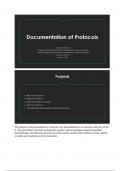
The purpose of this presentation is to discuss why documentation is so necessary and why we do
it. This presentation will look at diagnostic systems, ethical and legal standards regarding
documentation, the difference between electronic health and electronic medical records, and the
strengths and weaknesses of documentation.
, There are many reasons why we document, and we will not be able to discuss them all. Instead,
we will go over some of the primary reasons for documentation. These reasons include:
- Self-auditing purposes – By documenting appropriately, we can go back and check our
records in case of error.
- Fraud, waste, and abuse – Through accurate and consistent documentation, we can avoid
falling subject to fraud, waste, and abuse. If any of these three are suspected, we can refer
back to self-auditing to catch these instances.
- Insurance – When filing insurance claims, it is important to document the appropriate
codes in conjunction with the DSM-5 or the ICD so that insurance claims reflect progress
notes (Centers for Medicare and Medicaid Services, 2015).
- Compliance – We also document compliance with ethical and legal standards, which will
be discussed in more depth later in this presentation.
- Informed consent – For a client to follow different therapy routes, there must be informed
consent. This consent is documented throughout our relationship with the client so that, if
there is a discrepancy later on, we can refer back to our case notes to show that the client
consented to the events of the therapy session (American Counseling Association, 2014).
it. This presentation will look at diagnostic systems, ethical and legal standards regarding
documentation, the difference between electronic health and electronic medical records, and the
strengths and weaknesses of documentation.
, There are many reasons why we document, and we will not be able to discuss them all. Instead,
we will go over some of the primary reasons for documentation. These reasons include:
- Self-auditing purposes – By documenting appropriately, we can go back and check our
records in case of error.
- Fraud, waste, and abuse – Through accurate and consistent documentation, we can avoid
falling subject to fraud, waste, and abuse. If any of these three are suspected, we can refer
back to self-auditing to catch these instances.
- Insurance – When filing insurance claims, it is important to document the appropriate
codes in conjunction with the DSM-5 or the ICD so that insurance claims reflect progress
notes (Centers for Medicare and Medicaid Services, 2015).
- Compliance – We also document compliance with ethical and legal standards, which will
be discussed in more depth later in this presentation.
- Informed consent – For a client to follow different therapy routes, there must be informed
consent. This consent is documented throughout our relationship with the client so that, if
there is a discrepancy later on, we can refer back to our case notes to show that the client
consented to the events of the therapy session (American Counseling Association, 2014).