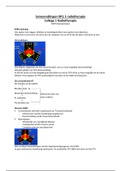
L1: Why EU institutions matter: 5D of EU institutional politics
x x
● E U institutionsare defined asdecision-making bodies→ 7 core institutions
○ European Parliament ○ The Court of Justice of the EU
○ European Council ○ The European Central Bank
○ The Council ○ Court of Auditors
○ The Commission
● Secondary legislation introduces additional EU institutions → EU agencies
U institutions in the public eye
E
● EU institutions are nowpoliticised→ subject to publicdiscussion, debate + contestation
○ Ex: Thecommissionis criticised for its‘democraticdeficit’due to its technocratic nature of
decision-making making → BREXIT - to take back control
● Always approved by the European commission and member states
U Institutions + Policies
E
● Could not be understood without examining their powers and governance structures
● Try to understand EU institutions by asking: What makes these institutions powerful, what hinders
the pursuit of their goals, and how they adapt to a changing political environment” (Hodson et al.,
2022:5).
● EU institutional politics:“the sphere of informaland formal rules, norms, procedures, and
practices that shape such decision-making” (Hodson et al., 2022:1)
○ structures political lifein the EU: different institutionswield different degrees of influence in
different policy domains. Knowledge of the formal competencies is insufficient to understand
their actual impact and powers.
5 dimensions of EU institutional politics
Intergovernmental Supranational
institutions representing the interests of states
> Institutions representing the interests of the
(European Council + Council of EU). Union andmaking (semi-) autonomous
> member states’ (elected) representativesmeet to from national influence decisions(ex:
commission and court of justice)
negotiate + define EU policies
ecision Making: intergovernmental
D ecision-making: bureaucratic/political
D
negotiations/bargaining decision-making
International Institutions Transnational Institutions
erive their authority from national
d erive their authority from societal actors such as citizens
d
governments voters and pressure groups rather than national gov
Commission and Court of Justice NGOs, European Parliament
eparated vs Fused:What are the institutional rolesof separate institutions? Who is the
S
legislator, and who has executive powers?
● Legislators: The commission, council and the EP
● Executive: The commission, the council
● Judicial: The Court of justice, national constitutional courts
● ‘Fourth branch’: the European Court of Auditors, the European ombudsman
1
, eaders vs Followers:Can EU institutions set the direction of European integration or do they
L
simply do what member states want?
● The European Commission is an important role in EU institutional politicsBUTlimited power to
compel member states to follow its lead → EX: Hungary and Poland (past)
● COVID-19 → Reliance on Franco-German leadership before proposing rescue fund
egitimate vs contested:Are EU institutions legitimate?Under what conditions
L
● Legitimacy:the acceptance of authority by the people.An institution is considered legitimate if it
is widely recognized and accepted as appropriate/rightful.
○ Your own choice to choose to get vaccinated
● Contested:something that is disputed, challenged,or questioned. It implies a lack of consensus /
agreement about the appropariateness of an authority / institution
○ AstraZeneca → Denmark opted out because it was the first vaccine model
● EU institutions are ‘acutely aware’ of the need to ‘legitimise their power and influence to one
another and to the public’
important legitimization mechanisms
3
Output legitimacy: the quality and effectiveness of gov policies, including the substance of the
policies and the rigour of evidence-based policymaking
> On the basis of expertise / technical knowledge
> ECB activities focusing on producing high quality policies / guidelinks
Inputlegitimacy:therepresentationandparticipationofadiverserangeofrelevantstakeholdersin
the EU policy making process. Includes the understanding of which stakeholders (citizens, state
actors and interest groups) are influential in shaping policies
hroughoutlegitimacy:derivedfromtheefficiency,accountability,transparency,inclusiveness,and
T
openness of the decision-making processes. It focuses on the fairness and appropriatenessofthe
procedures followed by the EU institutions in formulating and implementing policies
> publish scientific data
2
, L2: The European Council and the Council of the European Union
PART I: The European Council
Introduction
● Initially: European Council → predominantly aninformalinstitutionfor direct exchanges
between theheads of state or government of the memberstates.
○ Yet, it assumed responsibility for landmark decisions
● Historically has not received much recognition BUT changed recently with EU Treaties → placing
the European Council right after the European Parliament
The European Council
● Key institution in EU politics → attracting media attention.
● Union’ssupreme decision-maker(does not have powersto adopt legislations).
● Set EU's political direction + priorities on policy, money, and institutional developments.
○ Unanimitydecision-making (on economic gov, foreignpolicy, institutional issues)
○ A crisis manager
● Operates at a strategic and political level (domestic influence), distinct from legislative
● Provides guidelines and informal orders→ EU institutions follow + implement on EU agenda
Factors that influenced the rise of the European Council:
1. The need for member states to agree on policy in response to new circumstances in the
absence of delegated supranational decision-making
a. People are more involved
b. To be more legitimate, reconsider EU institutional structure → council helps by using the
voting system
2. Increasing politicisation of European integration (euro crisis, Syria, Libya, Ukraine, Gaza)
a. However, still slow at reacting and using far-reaching decision
3. Common EU policy responses needed to be negotiated each and every time between the
member states at the highest political level.
a. Meetings take place frequently, more often during crises
4. Predominant policies: economic governance, foreign policy, climate change.Rarely
involved in legislative politics:single market governanceand regulatory issues
a. Those policy areas are at the core of political issues
b. Crucial state powers dealing with these sensitive issues
Post-Maastricht EU Decision-Making:
1. Coordination of national budgetary policies.
2. Provision of financial assistance (e.g., during the euro crisis).
3. Imposition of foreign policy sanctions.
● Increased politicisation of EU policy making, requiring heads of state/government to exercise
tighter control over decision-making.
The European Council in the Treaty of Lisbon (2009) - How did it change?
● The centrality of the European Council in EU politics → Specifies that it should provide the EU
direction and priorities for EU institutions
○ Use the european framework to solve EU national issues
○ Resolving conflicts between national and EU policy
● The European Council on the par with the other core EU institutions.
● Functions within an institutional framework involving senior EU representatives:
○ President of the European Commission
○ High Representative for CFSP (supervisor and collaborator)
○ President of the Eurogroup (occasionally)
○ Justice and Home Affairs – a supervisory role together with the Council
● Broad economic policy guidelines
● The European Council’s leadership role became institutionalised.
● Quasi-constitutional power (determining the breach of EU values, changing the treaties
3
x x
● E U institutionsare defined asdecision-making bodies→ 7 core institutions
○ European Parliament ○ The Court of Justice of the EU
○ European Council ○ The European Central Bank
○ The Council ○ Court of Auditors
○ The Commission
● Secondary legislation introduces additional EU institutions → EU agencies
U institutions in the public eye
E
● EU institutions are nowpoliticised→ subject to publicdiscussion, debate + contestation
○ Ex: Thecommissionis criticised for its‘democraticdeficit’due to its technocratic nature of
decision-making making → BREXIT - to take back control
● Always approved by the European commission and member states
U Institutions + Policies
E
● Could not be understood without examining their powers and governance structures
● Try to understand EU institutions by asking: What makes these institutions powerful, what hinders
the pursuit of their goals, and how they adapt to a changing political environment” (Hodson et al.,
2022:5).
● EU institutional politics:“the sphere of informaland formal rules, norms, procedures, and
practices that shape such decision-making” (Hodson et al., 2022:1)
○ structures political lifein the EU: different institutionswield different degrees of influence in
different policy domains. Knowledge of the formal competencies is insufficient to understand
their actual impact and powers.
5 dimensions of EU institutional politics
Intergovernmental Supranational
institutions representing the interests of states
> Institutions representing the interests of the
(European Council + Council of EU). Union andmaking (semi-) autonomous
> member states’ (elected) representativesmeet to from national influence decisions(ex:
commission and court of justice)
negotiate + define EU policies
ecision Making: intergovernmental
D ecision-making: bureaucratic/political
D
negotiations/bargaining decision-making
International Institutions Transnational Institutions
erive their authority from national
d erive their authority from societal actors such as citizens
d
governments voters and pressure groups rather than national gov
Commission and Court of Justice NGOs, European Parliament
eparated vs Fused:What are the institutional rolesof separate institutions? Who is the
S
legislator, and who has executive powers?
● Legislators: The commission, council and the EP
● Executive: The commission, the council
● Judicial: The Court of justice, national constitutional courts
● ‘Fourth branch’: the European Court of Auditors, the European ombudsman
1
, eaders vs Followers:Can EU institutions set the direction of European integration or do they
L
simply do what member states want?
● The European Commission is an important role in EU institutional politicsBUTlimited power to
compel member states to follow its lead → EX: Hungary and Poland (past)
● COVID-19 → Reliance on Franco-German leadership before proposing rescue fund
egitimate vs contested:Are EU institutions legitimate?Under what conditions
L
● Legitimacy:the acceptance of authority by the people.An institution is considered legitimate if it
is widely recognized and accepted as appropriate/rightful.
○ Your own choice to choose to get vaccinated
● Contested:something that is disputed, challenged,or questioned. It implies a lack of consensus /
agreement about the appropariateness of an authority / institution
○ AstraZeneca → Denmark opted out because it was the first vaccine model
● EU institutions are ‘acutely aware’ of the need to ‘legitimise their power and influence to one
another and to the public’
important legitimization mechanisms
3
Output legitimacy: the quality and effectiveness of gov policies, including the substance of the
policies and the rigour of evidence-based policymaking
> On the basis of expertise / technical knowledge
> ECB activities focusing on producing high quality policies / guidelinks
Inputlegitimacy:therepresentationandparticipationofadiverserangeofrelevantstakeholdersin
the EU policy making process. Includes the understanding of which stakeholders (citizens, state
actors and interest groups) are influential in shaping policies
hroughoutlegitimacy:derivedfromtheefficiency,accountability,transparency,inclusiveness,and
T
openness of the decision-making processes. It focuses on the fairness and appropriatenessofthe
procedures followed by the EU institutions in formulating and implementing policies
> publish scientific data
2
, L2: The European Council and the Council of the European Union
PART I: The European Council
Introduction
● Initially: European Council → predominantly aninformalinstitutionfor direct exchanges
between theheads of state or government of the memberstates.
○ Yet, it assumed responsibility for landmark decisions
● Historically has not received much recognition BUT changed recently with EU Treaties → placing
the European Council right after the European Parliament
The European Council
● Key institution in EU politics → attracting media attention.
● Union’ssupreme decision-maker(does not have powersto adopt legislations).
● Set EU's political direction + priorities on policy, money, and institutional developments.
○ Unanimitydecision-making (on economic gov, foreignpolicy, institutional issues)
○ A crisis manager
● Operates at a strategic and political level (domestic influence), distinct from legislative
● Provides guidelines and informal orders→ EU institutions follow + implement on EU agenda
Factors that influenced the rise of the European Council:
1. The need for member states to agree on policy in response to new circumstances in the
absence of delegated supranational decision-making
a. People are more involved
b. To be more legitimate, reconsider EU institutional structure → council helps by using the
voting system
2. Increasing politicisation of European integration (euro crisis, Syria, Libya, Ukraine, Gaza)
a. However, still slow at reacting and using far-reaching decision
3. Common EU policy responses needed to be negotiated each and every time between the
member states at the highest political level.
a. Meetings take place frequently, more often during crises
4. Predominant policies: economic governance, foreign policy, climate change.Rarely
involved in legislative politics:single market governanceand regulatory issues
a. Those policy areas are at the core of political issues
b. Crucial state powers dealing with these sensitive issues
Post-Maastricht EU Decision-Making:
1. Coordination of national budgetary policies.
2. Provision of financial assistance (e.g., during the euro crisis).
3. Imposition of foreign policy sanctions.
● Increased politicisation of EU policy making, requiring heads of state/government to exercise
tighter control over decision-making.
The European Council in the Treaty of Lisbon (2009) - How did it change?
● The centrality of the European Council in EU politics → Specifies that it should provide the EU
direction and priorities for EU institutions
○ Use the european framework to solve EU national issues
○ Resolving conflicts between national and EU policy
● The European Council on the par with the other core EU institutions.
● Functions within an institutional framework involving senior EU representatives:
○ President of the European Commission
○ High Representative for CFSP (supervisor and collaborator)
○ President of the Eurogroup (occasionally)
○ Justice and Home Affairs – a supervisory role together with the Council
● Broad economic policy guidelines
● The European Council’s leadership role became institutionalised.
● Quasi-constitutional power (determining the breach of EU values, changing the treaties
3