Look We Have Coming to Dover - Daljit Nagra
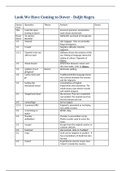
Stanza Quotation Theme Analysis Device
/Line
Title ‘Look We Have Incorrect grammar. Exclamation
Coming to Dover’ mark shows excitement
Dover ‘So various, Optimistic portrayal of immigrants
Beach beautiful’
1/1 ‘Stowed’ Like baggage - they are probably
illegal immigrants
1/1 ‘invade’ Negative attitudes towards
migrants
1/1-2 ‘Stowed in the sea’ Sibilance shows the wetness of the
‘alfresco lash’ sea. Mixing of language shows the
mixing of culture. Opposite of
Effects.
1/2 ‘diesel-breeze’ Interaction between nature and
the man-made. Links to History.
1/4 ‘gobfuls of surf Racism Skinheads spitting.
phlegmed’
1/4 ‘cushy come-and- Traditional British language shows
go’ the contrast between the tourists
and the migrants.
1/5 ‘lording the Connotations of English
ministered waves’ imperialism and colonialism. The
whole stanza uses plosive sounds
and violent imagery.
2/1 ‘Seagull and shoal’ Sky and sea. They are completely
surrounded. The animals are free,
but the humans are not.
2/3 ‘camouflage’ Army imagery
2/3-4 ‘scummed cliffs’ England is presented as not being
very white or pure.
2/4 ‘scramming on British slang
mulch’
2/4 ‘thunder Thunder is personified. Comic.
unbladders’ Plosive sounds used to enact the
noise.
2/5 ‘escape’ Escape from the original country or
customs officials.
2/5 ‘hutched’ Like animals. Links to ‘huddled’.
3/1 ‘reap’ Verb can be negative or positive - it
has connotations of death but also
harvest.
3/2 ‘inland’ Enjambment cleverly enacts how
‘inland’ is inside the country.
Stanza Quotation Theme Analysis Device
/Line
Title ‘Look We Have Incorrect grammar. Exclamation
Coming to Dover’ mark shows excitement
Dover ‘So various, Optimistic portrayal of immigrants
Beach beautiful’
1/1 ‘Stowed’ Like baggage - they are probably
illegal immigrants
1/1 ‘invade’ Negative attitudes towards
migrants
1/1-2 ‘Stowed in the sea’ Sibilance shows the wetness of the
‘alfresco lash’ sea. Mixing of language shows the
mixing of culture. Opposite of
Effects.
1/2 ‘diesel-breeze’ Interaction between nature and
the man-made. Links to History.
1/4 ‘gobfuls of surf Racism Skinheads spitting.
phlegmed’
1/4 ‘cushy come-and- Traditional British language shows
go’ the contrast between the tourists
and the migrants.
1/5 ‘lording the Connotations of English
ministered waves’ imperialism and colonialism. The
whole stanza uses plosive sounds
and violent imagery.
2/1 ‘Seagull and shoal’ Sky and sea. They are completely
surrounded. The animals are free,
but the humans are not.
2/3 ‘camouflage’ Army imagery
2/3-4 ‘scummed cliffs’ England is presented as not being
very white or pure.
2/4 ‘scramming on British slang
mulch’
2/4 ‘thunder Thunder is personified. Comic.
unbladders’ Plosive sounds used to enact the
noise.
2/5 ‘escape’ Escape from the original country or
customs officials.
2/5 ‘hutched’ Like animals. Links to ‘huddled’.
3/1 ‘reap’ Verb can be negative or positive - it
has connotations of death but also
harvest.
3/2 ‘inland’ Enjambment cleverly enacts how
‘inland’ is inside the country.