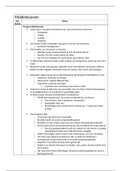
Core Study APFCE
Aims
(include hypotheses and research questions if relevant)
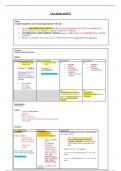
1. Test the DIFFERENTIAL EFFECT of the SOCIAL HORMONE OXYTOCIN on PERSONAL
SPACE preferences in relation to a person’s EMPATHY ABILITY
2. CONTROLLING EMPATHETIC TRAITS in ppts => effect of OT on INTERPERSONAL SPACE
CHOICES
3. HIGHLY empathetic individuals prefer CLOSER DISTANCES [opposite for low empathy]
Procedure
(include method and sample)
Method:
Independent groups design Repeated measures Experiment 1 Experiment 2
- DIFFERENT ppts - ALL ppts in both IV: IV:
in each level levels 1. Empathy – 1. Empathy –
high/low high/low
Empathy IV – high/low Treatment IV – 2. Treatment – 2. Treatment –
oxytocin/placebo oxytocin/placebo oxytocin/placebo
Interpersonal reactivity 3. Condition –
index [IRI] => 28 COUNTERBALANCED stranger, ball, friend
questions [4 categories, 7 , authority
questions each related to
empathy]
1. High empathy –
score 40+
2. Low empathy –
score below 33
DV: DV:
PREFERRED DISTANCE [% PREFERRED
remaining distance form total DISTANCE/ANGLE between
distance] measured between the 2 CHAIRS
PPT and APPROACHING
OBJECT
Data collection:
Questionnaire
Sample:
- 54 MALE undergraduates
- Haifa uni
- Aged 19 to 32
- Course credit/money
- Normal vision and no psychiatric/neurological disorders
- 5 left handed
Procedure:
OT administration Experiment 1 Experiment 2
RANDOM COMFORTABLE “Told to sit in another room to discuss a personal topic
INTERPERSONAL with another person”
Either solution of: DISTANCE PARADIGM
- 24 international - Pairs of similar rooms and they should
units OT in 250 ml - Circle on computer CHOOSE PREFERRED ROOMS
internasal solution screen - Computer simulation – coloured pictures
- Ppts imagined with 2 identical chairs, table, lamp, clock,
- 250ml saline themselves in plant
solution CENTRE with an
OTHER [friend, 84 pairs x 2 trials = 168 pairs/ppt
Had to wait 45 mins in quiet stranger, authority,
room reading nature magazine ball] approaching Experimental => distance between 2 chairs and
along radius angle
DOUBLE BLIND - PRESS SPACE
BAR TO WHERE Control => distance between table and plant and
THE OTHER angle
SHOULD STOP
24 trials x 4 conditions = 96
trials /ppt
Aims
(include hypotheses and research questions if relevant)
1. Test the DIFFERENTIAL EFFECT of the SOCIAL HORMONE OXYTOCIN on PERSONAL
SPACE preferences in relation to a person’s EMPATHY ABILITY
2. CONTROLLING EMPATHETIC TRAITS in ppts => effect of OT on INTERPERSONAL SPACE
CHOICES
3. HIGHLY empathetic individuals prefer CLOSER DISTANCES [opposite for low empathy]
Procedure
(include method and sample)
Method:
Independent groups design Repeated measures Experiment 1 Experiment 2
- DIFFERENT ppts - ALL ppts in both IV: IV:
in each level levels 1. Empathy – 1. Empathy –
high/low high/low
Empathy IV – high/low Treatment IV – 2. Treatment – 2. Treatment –
oxytocin/placebo oxytocin/placebo oxytocin/placebo
Interpersonal reactivity 3. Condition –
index [IRI] => 28 COUNTERBALANCED stranger, ball, friend
questions [4 categories, 7 , authority
questions each related to
empathy]
1. High empathy –
score 40+
2. Low empathy –
score below 33
DV: DV:
PREFERRED DISTANCE [% PREFERRED
remaining distance form total DISTANCE/ANGLE between
distance] measured between the 2 CHAIRS
PPT and APPROACHING
OBJECT
Data collection:
Questionnaire
Sample:
- 54 MALE undergraduates
- Haifa uni
- Aged 19 to 32
- Course credit/money
- Normal vision and no psychiatric/neurological disorders
- 5 left handed
Procedure:
OT administration Experiment 1 Experiment 2
RANDOM COMFORTABLE “Told to sit in another room to discuss a personal topic
INTERPERSONAL with another person”
Either solution of: DISTANCE PARADIGM
- 24 international - Pairs of similar rooms and they should
units OT in 250 ml - Circle on computer CHOOSE PREFERRED ROOMS
internasal solution screen - Computer simulation – coloured pictures
- Ppts imagined with 2 identical chairs, table, lamp, clock,
- 250ml saline themselves in plant
solution CENTRE with an
OTHER [friend, 84 pairs x 2 trials = 168 pairs/ppt
Had to wait 45 mins in quiet stranger, authority,
room reading nature magazine ball] approaching Experimental => distance between 2 chairs and
along radius angle
DOUBLE BLIND - PRESS SPACE
BAR TO WHERE Control => distance between table and plant and
THE OTHER angle
SHOULD STOP
24 trials x 4 conditions = 96
trials /ppt