Macroeconomics Notes
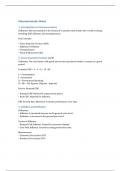
1. Introduction to Macroeconomics
Definition: Macroeconomics is the branch of economics that studies the overall economy,
including GDP, inflation, and unemployment.
Key Concepts:
• Gross Domestic Product (GDP)
• Inflation & Deflation
• Unemployment
• Fiscal & Monetary Policy
2. Gross Domestic Product (GDP)
Definition: The total value of all goods and services produced within a country in a given
period.
Formula: GDP = C + I + G + (X - M)
C = Consumption
I = Investment
G = Government Spending
(X - M) = Net Exports (Exports - Imports)
Real vs. Nominal GDP:
• Nominal GDP: Measured using current prices.
• Real GDP: Adjusted for inflation.
GDP Growth Rate: Measures economic performance over time.
3. Inflation and Deflation
Definition:
• Inflation: A sustained increase in the general price level.
• Deflation: A decrease in the general price level.
Causes of Inflation:
• Demand-Pull Inflation: Caused by excessive demand.
• Cost-Push Inflation: Caused by rising production costs.
Measurement:
• Consumer Price Index (CPI)
• Producer Price Index (PPI)
1. Introduction to Macroeconomics
Definition: Macroeconomics is the branch of economics that studies the overall economy,
including GDP, inflation, and unemployment.
Key Concepts:
• Gross Domestic Product (GDP)
• Inflation & Deflation
• Unemployment
• Fiscal & Monetary Policy
2. Gross Domestic Product (GDP)
Definition: The total value of all goods and services produced within a country in a given
period.
Formula: GDP = C + I + G + (X - M)
C = Consumption
I = Investment
G = Government Spending
(X - M) = Net Exports (Exports - Imports)
Real vs. Nominal GDP:
• Nominal GDP: Measured using current prices.
• Real GDP: Adjusted for inflation.
GDP Growth Rate: Measures economic performance over time.
3. Inflation and Deflation
Definition:
• Inflation: A sustained increase in the general price level.
• Deflation: A decrease in the general price level.
Causes of Inflation:
• Demand-Pull Inflation: Caused by excessive demand.
• Cost-Push Inflation: Caused by rising production costs.
Measurement:
• Consumer Price Index (CPI)
• Producer Price Index (PPI)