[TYPE THE COMPANY NAME]
PLS2607 Assignment 2
(COMPLETE ANSWERS)
Semester 1 2025 - DUE 7
April
NOPLAGIARISM
[Pick the date]
[Type the abstract of the document here. The abstract is typically a short summary of the contents of
the document. Type the abstract of the document here. The abstract is typically a short summary of
the contents of the document.]
, Book
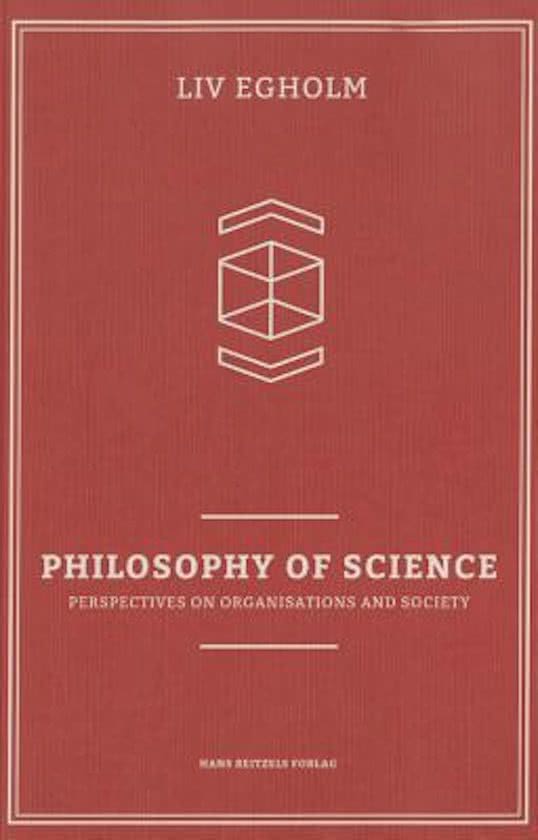
Philosophy of Science
PLS2607 Assignment 2 (COMPLETE ANSWERS) Semester 1 2025 - DUE 7 April
2025; 100% TRUSTED Complete, trusted solutions and explanations. Ensure
your success with us....
David Hume declared that anything that hints of metaphysics (i.e., the study
of that which transcends physics) should “be cast into the flames” (An
Enquiry, 12). Explain why Hume and the Logical Positivists viewed
metaphysics unfavourably.
David Hume (1711–1776) was highly skeptical about human knowledge, especially knowledge
claims that went beyond direct experience. In his work An Enquiry Concerning Human
Understanding (specifically Section 12), he argued that if a claim cannot be backed by empirical
observation (what we can see, hear, touch, etc.) or by logical/mathematical reasoning, it should
be dismissed. He famously said that anything else — including much of what metaphysics
discusses (like the nature of the soul, God, or ultimate reality) — should be "committed to the
flames," meaning it is meaningless or useless.
Why did Hume think this way?
Empiricism: Hume believed that all meaningful ideas must ultimately come from
sensory experience.
Skepticism about causality and substance: He showed that even basic notions like
cause and effect are assumptions we make based on habit, not logically necessary truths.
If we can't even directly perceive causality, how much less can we perceive metaphysical
realities!
Anti-metaphysics: Thus, for Hume, metaphysical claims go beyond experience and
reason, and so they are suspect and should be rejected.
Later, in the early 20th century, the Logical Positivists (like the Vienna Circle philosophers,
including A.J. Ayer, Moritz Schlick, and Rudolf Carnap) took a similar hard stance against
metaphysics, building on Hume's skepticism.
Here's how the Logical Positivists viewed it:
Verification Principle: A statement is meaningful only if it can be empirically verified
(tested through experience) or is tautological (true by definition, like in logic or
mathematics).
Critique of metaphysical language: Statements about God, absolute being, or
transcendent reality could not be verified through sense experience nor were they
tautologies. Therefore, they considered these statements literally meaningless — not even
false, just meaningless.
Goal of philosophy: They wanted philosophy to focus on logic, science, and clarifying
language — not to speculate about what lies beyond empirical reality.
PLS2607 Assignment 2
(COMPLETE ANSWERS)
Semester 1 2025 - DUE 7
April
NOPLAGIARISM
[Pick the date]
[Type the abstract of the document here. The abstract is typically a short summary of the contents of
the document. Type the abstract of the document here. The abstract is typically a short summary of
the contents of the document.]
, Book
Philosophy of Science
PLS2607 Assignment 2 (COMPLETE ANSWERS) Semester 1 2025 - DUE 7 April
2025; 100% TRUSTED Complete, trusted solutions and explanations. Ensure
your success with us....
David Hume declared that anything that hints of metaphysics (i.e., the study
of that which transcends physics) should “be cast into the flames” (An
Enquiry, 12). Explain why Hume and the Logical Positivists viewed
metaphysics unfavourably.
David Hume (1711–1776) was highly skeptical about human knowledge, especially knowledge
claims that went beyond direct experience. In his work An Enquiry Concerning Human
Understanding (specifically Section 12), he argued that if a claim cannot be backed by empirical
observation (what we can see, hear, touch, etc.) or by logical/mathematical reasoning, it should
be dismissed. He famously said that anything else — including much of what metaphysics
discusses (like the nature of the soul, God, or ultimate reality) — should be "committed to the
flames," meaning it is meaningless or useless.
Why did Hume think this way?
Empiricism: Hume believed that all meaningful ideas must ultimately come from
sensory experience.
Skepticism about causality and substance: He showed that even basic notions like
cause and effect are assumptions we make based on habit, not logically necessary truths.
If we can't even directly perceive causality, how much less can we perceive metaphysical
realities!
Anti-metaphysics: Thus, for Hume, metaphysical claims go beyond experience and
reason, and so they are suspect and should be rejected.
Later, in the early 20th century, the Logical Positivists (like the Vienna Circle philosophers,
including A.J. Ayer, Moritz Schlick, and Rudolf Carnap) took a similar hard stance against
metaphysics, building on Hume's skepticism.
Here's how the Logical Positivists viewed it:
Verification Principle: A statement is meaningful only if it can be empirically verified
(tested through experience) or is tautological (true by definition, like in logic or
mathematics).
Critique of metaphysical language: Statements about God, absolute being, or
transcendent reality could not be verified through sense experience nor were they
tautologies. Therefore, they considered these statements literally meaningless — not even
false, just meaningless.
Goal of philosophy: They wanted philosophy to focus on logic, science, and clarifying
language — not to speculate about what lies beyond empirical reality.