[TYPE THE COMPANY NAME]
TAM2601 Assignment
1 (100% COMPLETE
ANSWERS) 2025 - Due
21 May 2025
NO PLAGIARISM
[Pick the date]
[Type the abstract of the document here. The abstract is typically a short summary of the contents of
the document. Type the abstract of the document here. The abstract is typically a short summary of
the contents of the document.]
, Book
Introduction to Business Information Systems
Teacher as manager - TAM2601 Assignment 1 2025 - Due 21 May 2025 ;100
% TRUSTED workings, Expert Solved, Explanations and Solutions
Question 1 Read the extract below and answer the following questions:
When educators get together to talk about their work, the conversation
inevitably comes round to the learners they are teaching – their habits, the
challenges they are facing, and the challenges they pose as learners. One of
the best resources on this topic is the video by Michael Wesch, a cultural
anthropologist at Kansas State University. In this video (Wesch 2007),
Michael asked his students a simple question: “What is it like being a student
today?” Student responses – at once provocative and disturbing – say a lot
about the current generation of college and university students and how
educators can create environments that would help them learn. Students
seem to feel that they are not being taught in the ways best suited to help
them achieve deep, meaningful learning. They seek engagement and
connection…” 1.1 Mention and describe five characteristics of the millennial
generation learners. (10)
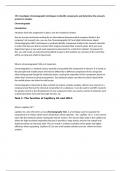
Five Characteristics of Millennial Generation Learners
The millennial generation (also known as Generation Y, born between 1981 and 1996) has
distinct learning characteristics shaped by technology, globalization, and changing societal
norms. Below are five key characteristics:
1. Digitally Native and Technology-Dependent
Millennials grew up with the internet, smartphones, and social media, making them
highly tech-savvy.
They prefer digital learning tools such as videos, online courses, and interactive
media over traditional textbooks and lectures.
2. Desire for Active and Experiential Learning
They do not respond well to passive learning (e.g., long lectures) but prefer hands-on,
interactive, and collaborative experiences.
They thrive in group projects, problem-solving tasks, and real-world applications of
knowledge.
3. Need for Instant Feedback and Recognition
TAM2601 Assignment
1 (100% COMPLETE
ANSWERS) 2025 - Due
21 May 2025
NO PLAGIARISM
[Pick the date]
[Type the abstract of the document here. The abstract is typically a short summary of the contents of
the document. Type the abstract of the document here. The abstract is typically a short summary of
the contents of the document.]
, Book
Introduction to Business Information Systems
Teacher as manager - TAM2601 Assignment 1 2025 - Due 21 May 2025 ;100
% TRUSTED workings, Expert Solved, Explanations and Solutions
Question 1 Read the extract below and answer the following questions:
When educators get together to talk about their work, the conversation
inevitably comes round to the learners they are teaching – their habits, the
challenges they are facing, and the challenges they pose as learners. One of
the best resources on this topic is the video by Michael Wesch, a cultural
anthropologist at Kansas State University. In this video (Wesch 2007),
Michael asked his students a simple question: “What is it like being a student
today?” Student responses – at once provocative and disturbing – say a lot
about the current generation of college and university students and how
educators can create environments that would help them learn. Students
seem to feel that they are not being taught in the ways best suited to help
them achieve deep, meaningful learning. They seek engagement and
connection…” 1.1 Mention and describe five characteristics of the millennial
generation learners. (10)
Five Characteristics of Millennial Generation Learners
The millennial generation (also known as Generation Y, born between 1981 and 1996) has
distinct learning characteristics shaped by technology, globalization, and changing societal
norms. Below are five key characteristics:
1. Digitally Native and Technology-Dependent
Millennials grew up with the internet, smartphones, and social media, making them
highly tech-savvy.
They prefer digital learning tools such as videos, online courses, and interactive
media over traditional textbooks and lectures.
2. Desire for Active and Experiential Learning
They do not respond well to passive learning (e.g., long lectures) but prefer hands-on,
interactive, and collaborative experiences.
They thrive in group projects, problem-solving tasks, and real-world applications of
knowledge.
3. Need for Instant Feedback and Recognition