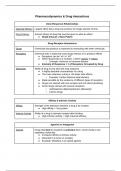
Pharmacodynamics & Drug Interactions
Dose-Response Relationships
Maximal Efficacy Largest effect that a drug can produce for longer periods of time
Drug Potency Amount (dose) of drug that must be given to elicit an effect
● Small Amount = More Potent
Drug-Receptor Interactions
Drugs Chemicals that produce a response by interacting with other chemicals
Receptors Chemical sites in body that most drugs interact w/ to produce effects
● Receptors can be “on” or “off”
● When drug binds to a receptor, it either mimics or blocks
○ Example: Hormone or hormone blocker
● Intensity of Response = # of Receptors Occupied by Drug
Selectivity Ability of drug to only elicit the drug response
● A highly desirable characteristic of a drug
● The more selective a drug is, the fewer side effects.
○ Example: Cardio selective beta blockers
● Made possible by the existence of different types of receptors
● Drugs can interact with one receptor and not others (lock/key)
● Some drugs interact with several receptors:
○ Antihistamine diphenhydramine (Benadryl)
○ Chemo drugs
Affinity & Intrinsic Activity
Affinity Strength of the attraction between a drug & its receptor
● High affinity = Very potent
Intrinsic Activity Ability of a drug to activate receptor after binding
● High intrinsic activity = High maximal efficacy
Agonist vs Antagonist
Agonist Drugs that bind to receptors & activates them, mimics body’s own
regulatory molecules
● Increases affinity & intrinsic activity
● Attracted to & turns on receptor
● Example: Morphine is an opioid agonist
Dose-Response Relationships
Maximal Efficacy Largest effect that a drug can produce for longer periods of time
Drug Potency Amount (dose) of drug that must be given to elicit an effect
● Small Amount = More Potent
Drug-Receptor Interactions
Drugs Chemicals that produce a response by interacting with other chemicals
Receptors Chemical sites in body that most drugs interact w/ to produce effects
● Receptors can be “on” or “off”
● When drug binds to a receptor, it either mimics or blocks
○ Example: Hormone or hormone blocker
● Intensity of Response = # of Receptors Occupied by Drug
Selectivity Ability of drug to only elicit the drug response
● A highly desirable characteristic of a drug
● The more selective a drug is, the fewer side effects.
○ Example: Cardio selective beta blockers
● Made possible by the existence of different types of receptors
● Drugs can interact with one receptor and not others (lock/key)
● Some drugs interact with several receptors:
○ Antihistamine diphenhydramine (Benadryl)
○ Chemo drugs
Affinity & Intrinsic Activity
Affinity Strength of the attraction between a drug & its receptor
● High affinity = Very potent
Intrinsic Activity Ability of a drug to activate receptor after binding
● High intrinsic activity = High maximal efficacy
Agonist vs Antagonist
Agonist Drugs that bind to receptors & activates them, mimics body’s own
regulatory molecules
● Increases affinity & intrinsic activity
● Attracted to & turns on receptor
● Example: Morphine is an opioid agonist