Rest and Sleep
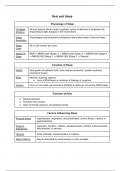
Physiology of Sleep
Circadian 24-hour internal clock in brain, regulates cycles of alertness & sleepiness by
Rhythms responding to light changes in the environment
Sleep Physiological and behavioral mechanisms that control when & how we sleep
Regulation
Sleep 90 to 100 minutes per cycle
Cycle
Stages of REM → NREM (N2) Stage 2 → NREM (N3) Stage 3 → NREM (N4) Stage 4
Sleep → NREM (N3) Stage 3 → NREM (N2) Stage 2 → Repeat
Function of Sleep
NREM New growth of epithelial cells, bone marrow production, protein synthesis,
renewal of tissues
REM Memory, learning, balance
● Loss of REM leads to confusion & feelings of suspicion
Dreams Occur in non-rapid eye movement (NREM) & rapid eye movement (REM) sleep
Function of Rest
● Mental relaxation
● Freedom from anxiety
● State of mental, physical, and spiritual activity
Factors Influencing Sleep
Physical Illness Hypertension, respiratory, musculoskeletal, chronic illness, nausea, &
gastrointestinal
Drugs & Hypnotics, diuretics, caffeine, antidepressants, alcohol, anticonvulsants,
Substances beta-blockers, & narcotic
Lifestyle Work schedule, social activities, & routines
Sleep Patterns May be disrupted by social activity or work schedule
Physiology of Sleep
Circadian 24-hour internal clock in brain, regulates cycles of alertness & sleepiness by
Rhythms responding to light changes in the environment
Sleep Physiological and behavioral mechanisms that control when & how we sleep
Regulation
Sleep 90 to 100 minutes per cycle
Cycle
Stages of REM → NREM (N2) Stage 2 → NREM (N3) Stage 3 → NREM (N4) Stage 4
Sleep → NREM (N3) Stage 3 → NREM (N2) Stage 2 → Repeat
Function of Sleep
NREM New growth of epithelial cells, bone marrow production, protein synthesis,
renewal of tissues
REM Memory, learning, balance
● Loss of REM leads to confusion & feelings of suspicion
Dreams Occur in non-rapid eye movement (NREM) & rapid eye movement (REM) sleep
Function of Rest
● Mental relaxation
● Freedom from anxiety
● State of mental, physical, and spiritual activity
Factors Influencing Sleep
Physical Illness Hypertension, respiratory, musculoskeletal, chronic illness, nausea, &
gastrointestinal
Drugs & Hypnotics, diuretics, caffeine, antidepressants, alcohol, anticonvulsants,
Substances beta-blockers, & narcotic
Lifestyle Work schedule, social activities, & routines
Sleep Patterns May be disrupted by social activity or work schedule