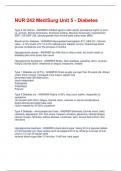
NUR 242 Med/Surg Unit 5 - Diabetes
Type II risk factors - ANSWER-middled aged to older adults, prevalence higher in men -
vs- women, African Americans, American Indians, Mexican Americans, hypertension
SBP >130 DBP >85, obesity/greater than normal body mass index (BMI)
Blood test for diabetes - ANSWER-Glycosylated hemoglobin A1C (HbA1C) - Normal
value - 4- 6% levels of 5.7 to 6.4% indicate poor diabetic control. Determines blood
glucose compliance over the previous 3 months
Hypoglycemia causes - ANSWER-too little foos or skip a meal, too much insulin or
diabetes pills more active than usual
Hypoglycemia Symptoms - ANSWER-Shaky, fast heartbeat, sweating, dizzy, anxious,
hungry, blurred vision, weakness or fatigue, headache, irritable
Type 1 Diabetes s/s (3 P's) - ANSWER-Onset usually younger than 30 years old, Abrupt
onset, thirst, hunger, increased urine output, weight loss
pancreatic beta-cell destruction
insulin dependent
Polydypisia
Polyphagia
Polyuria
Type II Diabetes s/s - ANSWER-Peak's in 50's, may occur earlier, frequently no
symptoms
can present with thirst, fatigue, blurred vision, vascular or neural complications
dysfunctional pancreatic beta-cells
insulin needed for 20-30% of patients
Type II Diabetes - what people don't see - ANSWER-blindness, blurred vision, boils,
cataracts, depression, ED, foot ulcers, frequent urination, glaucoma, intense fatigue,
intense hunger, itchiness, kidney disease, numbness, pain, sexual dysfunction, skin
infections
Hypoglycemia treatment - ANSWER-check blood sugar, taking 30 to 4 glucose tablets
or hard candies you chew quickly such as peppermint or by drinking 4 ounces of fruit
juice or 1/2 can of regular soda
recheck blood sugar after 15 minutes. If still low, treat again
Type II risk factors - ANSWER-middled aged to older adults, prevalence higher in men -
vs- women, African Americans, American Indians, Mexican Americans, hypertension
SBP >130 DBP >85, obesity/greater than normal body mass index (BMI)
Blood test for diabetes - ANSWER-Glycosylated hemoglobin A1C (HbA1C) - Normal
value - 4- 6% levels of 5.7 to 6.4% indicate poor diabetic control. Determines blood
glucose compliance over the previous 3 months
Hypoglycemia causes - ANSWER-too little foos or skip a meal, too much insulin or
diabetes pills more active than usual
Hypoglycemia Symptoms - ANSWER-Shaky, fast heartbeat, sweating, dizzy, anxious,
hungry, blurred vision, weakness or fatigue, headache, irritable
Type 1 Diabetes s/s (3 P's) - ANSWER-Onset usually younger than 30 years old, Abrupt
onset, thirst, hunger, increased urine output, weight loss
pancreatic beta-cell destruction
insulin dependent
Polydypisia
Polyphagia
Polyuria
Type II Diabetes s/s - ANSWER-Peak's in 50's, may occur earlier, frequently no
symptoms
can present with thirst, fatigue, blurred vision, vascular or neural complications
dysfunctional pancreatic beta-cells
insulin needed for 20-30% of patients
Type II Diabetes - what people don't see - ANSWER-blindness, blurred vision, boils,
cataracts, depression, ED, foot ulcers, frequent urination, glaucoma, intense fatigue,
intense hunger, itchiness, kidney disease, numbness, pain, sexual dysfunction, skin
infections
Hypoglycemia treatment - ANSWER-check blood sugar, taking 30 to 4 glucose tablets
or hard candies you chew quickly such as peppermint or by drinking 4 ounces of fruit
juice or 1/2 can of regular soda
recheck blood sugar after 15 minutes. If still low, treat again