
Britain Essay Plans, History A Level Revision
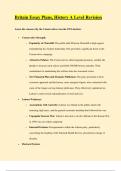
Assess the reasons why the Conservatives won the 1951 election:
Conservative Strength:
o Popularity of Churchill: The public held Winston Churchill in high regard,
remembering his wartime leadership. This provided a significant boost to the
Conservative campaign.
o Attractive Policies: The Conservatives offered popular promises, notably the
pledge to increase meat rations and build 300,000 houses annually. Their
commitment to maintaining the welfare state also reassured voters.
o New Financial Plan and Dynamic Politicians: The party presented a fresh
economic approach and had newer, more energetic figures who contrasted with
some of the longer-serving Labour politicians. They effectively capitalized on
Labour's controversial nationalization of steel and iron.
Labour Weakness:
o Associations with Austerity: Labour was linked in the public mind with
rationing, high taxes, and the general economic hardship that followed the war.
o Unpopular Korean War: Labour's decision to involve Britain in the Korean War
in 1950 was not widely supported.
o Internal Divisions: Disagreements within the Labour party, particularly
concerning the funding of the National Health Service, presented an image of
disunity.
Electoral System:
, o Representation of the Peoples Act (1948): This act meant Labour needed a 2%
lead in the popular vote to secure a majority of seats, putting them at a
disadvantage.
o First Past the Post: The nature of the electoral system meant that Labour's
support was concentrated in safe seats, while the Conservatives were more
successful in winning marginal constituencies.
o Decline of the Liberal Party: The significant decline of the Liberal Party saw a
substantial portion of their previous support (votes dropped from 2.6 million to
730,000) drift towards the Conservatives.
2. Assess the reasons why the Conservatives remained in power from 1951-1964:
Wages and Living Standards:
o "Feel Good Factor": Rising wages (from £8.30 to £18.75 per week) and pre-
election income tax cuts led to increased consumer spending and a sense of
prosperity.
o Housing Boom: The Conservatives met their promise of building 300,000 houses
a year, constructing 1.7 million homes and addressing a significant social need.
o Increased Purchasing Power: The greater availability of credit allowed people
to make larger purchases, further contributing to the economic optimism.
Economic Policy:
o Increased Borrowing: The government's willingness to borrow increased
spending power in the short term.
Assess the reasons why the Conservatives won the 1951 election:
Conservative Strength:
o Popularity of Churchill: The public held Winston Churchill in high regard,
remembering his wartime leadership. This provided a significant boost to the
Conservative campaign.
o Attractive Policies: The Conservatives offered popular promises, notably the
pledge to increase meat rations and build 300,000 houses annually. Their
commitment to maintaining the welfare state also reassured voters.
o New Financial Plan and Dynamic Politicians: The party presented a fresh
economic approach and had newer, more energetic figures who contrasted with
some of the longer-serving Labour politicians. They effectively capitalized on
Labour's controversial nationalization of steel and iron.
Labour Weakness:
o Associations with Austerity: Labour was linked in the public mind with
rationing, high taxes, and the general economic hardship that followed the war.
o Unpopular Korean War: Labour's decision to involve Britain in the Korean War
in 1950 was not widely supported.
o Internal Divisions: Disagreements within the Labour party, particularly
concerning the funding of the National Health Service, presented an image of
disunity.
Electoral System:
, o Representation of the Peoples Act (1948): This act meant Labour needed a 2%
lead in the popular vote to secure a majority of seats, putting them at a
disadvantage.
o First Past the Post: The nature of the electoral system meant that Labour's
support was concentrated in safe seats, while the Conservatives were more
successful in winning marginal constituencies.
o Decline of the Liberal Party: The significant decline of the Liberal Party saw a
substantial portion of their previous support (votes dropped from 2.6 million to
730,000) drift towards the Conservatives.
2. Assess the reasons why the Conservatives remained in power from 1951-1964:
Wages and Living Standards:
o "Feel Good Factor": Rising wages (from £8.30 to £18.75 per week) and pre-
election income tax cuts led to increased consumer spending and a sense of
prosperity.
o Housing Boom: The Conservatives met their promise of building 300,000 houses
a year, constructing 1.7 million homes and addressing a significant social need.
o Increased Purchasing Power: The greater availability of credit allowed people
to make larger purchases, further contributing to the economic optimism.
Economic Policy:
o Increased Borrowing: The government's willingness to borrow increased
spending power in the short term.


