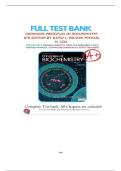
TEST BANK
Biochemistry
Jeremy M. Berg, John L. Tymoczko, Gregory J. Gatto Jr. & Lubert Stryer
8th Edition
,Table of Contents
Chapter 1 Biochemistry An Evolving Science 2
Chapter 2 Protein Composition and Structure 15
Chapter 3 Exploring Proteins and Proteomes 26
Chapter 4 DNA, RNA, and the Flow of Genetic Information 34
Chapter 5 Exploring Genes and Genomes 46
Chapter 6 Exploring Evolution and Bioinformatics 58
Chapter 7 Hemoglobin A Portrait of a Protein in Action 69
Chapter 8 Enzymes Basic Concepts and Kinetics 84
Chapter 9 Catalytic Strategies 96
Chapter 10 Regulatory Strategies 108
Chapter 11 Carbohydrates 119
Chapter 12 Lipids and Cell Membranes 128
Chapter 13 Membrane Channels and Pumps 140
Chapter 14 Signal-Transduction Pathways 153
Chapter 15 Metabolism Basic Concepts and Design 165
Chapter 16 Glycolysis and Gluconeogenesis 177
Chapter 17 The Citric Acid Cycle 189
Chapter 18 Oxidative Phosphorylation 201
Chapter 19 The Light Reactions of Photosynthesis 213
Chapter 20 The Calvin Cycle and the Pentose Phosphate Pathway 225
Chapter 21 Glycogen Metabolism 234
Chapter 22 Fatty Acid Metabolism 246
Chapter 23 Protein Turnover and Amino Acid Catabolism 258
Chapter 24 The Biosynthesis of Amino Acids 270
Chapter 25 Nucleotide Biosynthesis 281
Chapter 26 Biosynthesis of Membrane Lipids and Steroids 293
Chapter 27 The Integration of Metabolism 305
Chapter 28 DNA Replication, Repair, and Recombination 314
Chapter 29 RNA Synthesis and Processing 325
Chapter 30 Protein Synthesis 336
Chapter 31 The Control of Gene Expression in Prokaryotes 344
Chapter 32 The Control of Gene Expression in Eukaryotes 356
Chapter 33 Sensory Systems 368
Chapter 34 The Immune System 379
Chapter 35 Molecular Motors 390
Chapter 36 Drug Development 401
, Chapter 1 Biochemistry: An Evolving Science
Multiple-Choice Questions
1) DNA is made from the building blocks adenine, guanine, cytosine and _____.
A) uridine
B) thymine
C) inosine
D) ribose
E) None of the answers is correct.
Answer: B
Section: 1.2
2) The DNA backbone is made from repeating _____.
A) monosaccharide units
B) amino acid units
C) sugar-phosphate units
D) fatty acid
E) None of the answers is correct.
Answer: C
Section: 1.2
3) The number of hydrogen bonds formed between A and T is _____.
A) 1
B) 2
C) 3
D) 4
E) 2 if in DNA, 3 if in RNA
Answer: B
Section: 1.2
4) The number of hydrogen bonds formed between G and C is _____.
______________________________________________________________________________________________
1|Page
Downloaded by: ridaanssem | Want to earn $1.236
Distribution of this document is illegal extra per year?
, A) 1
B) 2
C) 3
D) 4
E) 2 if in RNA, 3 if in DNA
Answer: C
Section: 1.2
5) The fundamental groups of organisms include Eukarya, Bacteria, and _____.
A) Plantae
B) Animalia
C) Protista
D) Archaea
E) Fungi
Answer: D
Section: 1.1
6) Which of the following are the strongest bonds in molecules?
A) covalent bonds
B) ionic bonds
C) hydrogen bonds
D) metallic bonds
E) None of the answers is correct.
Answer: A
Section: 1.1
7) Which of the following describes the relationship between the strengths of hydrogen and
covalent bonds?
A) Hydrogen bonds are always stronger than covalent bonds.
B) Hydrogen bonds and covalent bonds have equivalent strength.
______________________________________________________________________________________________
2|Page
Downloaded by: ridaanssem | Want to earn $1.236
Distribution of this document is illegal extra per year?
Biochemistry
Jeremy M. Berg, John L. Tymoczko, Gregory J. Gatto Jr. & Lubert Stryer
8th Edition
,Table of Contents
Chapter 1 Biochemistry An Evolving Science 2
Chapter 2 Protein Composition and Structure 15
Chapter 3 Exploring Proteins and Proteomes 26
Chapter 4 DNA, RNA, and the Flow of Genetic Information 34
Chapter 5 Exploring Genes and Genomes 46
Chapter 6 Exploring Evolution and Bioinformatics 58
Chapter 7 Hemoglobin A Portrait of a Protein in Action 69
Chapter 8 Enzymes Basic Concepts and Kinetics 84
Chapter 9 Catalytic Strategies 96
Chapter 10 Regulatory Strategies 108
Chapter 11 Carbohydrates 119
Chapter 12 Lipids and Cell Membranes 128
Chapter 13 Membrane Channels and Pumps 140
Chapter 14 Signal-Transduction Pathways 153
Chapter 15 Metabolism Basic Concepts and Design 165
Chapter 16 Glycolysis and Gluconeogenesis 177
Chapter 17 The Citric Acid Cycle 189
Chapter 18 Oxidative Phosphorylation 201
Chapter 19 The Light Reactions of Photosynthesis 213
Chapter 20 The Calvin Cycle and the Pentose Phosphate Pathway 225
Chapter 21 Glycogen Metabolism 234
Chapter 22 Fatty Acid Metabolism 246
Chapter 23 Protein Turnover and Amino Acid Catabolism 258
Chapter 24 The Biosynthesis of Amino Acids 270
Chapter 25 Nucleotide Biosynthesis 281
Chapter 26 Biosynthesis of Membrane Lipids and Steroids 293
Chapter 27 The Integration of Metabolism 305
Chapter 28 DNA Replication, Repair, and Recombination 314
Chapter 29 RNA Synthesis and Processing 325
Chapter 30 Protein Synthesis 336
Chapter 31 The Control of Gene Expression in Prokaryotes 344
Chapter 32 The Control of Gene Expression in Eukaryotes 356
Chapter 33 Sensory Systems 368
Chapter 34 The Immune System 379
Chapter 35 Molecular Motors 390
Chapter 36 Drug Development 401
, Chapter 1 Biochemistry: An Evolving Science
Multiple-Choice Questions
1) DNA is made from the building blocks adenine, guanine, cytosine and _____.
A) uridine
B) thymine
C) inosine
D) ribose
E) None of the answers is correct.
Answer: B
Section: 1.2
2) The DNA backbone is made from repeating _____.
A) monosaccharide units
B) amino acid units
C) sugar-phosphate units
D) fatty acid
E) None of the answers is correct.
Answer: C
Section: 1.2
3) The number of hydrogen bonds formed between A and T is _____.
A) 1
B) 2
C) 3
D) 4
E) 2 if in DNA, 3 if in RNA
Answer: B
Section: 1.2
4) The number of hydrogen bonds formed between G and C is _____.
______________________________________________________________________________________________
1|Page
Downloaded by: ridaanssem | Want to earn $1.236
Distribution of this document is illegal extra per year?
, A) 1
B) 2
C) 3
D) 4
E) 2 if in RNA, 3 if in DNA
Answer: C
Section: 1.2
5) The fundamental groups of organisms include Eukarya, Bacteria, and _____.
A) Plantae
B) Animalia
C) Protista
D) Archaea
E) Fungi
Answer: D
Section: 1.1
6) Which of the following are the strongest bonds in molecules?
A) covalent bonds
B) ionic bonds
C) hydrogen bonds
D) metallic bonds
E) None of the answers is correct.
Answer: A
Section: 1.1
7) Which of the following describes the relationship between the strengths of hydrogen and
covalent bonds?
A) Hydrogen bonds are always stronger than covalent bonds.
B) Hydrogen bonds and covalent bonds have equivalent strength.
______________________________________________________________________________________________
2|Page
Downloaded by: ridaanssem | Want to earn $1.236
Distribution of this document is illegal extra per year?