Mental Health Assessment
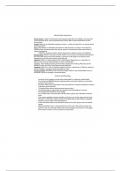
Mental Health: A state of well-being in which people realize their own abilities, can cope with
normal stresses of life, can work productively, and are able to make contributions to their
communities.
Anxiety: Refers to an individual’s response to stress – which can range from no anxiety, severe
anxiety, and panic
Stress: Represents an individual’s perception of and response to a stressor. The response
represents the interplay between the way the stressor is perceived and the effectiveness of
coping mechanisms.
-Ineffective coping can lead to anxiety, depression, substance abuse, and addiction
Mood & Affect: Refers to the state of mind, relative to how a person is feeling emotionally and
the observable response to those feelings. A person’s mood ranges on a spectrum from
depression on the low end to mania on the high end.
Addiction: Refers to a physiological and/or psychological dependence on a substance or
behavior and can have profound effect on one’s mental health.
Cognition: The mental processing of information and decision-making, affected by severe
swings on either end of the mood spectrum and addiction.
Psychosis: Refers to a state of impaired cognitive function, impairments in affective response,
and the inability to recognize reality and relate to others.
Functional Ability: Affected by most of these concepts. When in any mental health crisis, an
individual is prone to changes in functional ability.
Anatomy and Physiology
- Functions of the cerebrum are primarily responsible for a person’s mental health.
- The frontal lobe governs decision-making, problem solving, the ability to concentrate,
and short-term memory
- Emotions, affect, drive, awareness of self, and autonomic responses related to emotions
originate in the frontal lobe.
- The parietal lobe receives and processes sensory input
- The temporal lobe is responsible for perception and interpretation of sounds
- The occipital lobe interprets visual images
- The cerebral cortex communicates with the limbic system, also called the emotional
brain.
- This system regulates memory and basic emotions such as fear, anger, and sex drive.
- Structures of the limbic system include the cingulate gyrus, hippocampus, amygdala,
thalamus, and portions of the hypothalamus.
- These structures enable communication between the limbic system and the cerebral
cortex.
- Neurotransmitters have a n essential function in the role of the human emotion and
behavior. They are chemical vehicles that provide synaptic transmission of messages
from neuron to neuron or from neurons to muscle cells.
, - Neurotransmitters affecting mental health include dopamine, norepinephrine, serotonin,
histamine, acetylcholine, and gamma-aminobutyric acid (GABA)
Health History
General Health History:
- Present health status – “describe your feelings or mood”
- Past health history – “have you ever been treated for mental health problems?”
- Family History – “Do you have any blood relatives who have behaviors that could
indicate a mental health problem” or “alcoholism, drug abuse?”
- Personal and Psychosocial History – “How would you describe yourself to others?” or
“What do you like about yourself?”
- Interpersonal Relationships – “How satisfied are you with your relationships with
people?
- Stressors – “Have there been any recent changes in your life?” or “What are the major
stressors in your life now?
- Anger – “How do you react when you are angry?”
- Alcohol Use – “How often do you drink alcohol, including beer, wine or liquor?”
- Recreational Drug Use – “Some people use recreational drugs. Do you ever use them?”
Problem-Based History
- Depression – May neglect grooming, hygiene, have a slumped posture, look sad,
evidence of tearfulness, avoid eye contact, speak monotone
- Anxiety – May report feeling anxious or not being able to stop worrying. Feelings of
anger, guilt, worthlessness, and anguish often accompany anxiety
Altered Mental Status:
- Mental Status: The degree of competence that a person shows in intellectual, emotional,
psychological, and personality functioning
- Person may show change in orientation to person, place, or time; attention span; or
memory
- Orientation – Ask patient where they are and their name
- Memory – Immediate Recall, Recent memory, Remote Memory
Calculation Ability – Tested by asking the patient about making a change.
Communication Skills – Can the patient see, speak, read, and write
Judgement and Reasoning
Abstract Reasoning
Mental Health: A state of well-being in which people realize their own abilities, can cope with
normal stresses of life, can work productively, and are able to make contributions to their
communities.
Anxiety: Refers to an individual’s response to stress – which can range from no anxiety, severe
anxiety, and panic
Stress: Represents an individual’s perception of and response to a stressor. The response
represents the interplay between the way the stressor is perceived and the effectiveness of
coping mechanisms.
-Ineffective coping can lead to anxiety, depression, substance abuse, and addiction
Mood & Affect: Refers to the state of mind, relative to how a person is feeling emotionally and
the observable response to those feelings. A person’s mood ranges on a spectrum from
depression on the low end to mania on the high end.
Addiction: Refers to a physiological and/or psychological dependence on a substance or
behavior and can have profound effect on one’s mental health.
Cognition: The mental processing of information and decision-making, affected by severe
swings on either end of the mood spectrum and addiction.
Psychosis: Refers to a state of impaired cognitive function, impairments in affective response,
and the inability to recognize reality and relate to others.
Functional Ability: Affected by most of these concepts. When in any mental health crisis, an
individual is prone to changes in functional ability.
Anatomy and Physiology
- Functions of the cerebrum are primarily responsible for a person’s mental health.
- The frontal lobe governs decision-making, problem solving, the ability to concentrate,
and short-term memory
- Emotions, affect, drive, awareness of self, and autonomic responses related to emotions
originate in the frontal lobe.
- The parietal lobe receives and processes sensory input
- The temporal lobe is responsible for perception and interpretation of sounds
- The occipital lobe interprets visual images
- The cerebral cortex communicates with the limbic system, also called the emotional
brain.
- This system regulates memory and basic emotions such as fear, anger, and sex drive.
- Structures of the limbic system include the cingulate gyrus, hippocampus, amygdala,
thalamus, and portions of the hypothalamus.
- These structures enable communication between the limbic system and the cerebral
cortex.
- Neurotransmitters have a n essential function in the role of the human emotion and
behavior. They are chemical vehicles that provide synaptic transmission of messages
from neuron to neuron or from neurons to muscle cells.
, - Neurotransmitters affecting mental health include dopamine, norepinephrine, serotonin,
histamine, acetylcholine, and gamma-aminobutyric acid (GABA)
Health History
General Health History:
- Present health status – “describe your feelings or mood”
- Past health history – “have you ever been treated for mental health problems?”
- Family History – “Do you have any blood relatives who have behaviors that could
indicate a mental health problem” or “alcoholism, drug abuse?”
- Personal and Psychosocial History – “How would you describe yourself to others?” or
“What do you like about yourself?”
- Interpersonal Relationships – “How satisfied are you with your relationships with
people?
- Stressors – “Have there been any recent changes in your life?” or “What are the major
stressors in your life now?
- Anger – “How do you react when you are angry?”
- Alcohol Use – “How often do you drink alcohol, including beer, wine or liquor?”
- Recreational Drug Use – “Some people use recreational drugs. Do you ever use them?”
Problem-Based History
- Depression – May neglect grooming, hygiene, have a slumped posture, look sad,
evidence of tearfulness, avoid eye contact, speak monotone
- Anxiety – May report feeling anxious or not being able to stop worrying. Feelings of
anger, guilt, worthlessness, and anguish often accompany anxiety
Altered Mental Status:
- Mental Status: The degree of competence that a person shows in intellectual, emotional,
psychological, and personality functioning
- Person may show change in orientation to person, place, or time; attention span; or
memory
- Orientation – Ask patient where they are and their name
- Memory – Immediate Recall, Recent memory, Remote Memory
Calculation Ability – Tested by asking the patient about making a change.
Communication Skills – Can the patient see, speak, read, and write
Judgement and Reasoning
Abstract Reasoning