Fundamental Exam 1 !
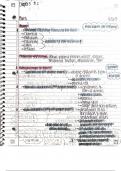
Development of nursing from Early Civilization !
" • Most Early Civilization believed illness had supernatural causes (nurses were mothers this is where naturing skills came
from)!
" • Ancient Greek believed sickness was caused by sin "God's Displeasure" (Hebrews came up with The Ten
Commandments nurses cared in the homes and communities as nurse-midwives) !
" • The early Christians believed that love and caring for others were important no matter what (nurses where called
"deaconess" made first organized visits to the sick)!
" • Crusades(11th-13th century) Hospitals were built, nursing becoming a respected vocation!
" • Western societies shifted from religious to an emphasize on warfare, exploration, and more knowledge. (Nurses were
women convicts)!
!
Florence Nightingale and the Birth Of Modern Nursing!
" • From the middle of the 19 century to the 20th century social reforms changed the roles of nurses and of women in
general !
" • During this Time Nursing as we know it began based on many beliefs of Florence!
" • She challenged prejudices against women during war !
" • She established her first training school for nurses and wrote books about health care and nursing education !
" • She's a disaster nurse, care provider, educator, manager, consultant, and statistician!
" • Identified personal needs of the patients !
" • Established hospital management standards!
" • Recognized 2 components of nursing!
" " ○ Health !
" " ○ Illness!
" • Meeting the personal needs of the patient within the environment!
Important Historical Nurses!
" • Clara Barton (volunteered to care for wounds & feed union soldiers during the civil war: served as supervisor of nurses
for the ARMY of James in 1882)!
" • Dorothea Dix (Served as superintendent of the female nurses of the Army during the civil war she was a pioneering
crusader for the reform of the treatment of the mentally ill) !
" • Mary Mahoney ( First Black Nurse in 1879)!
" • Sojourner Truth (Provided nursing care to soldiers during the CW and worked for the women movement) !
Four Aims of nursing !
" • To promote health- to increase a person's well-being and potential!
" • To restore health- provide direct care to a person who is ill (Taking blood pressure, Rehab services)!
" • To Prevent health-teaching and self-example (education programs, Internet, assessments)!
" • To facilitate with coping with disability or death- taking care of the elderly and disable and their families facilitate with
coping!
!
*The AACN believes that the BSN should be the minimum level required for entry into the nursing field in today's healthcare
environment*!
!
!
Guidelines For Nursing Practice !
" • Standards of Nursing Practice !
" • Nursing Practice Acts & Licensure!
" • Professional Values!
" • The Nursing Process!
" • Code of Ethics!
The Nursing Process!
Assessment!
Diagnosis!
Planning !
Implementation!
Evaluation!
QSEN!
" • Patient Centered Care!
" • Teamwork and Collab!
" • Quality Improvement and Safety !
" • EBP (evidence based practice)!
" • Informatics !
!
Vocab!
" • Health: A state of optimal functioning or well- being !
" " ○ Includes: Physical, social, & mental !
," " ○ It is NOT simply the absence of disease/illness or injury!
" " ○ Genetics, Cognitive Ability, Education, race/ethnicity, culture, age, biological sex, developmental level, lifestyle,
environment, socioeconomic status!
" " ○ Nurses promote health: !
" " " Identify, analyze, maximize each patient's own individual strength as components of preventing illness,
restoring health, and facilitating coping with disability & death, !
" " " Establish a management framework from the inside!
" • Health Literacy; The ability of people to obtain, process, and understand the basic, information, needed to make
appropriate decisions about health!
" • Burnout: cumulative state of frustration with the work environment that develops over a long time!
" • Mindfulness: Intentionally bringing awareness to the present moment with an attitude of openness and curiosity (STOP
Technique) Stop & take a few steps back, Take a few breaths, Observe inside yourself, Proceed after you pause!
" • Standards: allow nurses to carry out professional roles, serving as protection for the nurse, the patient, & the institution
where health care is provided!
" • Nurse Practice Acts: laws established in each state in the U.S. to regulate the practice of nursing !
" • Compassion Fatigue: Loss of satisfaction from providing good patient care!
" • Secondary Traumatic Stress: A feeling of despair caused by the transfer of emotion distress from a victim to a
caregiver, which often develops suddenly !
!
Professional Nursing Organizations !
" International Nursing Organization (ICN)!
" • Founded in 1899 !
" • The first international org of professional women!
" • Shared a commitment to maintain high standards of nursing service & education by promoting ethics !
" • Provides a way for national nursing orgs to work together !
" National Nursing Organizations (!
" • ANA: For RNs in the U.S., founded in late 1800s The scope of practice)!
" " ○ Mission is to advance the profession of nursing to improve health for all!
" • NLN: Open for all people interested in nursing, est. 1952!
" " ○ Objective is to foster the development & improvement of all nursing services and nursing education!
" • AACN: The national voice for BSN programs !
" " ○ Focuses on establishing quality educational standards, influencing the nursing profession to improve health care
& promoting public support of BSN & grad education, research & nursing practice !
" • AAN!
" " ○ Serves the public & the nursing profession by advancing health policy & practice through the generation,
synthesis, & dissemination of nursing knowledge !
" • NSNA: Est. 1952!
" " ○ The National organization for students enrolled in nursing education programs !
Vocab !
" • Knowledge: An awareness of reality acquired through learning or investigation!
" " ○ The "Why" !
" " ( Anatomy, physiology, chemistry, nutrition, psychology, & sociology) !
" " ○ Traditional Knowledge: passed down from generation – generation!
" " ○ Authoritative Knowledge: comes from an expert and is accepted as truth based on the persons perceived
expertise!
" " ○ Scientific Knowledge: obtained through research !
" • Nursing Theory: Developed to describe nursing. Serves as purpose of describing, explaining, predicting, & controlling
desired outcomes of nursing care practices!
" • Research: to examine carefully or to search again, a process that uses observable & verifiable info (data) collected in a
systemic manner to describe explain or predict events !
" • Informed Consent: the patients right to consent knowledgeably to participate in a study w/o coercion. It can be
withdrawn at any time w/o jeopardizing the care that they will receive. !
" • Research Utilization (RU): A process of transforming research knowledge into practice with knowledge referring to
conducting and analyzing research. It enables nurses to improve patient care by informing practice on interventions that may
no longer be useful !
Nursing Theory Framework!
Theory: Group of concepts that describe a pattern of reality !
" " ○ Fluid, changeable, adaptable!
Concepts: (Ideas) abstract impressions organized into symbols of reality !
Conceptual Framework: Group of concepts that follow an understandable pattern!
!
Theorists!
," • Erik Erikson: based his theory of psychological development on the process of socialization, emphasizing how people
learn to interact with the world. !
" " ○ Recognized the role of social, biologic, & environmental factors in development, and defined specific tasks or
conflicts that people accomplish or overcome the 8 stages of life!
" " a. Infancy (0-1 year) Trust vs Mistrust- The basic needs such as affection and nourishment is met!
" " b. Early child hood(1-3 years) autonomy vs shame/doubt- develop a sense of independence in any task!
" " c. Play age(3-6Years) Initiative vs quilt- Take initiative on some activities, may feel quilt when unsuccessful or over
stepping boundaries !
" " d. School age(7-11 Years) Industry vs Inferiority develop self-confidence in abilities when competent or sense of
inferiority when not !
" " e. Adolescence (12-18) Identity vs confusion –experiment with and develop identity and roles!
" " f. Early Adulthood (19-25 years) Intimacy vs Isolation-!
" " Establish intimacy and relationships with others!
" " g. Middle Age (30-64) Generativity vs stagnation-contribute to society and be a part of a family!
" " h. Old Age(65 and up) Integrity vs despair- Asses and make sense of life and meaning of contributions!
" " " !
" • Abraham Maslow: developed his theory of human needs in terms of physical and psychosocial needs considered
essential to human life, rather than chronological age!
" " ○ Developed the 5 levels of need in a hierarchy with diff needs existing!
" " " From bottom to top Physiological, safety, love and belonging, esteem, and self-actualization!
!
Nursing Research !
" • Research to improve the care of people in the clinical setting as well as the broader study of people and the nursing
profession!
" • Ultimate goal is holistic patient care, individualized to meet needs, promote health, & prevent or treat illness!
" • Goals of Nursing Research: !
" " ○ Build the scientific foundation for clinical practice!
" " ○ Prevent Disease and Disability !
" " ○ Manage & eliminate symptoms caused by illness!
" " ○ Enhance end of life & palliative care!
!
Quantitative Research involves numbers!
" • Involves the concepts of basic and applied research !
" • Variable: something that varies and has different values that can be measured!
" • Dependent variable: variable being studied, determined as a result of the study !
" • Independent Variable: Causes or conditions that are manipulated or identified to determine the effects on the
dependent variable!
" • Hypothesis, Data, Instruments!
!
Qualitative Research !
" • A method for research conducted to gain insight by discovering meanings. !
" • Primarily analyzes words or narratives rather than numbers !
!
Evidence Based Practice (EBP)!
" • A problem solving approach to making clinical decisions using the best evidence available !
" • Consider patients preferences, values, engagement in care decisions as essential to providing optimal evidence based
care to patient and their families !
PICOT- P: Patient population problem, I: Intervention of Interest, C: Comparison of Interest, O: Outcome of Interest, T: Time!
!
Vocab !
" • Values: Beliefs about the worth of something about what matters the act as a standard to guide ones behavior!
" • Value System: an organization of values in which each is ranked along a continuum of importance often leading to a
personal code of conduct!
" • Values Clarification: process by which people come to understand their own values & value system !
" • Ethics: A systematic of principles of right & wrong conduct, virtue, & vice, & good and evil as they relate to conduct and
human flourishing !
" • Morals: personal or communal standards of right and wrong !
" • Value Clarification: a process by which people come to understand their own values and value system. A process of
discovery allowing the person to discover through feelings and analysis of behavior what choices to make when alternatives
are presented .!
" • (Self Determination): Respect the rights of patients or their /surrogates to make health care decisions!
" • Nonmaleficence: Avoid causing harm: Seek not to inflict harm: Seek to prevent harm or risk of harm whenever possible!
" • Beneficence: Benefit the patient & balance benefits against risk & harms; Actively promoting good !
" • Justice: Treat fairly & Equally; seek to distribute the benefits, risks, & costs of nursing care justly!
, " • Fidelity: Keep promises; be faithful to the promise you made to the public to be competent & willing to use competence
to benefit the patients entrusted to your care; Never abandon a patient w/o first providing to the patient needs!
" • Moral Distress: occurs when you know the right thing to do but either personal or institutional factors make It difficult to
follow the correct course of actions !
" !
Development of Values!
" • Modeling: learned by observing parents, peers, & significant others !
" • Moralizing: taught a complete value system by parents or institution!
" • Laissez- Faire: children are left to explore values on their own & develop their own personal value system !
" • Reward & Punishment!
" • Responsible Choice: Children are encouraged to explore completing values to weigh their positives and negative!
!
Professional Values!
" • Altruism: Concerned with the welfare and well-being of others!
" • Autonomy: The right of self determination !
" • Human Dignity: Respect for the inherent worth & uniqueness of individuals!
" • Integrity: Acting in accordance w/ an appropriate code of ethics & accepted standard of practice!
" • Social justice: Upholding moral, legal, & humanistic principles!
!
Principle Based Approach !
" • Combined elements of both utilitarian & deontologic theories & offers specific action guides for practice !
" " ○ Utilitarian: Right/ Wrong depends of consequences (abortion)!
" " ○ Deontologic: Right/wrong no matter the consequences (jehovah witness) !
" • Autonomy, non-maleficence, beneficence, Justice, Fidelity!
" • Ethical Dilemma: Arise when attempted adherence to basic ethical principles results in two conflicting courses of action
( Pulling the plug) !
!
Care Based Approach !
" • Directs attention to the specific situations of individual patients viewed within the context of their narrative!
" • Essential to person centered care!
" • How you choose to be and act each time you encounter a patient or colleague !
!
Ethical Conduct !
" • Begins in nursing school, continues in formal and informal discussions!
" • ANA: nurses bill of rights!
!
Making Ethical Decisions!
" • The Joint commission mandates all accredited facilities have a mechanism for addressing ethical problems!
" • Nurses should be familiar with & use the resources within their institutions.!
" 1. Assess the situation (Gather Data)!
" 2. Diagnose (identify) the ethical problem !
" 3. Plan (identify & weigh alternatives)!
" 4. Implement you decision !
" 5. Evaluate your decision!
!
Moral resilience: the developed capacity to respond well to morally distressing experiences and to emerge strong!
Vocab!
" • Law: a standard rule of conduct established and enforced by the government that is intended chiefly to protect the
rights of the public !
!
Sources of Law!
" • 4 Sources: !
" • Constitutions: Federal and state indicate how state gov are created, give authority & state the principles & provisions for
establishing specific laws!
" • Statutory Law: Fed & State Constitution!
" • Administrative Law: President, State governors, & city mayors; responsible for law enforcement!
" • Common Law: Court made law; malpractice !
!
Practice Rules!
" • Federal Legislation; Medicare & Medicaid Reimbursement!
" • State Legislation: Scope of practice, Educational Requirements (RNs, LPNs,)!
" • Board of Nursing: Licensing & Unprofessional conduct (Delegation, Med Administration)!
" • Health Care Institution: Policies & Procedures (wound changing)!
!
Standards!
Development of nursing from Early Civilization !
" • Most Early Civilization believed illness had supernatural causes (nurses were mothers this is where naturing skills came
from)!
" • Ancient Greek believed sickness was caused by sin "God's Displeasure" (Hebrews came up with The Ten
Commandments nurses cared in the homes and communities as nurse-midwives) !
" • The early Christians believed that love and caring for others were important no matter what (nurses where called
"deaconess" made first organized visits to the sick)!
" • Crusades(11th-13th century) Hospitals were built, nursing becoming a respected vocation!
" • Western societies shifted from religious to an emphasize on warfare, exploration, and more knowledge. (Nurses were
women convicts)!
!
Florence Nightingale and the Birth Of Modern Nursing!
" • From the middle of the 19 century to the 20th century social reforms changed the roles of nurses and of women in
general !
" • During this Time Nursing as we know it began based on many beliefs of Florence!
" • She challenged prejudices against women during war !
" • She established her first training school for nurses and wrote books about health care and nursing education !
" • She's a disaster nurse, care provider, educator, manager, consultant, and statistician!
" • Identified personal needs of the patients !
" • Established hospital management standards!
" • Recognized 2 components of nursing!
" " ○ Health !
" " ○ Illness!
" • Meeting the personal needs of the patient within the environment!
Important Historical Nurses!
" • Clara Barton (volunteered to care for wounds & feed union soldiers during the civil war: served as supervisor of nurses
for the ARMY of James in 1882)!
" • Dorothea Dix (Served as superintendent of the female nurses of the Army during the civil war she was a pioneering
crusader for the reform of the treatment of the mentally ill) !
" • Mary Mahoney ( First Black Nurse in 1879)!
" • Sojourner Truth (Provided nursing care to soldiers during the CW and worked for the women movement) !
Four Aims of nursing !
" • To promote health- to increase a person's well-being and potential!
" • To restore health- provide direct care to a person who is ill (Taking blood pressure, Rehab services)!
" • To Prevent health-teaching and self-example (education programs, Internet, assessments)!
" • To facilitate with coping with disability or death- taking care of the elderly and disable and their families facilitate with
coping!
!
*The AACN believes that the BSN should be the minimum level required for entry into the nursing field in today's healthcare
environment*!
!
!
Guidelines For Nursing Practice !
" • Standards of Nursing Practice !
" • Nursing Practice Acts & Licensure!
" • Professional Values!
" • The Nursing Process!
" • Code of Ethics!
The Nursing Process!
Assessment!
Diagnosis!
Planning !
Implementation!
Evaluation!
QSEN!
" • Patient Centered Care!
" • Teamwork and Collab!
" • Quality Improvement and Safety !
" • EBP (evidence based practice)!
" • Informatics !
!
Vocab!
" • Health: A state of optimal functioning or well- being !
" " ○ Includes: Physical, social, & mental !
," " ○ It is NOT simply the absence of disease/illness or injury!
" " ○ Genetics, Cognitive Ability, Education, race/ethnicity, culture, age, biological sex, developmental level, lifestyle,
environment, socioeconomic status!
" " ○ Nurses promote health: !
" " " Identify, analyze, maximize each patient's own individual strength as components of preventing illness,
restoring health, and facilitating coping with disability & death, !
" " " Establish a management framework from the inside!
" • Health Literacy; The ability of people to obtain, process, and understand the basic, information, needed to make
appropriate decisions about health!
" • Burnout: cumulative state of frustration with the work environment that develops over a long time!
" • Mindfulness: Intentionally bringing awareness to the present moment with an attitude of openness and curiosity (STOP
Technique) Stop & take a few steps back, Take a few breaths, Observe inside yourself, Proceed after you pause!
" • Standards: allow nurses to carry out professional roles, serving as protection for the nurse, the patient, & the institution
where health care is provided!
" • Nurse Practice Acts: laws established in each state in the U.S. to regulate the practice of nursing !
" • Compassion Fatigue: Loss of satisfaction from providing good patient care!
" • Secondary Traumatic Stress: A feeling of despair caused by the transfer of emotion distress from a victim to a
caregiver, which often develops suddenly !
!
Professional Nursing Organizations !
" International Nursing Organization (ICN)!
" • Founded in 1899 !
" • The first international org of professional women!
" • Shared a commitment to maintain high standards of nursing service & education by promoting ethics !
" • Provides a way for national nursing orgs to work together !
" National Nursing Organizations (!
" • ANA: For RNs in the U.S., founded in late 1800s The scope of practice)!
" " ○ Mission is to advance the profession of nursing to improve health for all!
" • NLN: Open for all people interested in nursing, est. 1952!
" " ○ Objective is to foster the development & improvement of all nursing services and nursing education!
" • AACN: The national voice for BSN programs !
" " ○ Focuses on establishing quality educational standards, influencing the nursing profession to improve health care
& promoting public support of BSN & grad education, research & nursing practice !
" • AAN!
" " ○ Serves the public & the nursing profession by advancing health policy & practice through the generation,
synthesis, & dissemination of nursing knowledge !
" • NSNA: Est. 1952!
" " ○ The National organization for students enrolled in nursing education programs !
Vocab !
" • Knowledge: An awareness of reality acquired through learning or investigation!
" " ○ The "Why" !
" " ( Anatomy, physiology, chemistry, nutrition, psychology, & sociology) !
" " ○ Traditional Knowledge: passed down from generation – generation!
" " ○ Authoritative Knowledge: comes from an expert and is accepted as truth based on the persons perceived
expertise!
" " ○ Scientific Knowledge: obtained through research !
" • Nursing Theory: Developed to describe nursing. Serves as purpose of describing, explaining, predicting, & controlling
desired outcomes of nursing care practices!
" • Research: to examine carefully or to search again, a process that uses observable & verifiable info (data) collected in a
systemic manner to describe explain or predict events !
" • Informed Consent: the patients right to consent knowledgeably to participate in a study w/o coercion. It can be
withdrawn at any time w/o jeopardizing the care that they will receive. !
" • Research Utilization (RU): A process of transforming research knowledge into practice with knowledge referring to
conducting and analyzing research. It enables nurses to improve patient care by informing practice on interventions that may
no longer be useful !
Nursing Theory Framework!
Theory: Group of concepts that describe a pattern of reality !
" " ○ Fluid, changeable, adaptable!
Concepts: (Ideas) abstract impressions organized into symbols of reality !
Conceptual Framework: Group of concepts that follow an understandable pattern!
!
Theorists!
," • Erik Erikson: based his theory of psychological development on the process of socialization, emphasizing how people
learn to interact with the world. !
" " ○ Recognized the role of social, biologic, & environmental factors in development, and defined specific tasks or
conflicts that people accomplish or overcome the 8 stages of life!
" " a. Infancy (0-1 year) Trust vs Mistrust- The basic needs such as affection and nourishment is met!
" " b. Early child hood(1-3 years) autonomy vs shame/doubt- develop a sense of independence in any task!
" " c. Play age(3-6Years) Initiative vs quilt- Take initiative on some activities, may feel quilt when unsuccessful or over
stepping boundaries !
" " d. School age(7-11 Years) Industry vs Inferiority develop self-confidence in abilities when competent or sense of
inferiority when not !
" " e. Adolescence (12-18) Identity vs confusion –experiment with and develop identity and roles!
" " f. Early Adulthood (19-25 years) Intimacy vs Isolation-!
" " Establish intimacy and relationships with others!
" " g. Middle Age (30-64) Generativity vs stagnation-contribute to society and be a part of a family!
" " h. Old Age(65 and up) Integrity vs despair- Asses and make sense of life and meaning of contributions!
" " " !
" • Abraham Maslow: developed his theory of human needs in terms of physical and psychosocial needs considered
essential to human life, rather than chronological age!
" " ○ Developed the 5 levels of need in a hierarchy with diff needs existing!
" " " From bottom to top Physiological, safety, love and belonging, esteem, and self-actualization!
!
Nursing Research !
" • Research to improve the care of people in the clinical setting as well as the broader study of people and the nursing
profession!
" • Ultimate goal is holistic patient care, individualized to meet needs, promote health, & prevent or treat illness!
" • Goals of Nursing Research: !
" " ○ Build the scientific foundation for clinical practice!
" " ○ Prevent Disease and Disability !
" " ○ Manage & eliminate symptoms caused by illness!
" " ○ Enhance end of life & palliative care!
!
Quantitative Research involves numbers!
" • Involves the concepts of basic and applied research !
" • Variable: something that varies and has different values that can be measured!
" • Dependent variable: variable being studied, determined as a result of the study !
" • Independent Variable: Causes or conditions that are manipulated or identified to determine the effects on the
dependent variable!
" • Hypothesis, Data, Instruments!
!
Qualitative Research !
" • A method for research conducted to gain insight by discovering meanings. !
" • Primarily analyzes words or narratives rather than numbers !
!
Evidence Based Practice (EBP)!
" • A problem solving approach to making clinical decisions using the best evidence available !
" • Consider patients preferences, values, engagement in care decisions as essential to providing optimal evidence based
care to patient and their families !
PICOT- P: Patient population problem, I: Intervention of Interest, C: Comparison of Interest, O: Outcome of Interest, T: Time!
!
Vocab !
" • Values: Beliefs about the worth of something about what matters the act as a standard to guide ones behavior!
" • Value System: an organization of values in which each is ranked along a continuum of importance often leading to a
personal code of conduct!
" • Values Clarification: process by which people come to understand their own values & value system !
" • Ethics: A systematic of principles of right & wrong conduct, virtue, & vice, & good and evil as they relate to conduct and
human flourishing !
" • Morals: personal or communal standards of right and wrong !
" • Value Clarification: a process by which people come to understand their own values and value system. A process of
discovery allowing the person to discover through feelings and analysis of behavior what choices to make when alternatives
are presented .!
" • (Self Determination): Respect the rights of patients or their /surrogates to make health care decisions!
" • Nonmaleficence: Avoid causing harm: Seek not to inflict harm: Seek to prevent harm or risk of harm whenever possible!
" • Beneficence: Benefit the patient & balance benefits against risk & harms; Actively promoting good !
" • Justice: Treat fairly & Equally; seek to distribute the benefits, risks, & costs of nursing care justly!
, " • Fidelity: Keep promises; be faithful to the promise you made to the public to be competent & willing to use competence
to benefit the patients entrusted to your care; Never abandon a patient w/o first providing to the patient needs!
" • Moral Distress: occurs when you know the right thing to do but either personal or institutional factors make It difficult to
follow the correct course of actions !
" !
Development of Values!
" • Modeling: learned by observing parents, peers, & significant others !
" • Moralizing: taught a complete value system by parents or institution!
" • Laissez- Faire: children are left to explore values on their own & develop their own personal value system !
" • Reward & Punishment!
" • Responsible Choice: Children are encouraged to explore completing values to weigh their positives and negative!
!
Professional Values!
" • Altruism: Concerned with the welfare and well-being of others!
" • Autonomy: The right of self determination !
" • Human Dignity: Respect for the inherent worth & uniqueness of individuals!
" • Integrity: Acting in accordance w/ an appropriate code of ethics & accepted standard of practice!
" • Social justice: Upholding moral, legal, & humanistic principles!
!
Principle Based Approach !
" • Combined elements of both utilitarian & deontologic theories & offers specific action guides for practice !
" " ○ Utilitarian: Right/ Wrong depends of consequences (abortion)!
" " ○ Deontologic: Right/wrong no matter the consequences (jehovah witness) !
" • Autonomy, non-maleficence, beneficence, Justice, Fidelity!
" • Ethical Dilemma: Arise when attempted adherence to basic ethical principles results in two conflicting courses of action
( Pulling the plug) !
!
Care Based Approach !
" • Directs attention to the specific situations of individual patients viewed within the context of their narrative!
" • Essential to person centered care!
" • How you choose to be and act each time you encounter a patient or colleague !
!
Ethical Conduct !
" • Begins in nursing school, continues in formal and informal discussions!
" • ANA: nurses bill of rights!
!
Making Ethical Decisions!
" • The Joint commission mandates all accredited facilities have a mechanism for addressing ethical problems!
" • Nurses should be familiar with & use the resources within their institutions.!
" 1. Assess the situation (Gather Data)!
" 2. Diagnose (identify) the ethical problem !
" 3. Plan (identify & weigh alternatives)!
" 4. Implement you decision !
" 5. Evaluate your decision!
!
Moral resilience: the developed capacity to respond well to morally distressing experiences and to emerge strong!
Vocab!
" • Law: a standard rule of conduct established and enforced by the government that is intended chiefly to protect the
rights of the public !
!
Sources of Law!
" • 4 Sources: !
" • Constitutions: Federal and state indicate how state gov are created, give authority & state the principles & provisions for
establishing specific laws!
" • Statutory Law: Fed & State Constitution!
" • Administrative Law: President, State governors, & city mayors; responsible for law enforcement!
" • Common Law: Court made law; malpractice !
!
Practice Rules!
" • Federal Legislation; Medicare & Medicaid Reimbursement!
" • State Legislation: Scope of practice, Educational Requirements (RNs, LPNs,)!
" • Board of Nursing: Licensing & Unprofessional conduct (Delegation, Med Administration)!
" • Health Care Institution: Policies & Procedures (wound changing)!
!
Standards!